Biography
Euphrosynus of Pskov
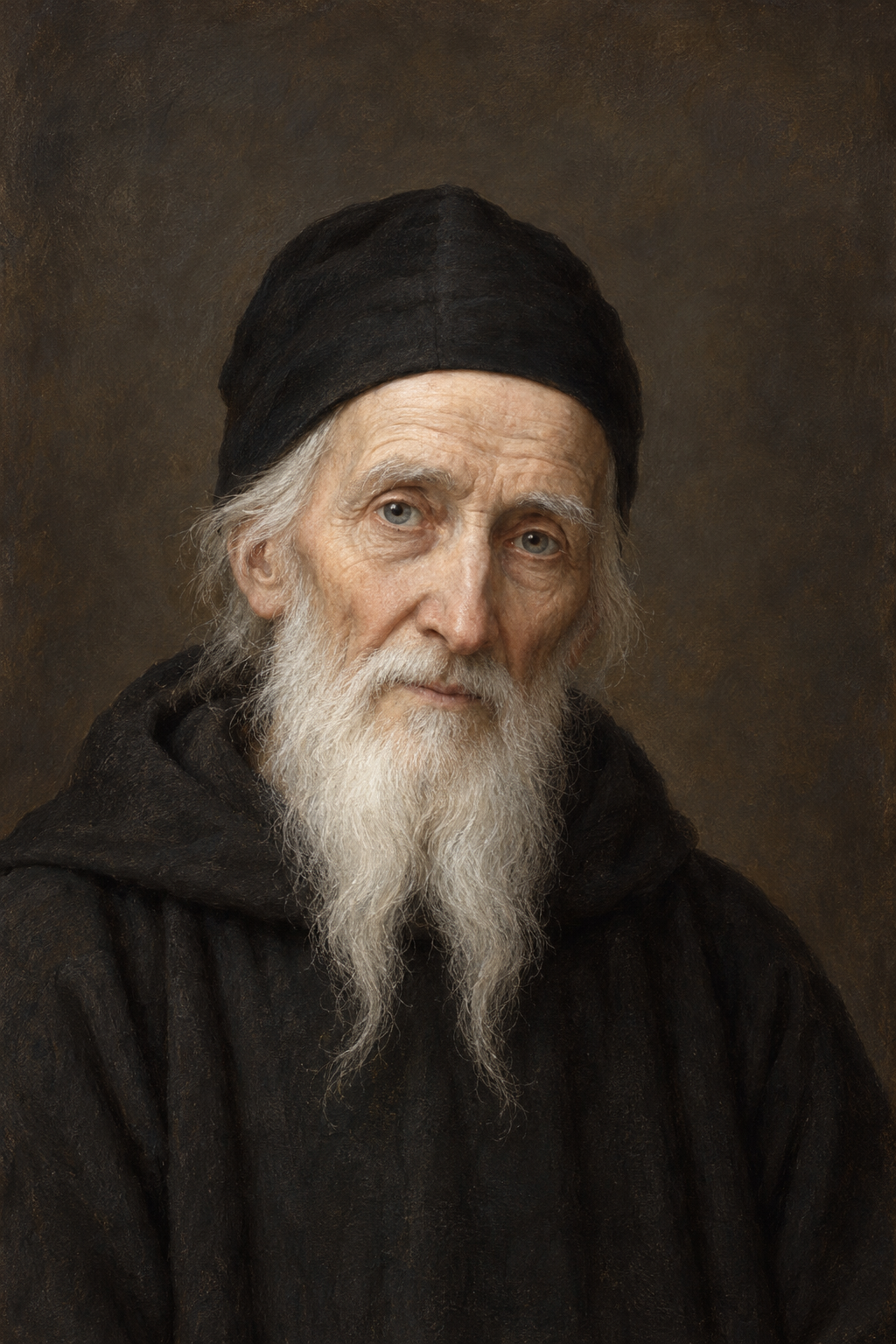
About Euphrosynus of Pskov
Euphrosynus of Pskov, born Eleazar in the village of Videlebye, became a monk at Snetogorsk rather than enter the marriage his parents wanted. He later sought solitude near the Tolva River. Others joined him, and the community that grew around him became the monastery now known as Spaso-Eleazar.
He guided its monks without becoming either a priest or its abbot. The Church’s life says that he entrusted the abbacy to his disciple Ignatius and withdrew again to a forest dwelling. It links the dedication of the monastery’s church to a vision of Basil the Great, Gregory the Theologian, and John Chrysostom; the vision belongs to the devotional account of its foundation.
His testament shows how personally he supported the community. He gave his property, fishing rights, and town buildings for the common maintenance of the brethren. Neither the abbot nor individual monks were to profit privately from them. Gifts could be offered voluntarily, but a donor could not later demand their return.
The discipline was severe. Personal possessions and privileged treatment for wealthy donors were forbidden. The rule’s summary even prescribes burial outside the monastery for a monk found to have retained private property. The testament barred women from entering and prohibited baths and luxurious clothing. Its ideal of equality rested on shared deprivation and obedience, not on individual freedom to choose a way of life.
Euphrosynus also became involved in a prolonged dispute over repeating Alleluia twice or three times in worship. He defended the double repetition against clerical opponents who accused him of heresy. The Orthodox Encyclopedia distinguishes his position from stronger claims made by later writers of his Life: he did not himself declare the triple repetition heretical. Surviving versions of his biography were shaped by this controversy, and their accounts of his journey to Constantinople differ.
He died on May 15, 1481. His approximate birth year, 1386, is derived from the age of ninety-five given in his Life. Veneration began locally, and the council of 1551 explicitly affirmed his commemoration. His original parchment testament, once kept at the monastery, had been lost by the early twentieth century.
Spaso-Eleazar Monastery names Euphrosynus among its holy patrons and keeps his feast on May 15 in the Julian calendar, corresponding to May 28 in the present civil calendar.
Wondering how to weigh the stories and sources? Learn how to read a saint biography.