Biography
Euschemon of Lampsacus
About Euschemon of Lampsacus
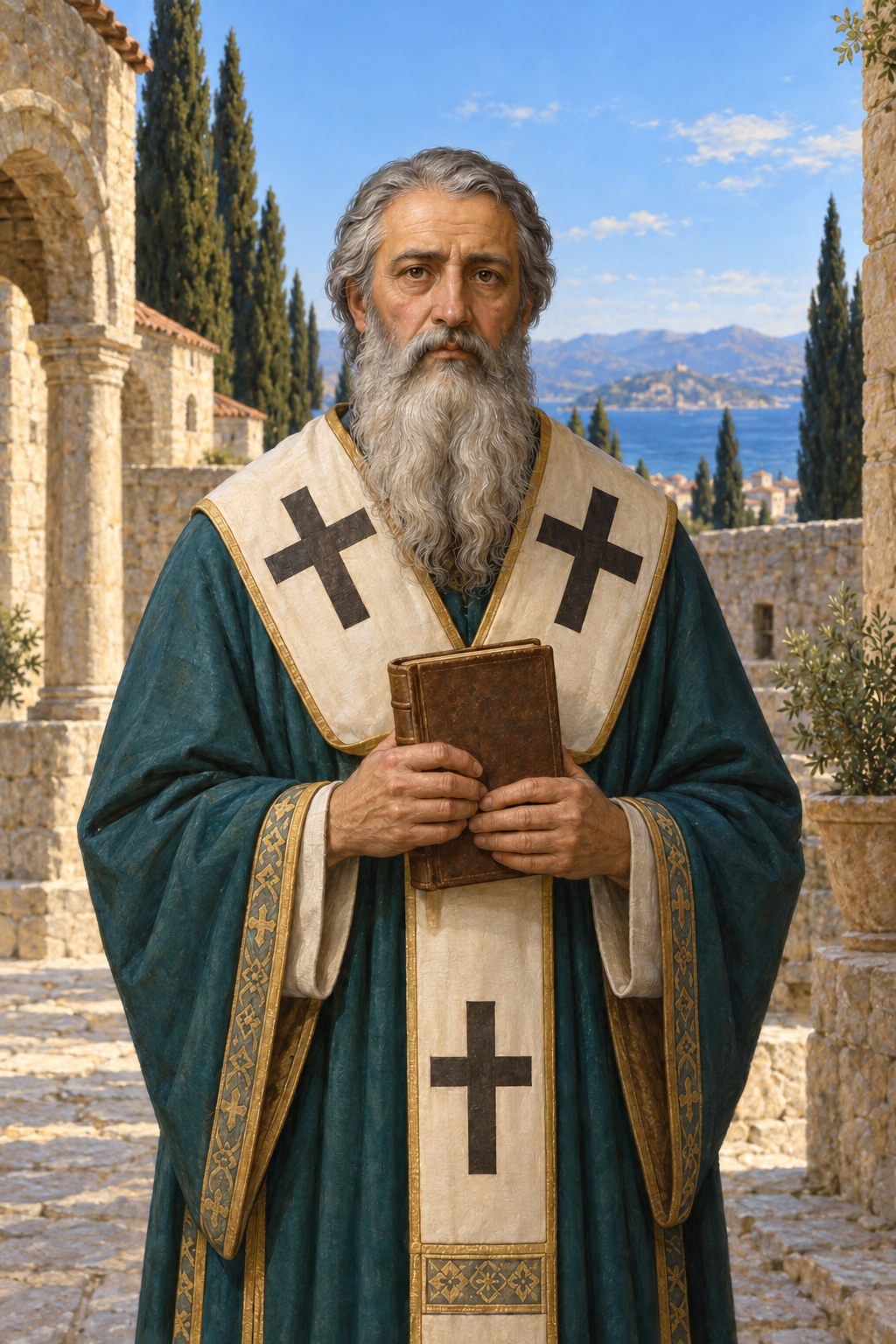
Euschemon of Lampsacus was a Byzantine bishop remembered for defending the veneration of icons. A letter sent to him by Theodore the Studite in 815 provides a firm point in the outline of his life. The Prosopography of the Byzantine Empire dates it after April of that year and identifies its recipient as the bishop of Lampsacus, in the province of Hellespontus.
Theodore addressed him respectfully as a spiritual father and friend. The letter indicates that Euschemon had already suffered persecution for supporting the veneration of images. It offers evidence for a relationship between the two churchmen, although it does not provide a complete biography of the bishop.
His title needs similar care. Although some hagiographical language could suggest an archbishop, the scholarly prosopography considers that rank unlikely. It notes that earlier council lists describe Lampsacus as a bishopric under Cyzicus.
The church tradition preserved in Finland describes Euschemon as a monk from his youth, known for an ascetic life before becoming a bishop. It also attributes miracles to him, including the restoration of a child to life and the protection of vegetable gardens from pests. These belong to the devotional account of his holiness, rather than to the dated evidence supplied by Theodore’s correspondence.
Later accounts agree that his defense of icons brought imprisonment and exile, but they do not give a consistent imperial chronology. The Orthodox Encyclopedia places his suffering under Michael II, who ruled from 820 to 829, and records his death before 843. Its account also distinguishes him from an earlier Studite monk of the same name, whose appearance in Theodore’s correspondence should not be folded into this bishop’s life.
The Orthodox Church in America instead associates his imprisonment and banishment with Emperor Theophilus, whose reign began in 829. It says that Euschemon died in exile.
The Byzantine synaxarion also remembers him persuading his iconoclast guards to venerate images. The scholarly prosopography reports this as part of the received account. It presents the imprisoned bishop continuing his religious teaching among the people charged with holding him.
The surviving evidence therefore supports a bishop active during the ninth-century controversy without establishing a precise lifespan or a securely identified place of death. The scholarly prosopography records his commemoration in Byzantine calendars on March 14 or 15.
The Orthodox Church in America commemorates him on March 14 as a confessor: a saint remembered for suffering in defense of his faith. Its brief notice centers his remembrance on ascetic discipline, imprisonment, and exile.
Wondering how to weigh the stories and sources? Learn how to read a saint biography.