Biography
Eusebius of Vercelli
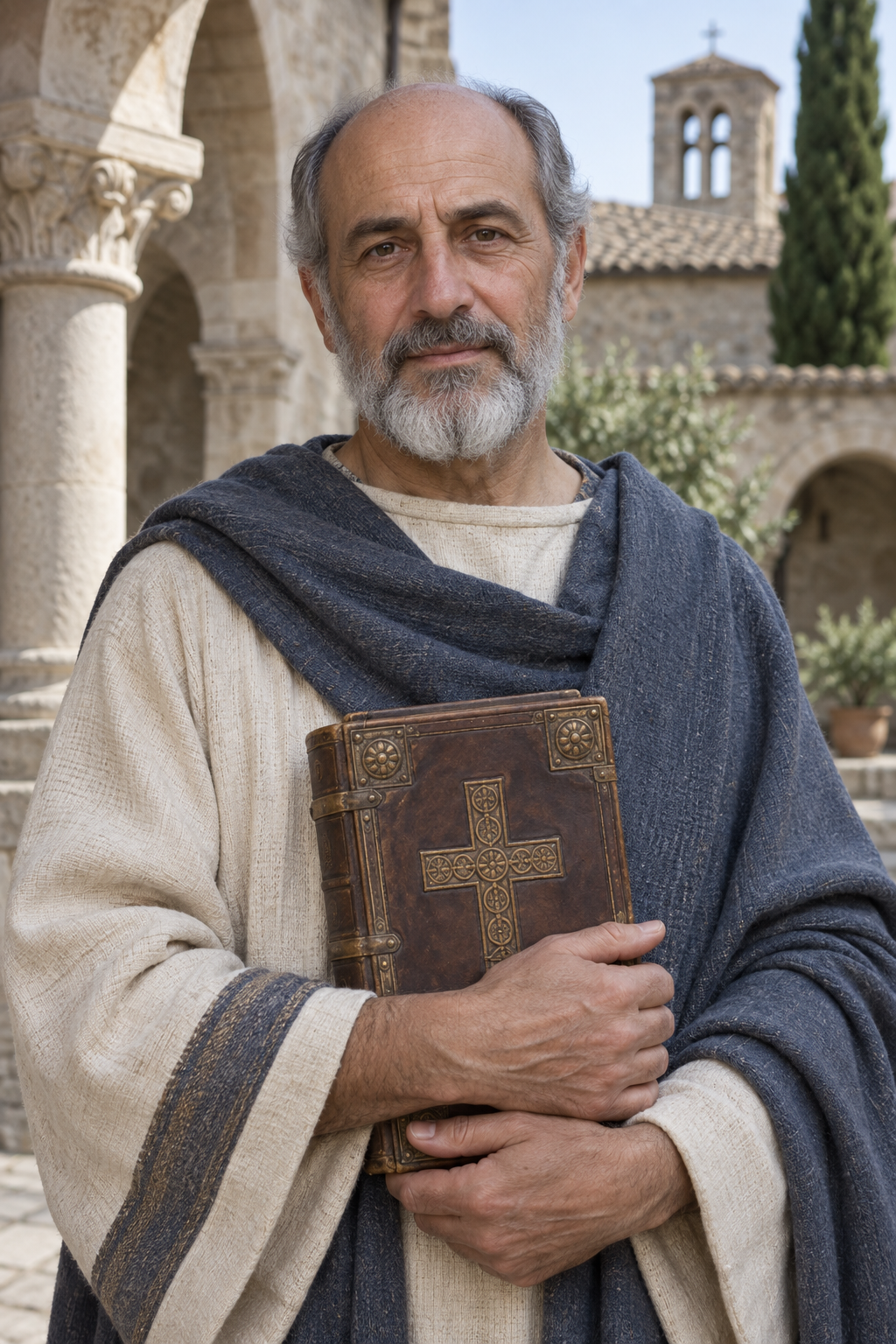
About Eusebius of Vercelli
Eusebius of Vercelli was a bishop whose work joined the formation of clergy to the defense of Nicene Christianity. Born in Sardinia near the beginning of the fourth century, he moved to Rome as a child and served there as a reader in the church. He became bishop of Vercelli in 345. His later exile took him to Scythopolis, Cappadocia, and the Egyptian Thebaid. Even at a distance he kept in touch with communities in northern Italy: a surviving letter addresses believers in Vercelli, Novara, Ivrea, and Tortona. Its closing greetings extend beyond his immediate congregation to people outside the church.
At Vercelli, his example helped establish a form of clerical life combining pastoral responsibility with monastic discipline. Writing to the city after Eusebius's death, Ambrose recalled a man whom the congregation had welcomed although he was not a local citizen. He particularly praised Eusebius for practicing an ascetic life while governing an urban church. Fasting, restraint, and the formation of younger men belonged together in this model. Ambrose understood that training as preparation for hardship, not simply a withdrawal from ordinary responsibilities. His account connected the endurance Eusebius later showed in exile with habits already cultivated in the community.
The controversy over Christian teaching soon called for cooperation beyond Vercelli. Letters from Pope Liberius show Eusebius assisting a delegation that included Bishop Lucifer, the priest Pancratius, and the deacon Hilarius. Liberius first commended these travelers to him and then thanked him for the support they received. The correspondence preserves something easily missed in accounts of councils: representatives had to undertake difficult journeys, and their work depended on help from other church leaders. Eusebius's contribution was therefore practical as well as doctrinal. These exchanges belong to the struggle surrounding the council at Milan, where the delegation represented the Roman bishop.
Emperor Constantius pressed bishops to condemn Athanasius of Alexandria and enter communion with his opponents. Athanasius names Eusebius among those who resisted. In his account, the bishops objected that the emperor's demands had no basis in church law; Constantius answered with the threat of banishment. The confrontation concerned both the disputed teaching and the emperor's power to dictate an ecclesiastical judgment. Eusebius accepted exile rather than give the required assent. Athanasius presents these displaced bishops as confessors, people whose fidelity had been tested through suffering. He also describes their journeys as occasions for continuing to teach, so that removal from their churches did not bring their influence to an end.
Sulpitius Severus places Eusebius's banishment alongside that of other western church leaders. His account also records the response to their displacement: supporters gathered money to supply the exiles' needs, and representatives from many provinces visited them. Exile could separate a bishop from his own city without severing every bond of support. The wider network of Christians helped sustain the banished leaders materially and maintained contact with them. For Eusebius, the conflict thus unfolded within a church whose communities remained connected across considerable distances.
When reconciliation became possible, Eusebius took part in an effort to restore communion rather than perpetuate every division. The Alexandrian council's letter to Antioch names him and Asterius as participants who would help carry its settlement forward. The document asks Christians sharing the Nicene faith to receive one another, while rejecting teaching that made the Holy Spirit a creature. It also examines disagreements over the word hypostasis. Some Christians spoke of three, others of one; questioning what each group meant revealed that different expressions did not necessarily conceal incompatible beliefs. The proposed settlement required clarification and a common confession, not agreement achieved merely by repeating the same vocabulary. Eusebius's mission placed him within that patient work of distinguishing a real doctrinal difference from a quarrel over terminology.
After his return in 362, Eusebius worked with Hilary of Poitiers and Liberius to restore Nicene teaching in the Italian churches. His death is dated to 370 or 371. His literary remains are modest beside the reach of his episcopal work: letters survive, while a Latin translation of Eusebius of Caesarea's commentary on the Psalms has been lost. Other writings once connected with him are less secure, including a letter to Gregory of Elvira and books of On the Trinity. The surviving correspondence nevertheless preserves a bishop engaged with his own congregation, fellow bishops, and imperial authority. His reputation rests especially on the combination of steadfastness under pressure and cooperation in rebuilding communion.
In the regional liturgy of Piedmont he is honored as a patron, with a solemnity in Vercelli itself. That liturgy also explains the traditional title of martyr through the persecutions he endured for his faith. The title here commemorates suffering rather than supplying an account of execution. His memory therefore embraces both the bishop who organized a common life for his clergy and the exile whose convictions outlasted imperial pressure.
Wondering how to weigh the stories and sources? Learn how to read a saint biography.
Explore similar vocations
Prayers for Eusebius of Vercelli
Eusebius of Vercelli — traditional collect excerpt
ut, cujus natalítia cólimus, de ejúsdem étiam protectióne gaudeámus.