Biography
Eustathius of Antioch
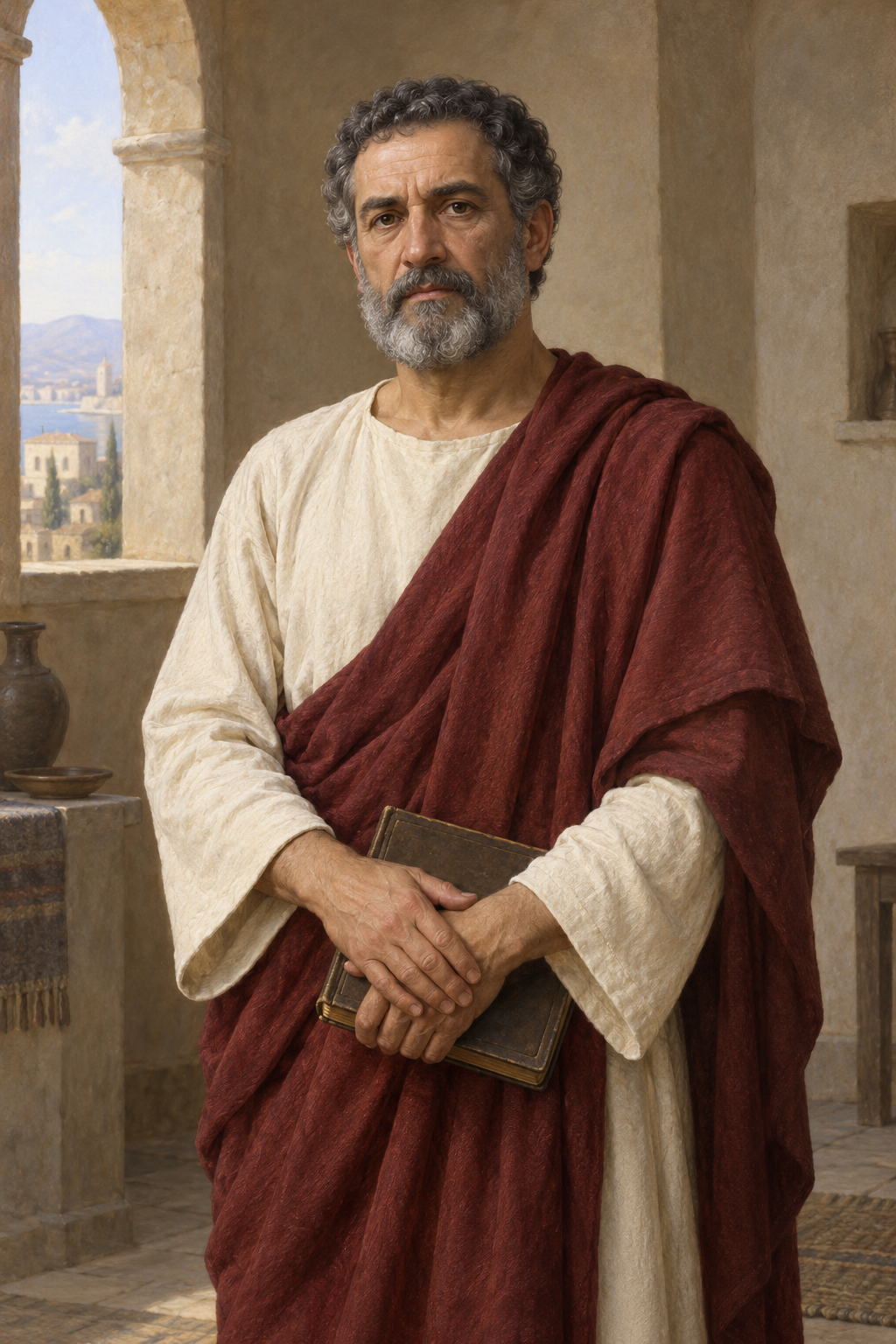
About Eustathius of Antioch
Eustathius of Antioch was a fourth-century bishop and Christian theologian, remembered for opposing teachings that subordinated the Son to the Father. Jerome identifies him as a native of Side in Pamphylia and records his service first at Beroea in Syria, then at Antioch. His early life is poorly documented. The surviving literary notices are more informative about his teaching and ecclesiastical career than about his childhood or family.
Sophie Cartwright’s study finds evidence of substantial education in his writing, including familiarity with philosophy and medicine. It places him among the important opponents of Arius in the early controversy, while stressing uncertainty about the chronology. His presence at Nicaea in 325 belongs to his established public career; the exact part he played in shaping its language is disputed. It would be too strong to credit him alone with the council’s doctrinal settlement.
One fragment of his own writing survives through Theodoret’s history. In it, Eustathius describes the rejection of a controversial statement at the council and accuses opponents of signing the agreed confession without genuine commitment. The passage is forceful and partisan. It preserves how he understood the conflict, rather than providing a neutral account of every participant’s motives.
After Nicaea, he was removed from his see and sent into exile. The precise date and circumstances remain debated. Cartwright argues for deposition in 327 and discusses competing explanations, while older references give later dates. She considers his death in exile before 337 probable, but the evidence does not establish an exact year. His story should retain these limits rather than turn a disputed reconstruction into a precise chronology.
Theodoret gives a dramatic later narrative of the deposition. He says opponents arranged for a woman to accuse Eustathius of fathering her child, then obtained imperial support for his exile. In the following chapter, he reports that she later acknowledged the deception. This is a sympathetic account written after the events, and its accusation and recantation should not be treated as independently verified testimony.
The same history describes supporters who formed separate assemblies after his banishment and became known as Eustathians. The account connects his removal with a lasting division in Antioch’s Christian community. His influence therefore extended beyond his tenure as bishop, through people who continued to identify their faith with his leadership.
John Chrysostom later praised him in a sermon addressed to Antioch’s Christians. The sermon portrays Eustathius as retaining concern for his flock when exile took him from the city. It says he urged them to remain steadfast and protect those more easily misled. This is evidence of how a later congregation remembered its former bishop, and of the pastoral meaning Chrysostom gave to his departure.
Chrysostom interprets suffering through the example of Paul and the belief that divine strength can appear through human weakness. He presents Eustathius’s exile within that religious understanding, rather than as a failure that cancelled his ministry. His praise belongs to a sermon intended to encourage believers. It supplies an important witness to devotion while also revealing the theological purpose behind the story he tells.
Eustathius was also a writer on Scripture. Jerome lists works on the soul and against Origen’s treatment of the medium at Endor, together with numerous letters. This early catalogue shows that readers knew a broader body of writing than the texts now available. Its report of books in circulation cannot be used to reconstruct the contents of every lost work.
His surviving argument about Endor concerns the biblical account in which Saul consults a medium and receives a message attributed to Samuel. Gjoko Gjorgjevski and Marija Todorovska explain Eustathius’s objection to Origen’s interpretation: he rejected the idea that the medium possessed power over a prophet’s soul. For him, authority over the dead belonged to God. The disagreement concerned both the reading of the narrative and what it implied about spiritual power.
The same study shows him examining who speaks within the story. He distinguishes a character’s claim from the authority of the biblical narrator and interprets the apparition as deception. The scholars also point to a weakness in his criticism: Origen’s argument relied on the narrator’s identification of Samuel, not merely on the woman’s words. His polemic is thus a serious exercise in interpretation that remains open to criticism.
The Catholic Encyclopedia distinguishes genuine writings from texts falsely circulated under his name, including a supposed address to Constantine at Nicaea. That caution is part of responsible attention to his legacy. Eustathius is honoured in both Catholic and Orthodox tradition, and the Orthodox Church in America commemorates him on 21 February. His remembrance combines defence of Christian belief with the difficult history of episcopal conflict, exile and divided communities.
The older Catholic reference also records a Latin commemoration on 16 July, alongside the Greek February observance. These different calendar traditions preserve remembrance of the same bishop across ecclesiastical communities.
Wondering how to weigh the stories and sources? Learn how to read a saint biography.