Biography
Euthymius II of Novgorod
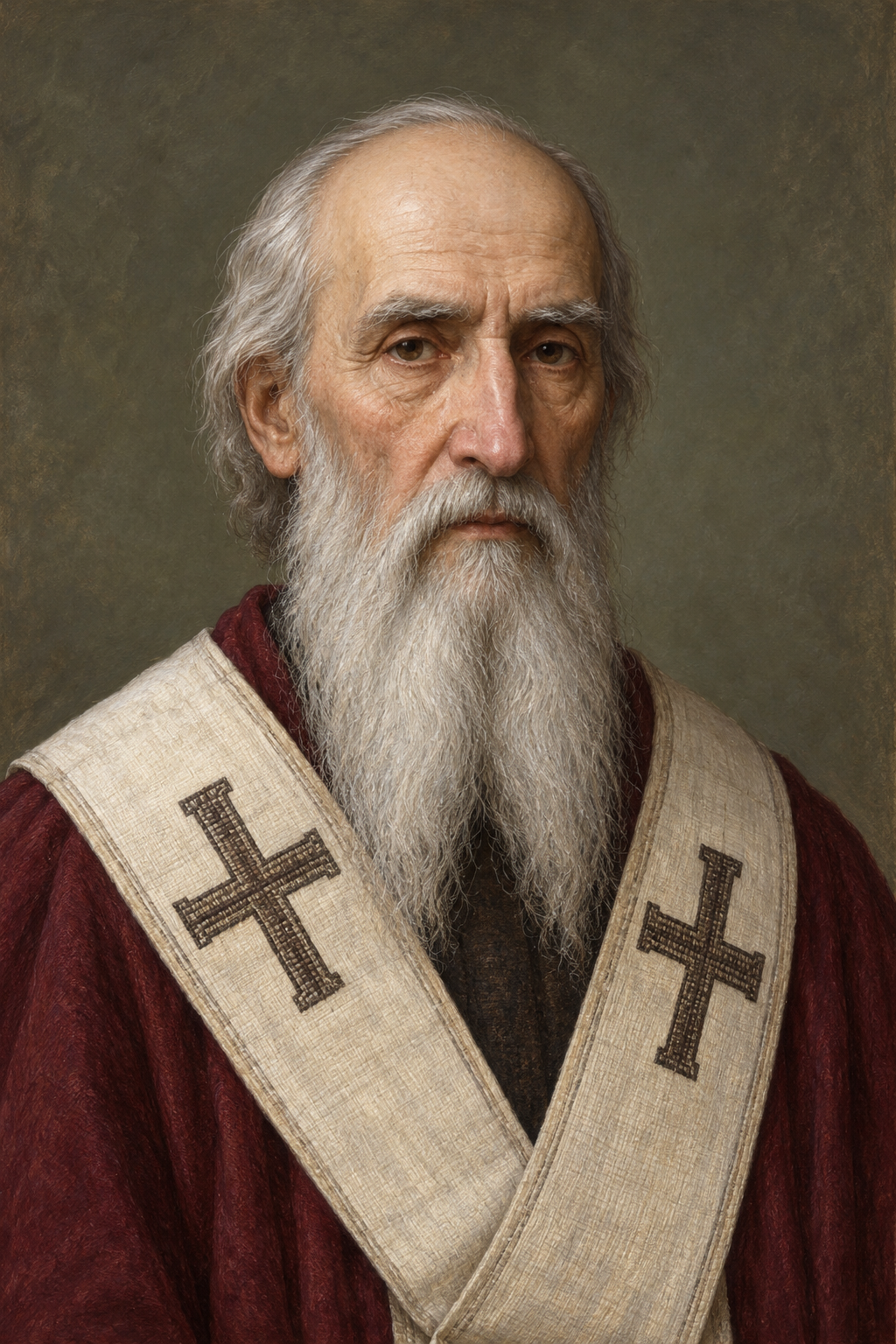
About Euthymius II of Novgorod
Euthymius II became archbishop of Novgorod after his election in 1429. Born there as John, he entered monastic life at Vyazhishchi and later served as a church administrator and abbot. His consecration followed in 1434. The Orthodox Encyclopedia tentatively links the delay to a dispute over the metropolitan’s judicial authority.
His authority brought conflict as well as responsibility. An attempt to replace Pskov’s locally chosen representative with his own appointee caused a prolonged rupture. He also supported the prince Dmitry Shemyaka and defended Novgorod’s right to shelter visiting princes. Metropolitan Jonah, who backed Shemyaka’s rival Vasily II, demanded that Euthymius end contact with the excommunicated prince.
The break with Pskov eventually healed, and Euthymius celebrated the liturgy there in 1449. He also negotiated settlements with Moscow in 1441 and 1456, combining religious office with the difficult work of diplomacy. The chamber Euthymius commissioned in 1433 still stands within the Novgorod Kremlin. The Novgorod Museum identifies it as the oldest surviving building of the archbishop’s court and a notable example of Gothic civil architecture. Its early rooms cannot all be assigned secure functions from surviving written records. The building nevertheless reflects the combined ecclesiastical and political responsibilities of an archbishop who helped lead the republic during its struggle to preserve independence.
The building also incorporated technology associated with the Baltic region. Archaeologists identify three furnaces supplying warm air to several rooms, while much of the complex remained unheated. Fires first warmed beds of stones; after the smoke had cleared, openings allowed their stored heat to reach the rooms above. This system illuminates the daily use of the archbishop’s residence as well as its impressive appearance. It was gradually replaced by other kinds of heating in later centuries.
Its doorways reveal distinctions between service areas and more important halls. The surviving openings range from relatively plain passages to elaborate entrances with Gothic detailing. Researchers connect that variation with the hierarchy of the interiors. Although comparisons extend across the Baltic, they do not establish the particular home town of the German builders. The architectural evidence supports exchange across regions without identifying every craftsman.
Euthymius commissioned painted decoration for the interiors in 1441. Surviving plant ornaments, recovered during modern restoration, help reveal the design. Art historian Tatiana Tsarevskaya argues that their consistent character and careful arrangement suggest a unified conception by a master familiar with European decoration. At the same time, she finds that the use of these motifs followed local tradition. The chamber thus joined imported architectural ideas with Novgorod’s own artistic practices; it was not simply a transplanted Western building.
His patronage also shaped the written remembrance of the city. In the late 1430s he commissioned Pachomius Logothetes to compose texts for the feasts of the Mother of God of the Sign and Barlaam of Khutyn. These works presented Novgorod as a city under special divine protection. They gave an earlier archbishop, John, an important role in guiding its people toward salvation. Such statements express the religious vision of the texts, rather than independently demonstrable claims about the city.
Scholar Zoia Isidorova proposes that this picture of a sacred city helped legitimate Euthymius’s own political authority. Her interpretation connects devotional writing with the archbishop’s secular position. It also distinguishes the city itself from the people living in it, a feature she identifies as new in these compositions. The commission therefore belongs to the history of civic identity as well as to the history of local worship.
Ágnes Kriza offers a related but distinct interpretation of his artistic patronage. She connects its changing direction in the late 1430s with the church union negotiated at Florence. Rejection of that union affected Novgorod’s ecclesiastical alignment and its relationship with Moscow. Kriza reads his commissions in architecture, painting, literature and liturgy within that disputed religious setting. This remains a scholarly explanation of the pattern of his patronage, not a surviving declaration of his intentions for every work.
The Church’s account remembers his restoration of churches after fires, his support for the copying of service books, and his efforts to maintain a demanding rule of prayer amid public duties. It describes him keeping private vigils and spending the first week of Lent in silent prayer at Vyazhishchi.
That account also says he sought Jonah’s pardon near the end of his life. A letter arrived after his death, and the narrative of its reading describes his body as undecayed. This is a claim of the saint’s devotional tradition, not an independently verified physical finding. His wider commemoration was established by the Moscow Council of 1549.
He died in March 1458; the reference sources do not agree on the day. At the Nicholas Vyazhishchi Monastery, the lower church is dedicated to Euthymius. Its patronal feast is March 11 on the Julian calendar, observed on March 24 in the present civil calendar.
Wondering how to weigh the stories and sources? Learn how to read a saint biography.