Biography
Euthymius of Tarnovo
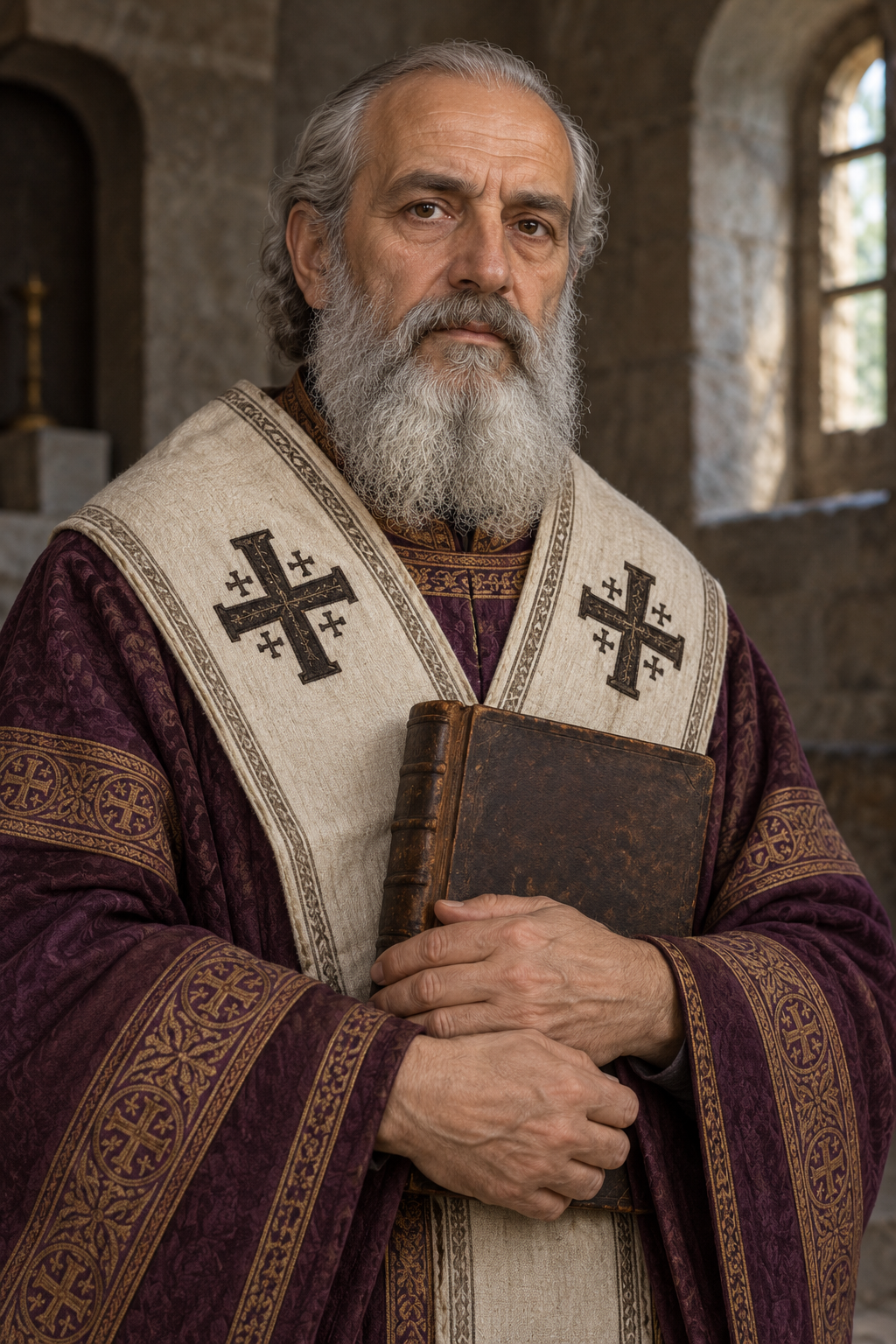
About Euthymius of Tarnovo
Euthymius of Tarnovo was a monk, writer and patriarch whose life connected the work of translating Christian books with the care of a community facing conquest. Born in Tarnovo, probably during the 1320s, he joined the circle of Theodosius of Tarnovo at Kilifarevo. Theodosius entrusted him with responsibility for the monastery while withdrawing to a more secluded life of prayer.
He accompanied his teacher to Constantinople in 1363. After Theodosius died, Euthymius stayed at the Studion monastery and later traveled to Mount Athos. His journey included a period of exile on Lemnos. The received account attributes that punishment to a false accusation that he was hiding royal treasure; it is part of the story transmitted by his admirers. He eventually returned to Bulgaria and gathered disciples around a church dedicated to the Holy Trinity near Tarnovo.
The principal account of his life is a panegyric written by Gregory Tsamblak, who became metropolitan of Kyiv. Roger Bernard explains that the work was composed after Tsamblak received that office. Its purpose and language are those of religious praise. It preserves an extensive portrait of Euthymius’s spiritual world, but the story becomes difficult to follow historically after his final exile.
Book work continued alongside pastoral responsibility. Euthymius was elected patriarch in 1375 and wrote letters answering questions from other churchmen. The Orthodox Encyclopedia identifies four surviving letters and four saints’ Lives whose titles name him as author. They concern John of Rila, Hilarion of Moglena, Paraskeva and Philothea. Other writings have been attributed to him with varying degrees of confidence, so a list of everything later attached to his name would overstate the securely identified body of work. His correspondents included Cyprian, Anthim of Wallachia and Nicodemus of Tismana, linking his teaching with other Orthodox communities.
His name is often linked to a comprehensive reform of Bulgarian spelling and literary language. The extent of that reform is disputed. Kiril Kabakchiev reads the testimony of Constantine of Kostenets and Gregory Tsamblak differently: he argues that it supports a new translation of the Pentateuch, rather than the linguistic and orthographic reform often reconstructed from those sources. This is a scholarly interpretation of the evidence, not a reason to deny Euthymius’s activity as a translator.
His liturgical work included a service book translated from Greek, with the liturgies of John Chrysostom and Basil the Great and the Liturgy of the Presanctified Gifts. The Orthodox Encyclopedia records three surviving manuscripts of this book. It also notes that one may have contained a revised form of the Synodikon of Tsar Boril, an attribution it presents cautiously.
His pastoral authority also involved conflict. Tsamblak depicts him driving out religious opponents and canceling an annual festival near Tarnovo because he believed it encouraged sexual misconduct. The same narrative praises his concern for poor people and hospitality. These episodes show the terms in which his admirer understood a patriarch’s duties: assistance to those in need alongside discipline and the defense of Orthodox teaching.
When Tarnovo fell to the Ottomans in 1393, Euthymius remained with the people. Tsamblak describes the killing of 110 leading citizens and a threatened execution of the patriarch himself. In the account, the executioner’s hand becomes powerless and Euthymius is spared. The miraculous reprieve belongs to the hagiographic narrative; it should not be presented as an independently established event. The story then follows the patriarch into exile, separated from people who sought his final blessing.
The final place and date of his death are less certain. Bachkovo monastery is the usual identification, but the evidence has been debated. Dan Ioan Mureşan reviews a disputed burial inscription dated 1404 and discusses the possibility that it records a reburial rather than a death. On that reading, Euthymius may have died around 1402. The Orthodox Encyclopedia instead gives a possible range extending to 1409, underlining the uncertainty of a precise chronology.
The dispute about his remains continued into modern times. In 2023 the Bulgarian Holy Synod formally affirmed the relics discovered at Bachkovo in 1905 and established a feast for their glorification. Its message acknowledged the long controversy while announcing the church’s decision. This establishes the position of the Bulgarian Orthodox Church; it does not turn every proposed medieval date into a settled historical fact.
The same message invokes Euthymius as a heavenly patron and intercessor for Orthodox Bulgarian people. His commemoration thus includes a living relationship between a church community and its remembered patriarch. The scope is specifically that community, rather than an unsupported claim that every Bulgarian shares the devotion.
His written legacy also outlasted the fall of his city. Mureşan traces the transmission of Euthymius’s literary heritage through Athonite and Moldavian connections, including manuscripts copied by Gabriel Uric in the early fifteenth century. The movement of those books offers a concrete measure of his continuing influence: texts associated with his work were preserved and read beyond the political world in which he had served.
Wondering how to weigh the stories and sources? Learn how to read a saint biography.