Biography
Euthymius the Athonite
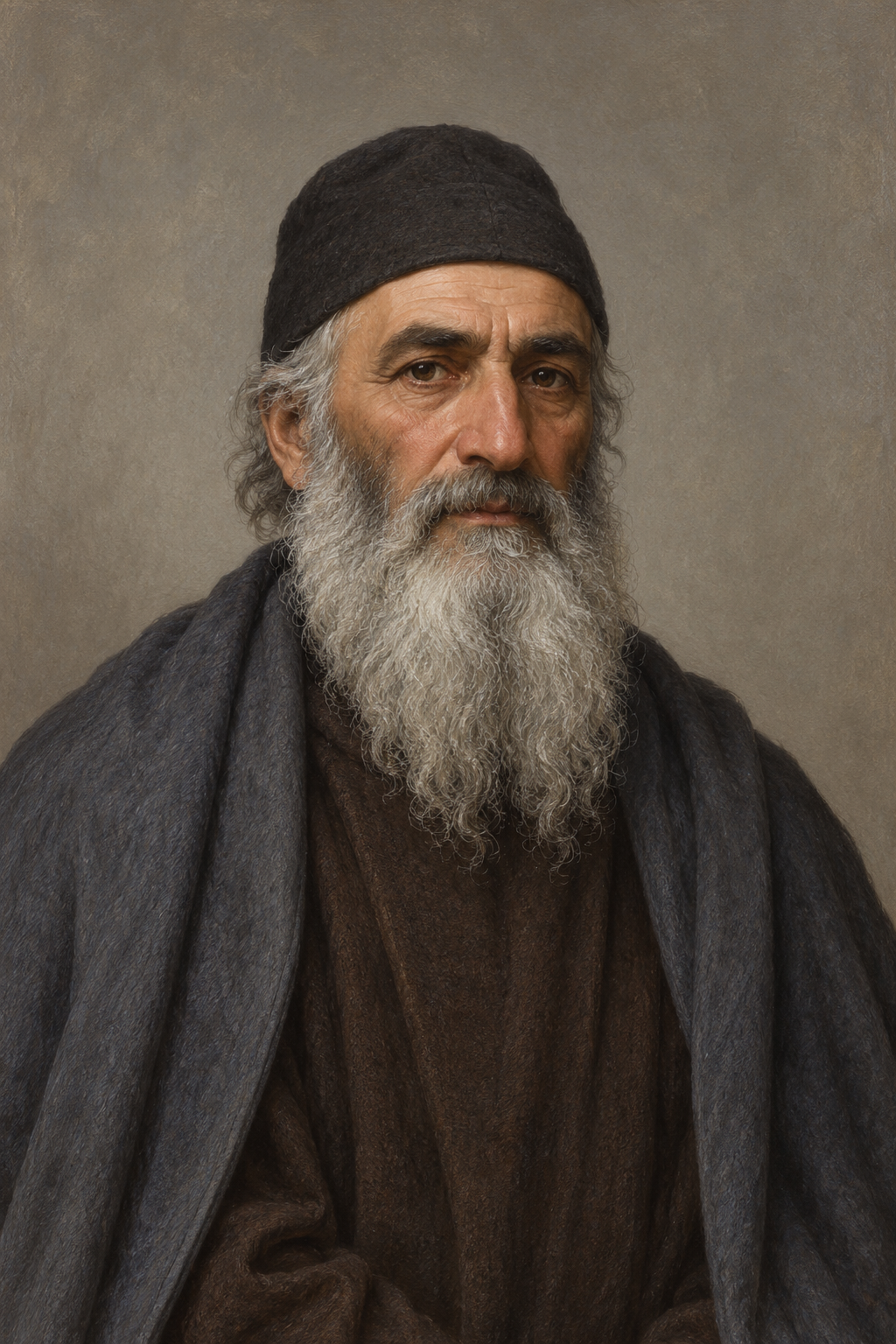
About Euthymius the Athonite
Euthymius the Athonite was a Georgian monk and translator who became abbot of Iviron on Mount Athos. His father, John, had entered monastic life before him. The Georgian Encyclopedia records that Euthymius was among noble children held as hostages by the Byzantine emperor; John obtained permission to recover his son, and they settled at Athanasius’s Lavra.
After John’s death, Euthymius led Iviron from 1005 to 1019. His responsibilities included the care of a large monastic community and building work. He eventually relinquished leadership. George the Athonite later wrote an account of his life and work.
His writing served the needs of worship and community life. He translated biblical and patristic texts, compiled a Short Synaxarion and produced a monastic rule. His work also included a concise collection of church law. These undertakings placed study alongside the practical responsibilities of an abbot.
Translation did not always mean following an original line by line. Scholar Ketevan Bezarashvili distinguishes two methods in his work: close adherence to Greek wording and substantial changes to the arrangement of a text. Her study examines these approaches in the writings of Gregory the Theologian that Euthymius gathered and translated.
Surviving manuscripts allow scholars to investigate how this labor developed. Ekvtime Kochlamazashvili studies passages from Maximus the Confessor’s Four Hundred Chapters on Love preserved in Georgian anthologies. Their copyists do not name the translator. The attribution to Euthymius rests instead on the passages’ proximity to his other translations and on characteristic additions, omissions and adaptations. It is a scholarly conclusion, not a signature discovered on the page.
The copies range from the thirteenth century to much later manuscripts. Comparing excerpts with complete translations of other works, Kochlamazashvili proposes that Euthymius first selected and translated useful passages, then returned to some texts more fully. This suggests a working process shaped by immediate needs as well as longer projects. A complete translation of Maximus’s collection remains only a possibility: none survives, and contemporary lists do not record one. The fragments therefore extend knowledge of his work without establishing every stage of its history.
He also translated in the opposite direction, from Georgian into Greek. Christian Høgel identifies the story of Barlaam and Ioasaph as a major example. Euthymius drew upon Greek Christian writings to reshape the narrative for a Byzantine readership. His task involved selection and composition as well as knowledge of two languages.
The story itself had traveled across religious and linguistic boundaries. Encyclopaedia Iranica traces its Buddhist origins and its transformation into a Christian account of a prince instructed by an ascetic. Its Greek version helped carry the tale into the literature of medieval Europe. The story’s wide reception belongs to the history of Euthymius’s literary influence, rather than to the events of his own life.
The later readers of this narrative were spread far beyond Athos. Jes Asmussen’s account in Encyclopaedia Iranica describes Latin and other European translations, a German poetic version by Rudolf von Ems, and an Old Norse translation commissioned by King Haakon Haakonsøn. The tale also entered the Golden Legend. Such adaptations gave the story new settings and audiences centuries after Euthymius had worked on it. His place in this transmission was a particular one: he rendered a Georgian Christian narrative into Greek, rather than composing the entire story from the beginning.
Høgel argues that Euthymius used material from the collection of saints’ lives associated with Symeon Metaphrastes. He suggests that collections of excerpts helped the translator work. This offers a glimpse of a scholarly practice in which reading, gathering and rearranging texts formed part of monastic labor.
Høgel connects his resignation as abbot with renewed concentration on translation. He also distinguishes Euthymius’s use of earlier wording from a search for additional historical information. Familiar phrases could give a newly arranged story the sound and religious setting that its readers recognized. The surviving text thus records choices about literary form as well as language.
His reputation as a translator also entered worship. Eka Dughashvili examines a Greek service preserved in a manuscript at Georgia’s National Centre of Manuscripts. Platon Ioseliani copied it during a visit to Athos in 1849. Within it, a hymn attributed to Manuel the Rhetor celebrates Euthymius as a monk and translator of Scripture into Georgian. The praise belongs to later liturgical remembrance; it is not a contemporary description of his daily routine.
Dughashvili places Manuel in the fifteenth and sixteenth centuries and suggests that patrons from Samtskhe encouraged this commemoration while supporting Iviron. That proposed connection remains an interpretation of the surviving evidence. The hymn nevertheless shows how a community remembered Euthymius long after his death, especially through monastic discipline and the work of making Christian texts available in Georgian. Its use for his May 13 commemoration joins the history of his books to the continuing prayer of the monastery.
The Georgian and Greek Orthodox Churches honor Euthymius as a saint. His feast falls on May 13 in the Julian calendar.
Wondering how to weigh the stories and sources? Learn how to read a saint biography.