Biography
Euthymius the Great
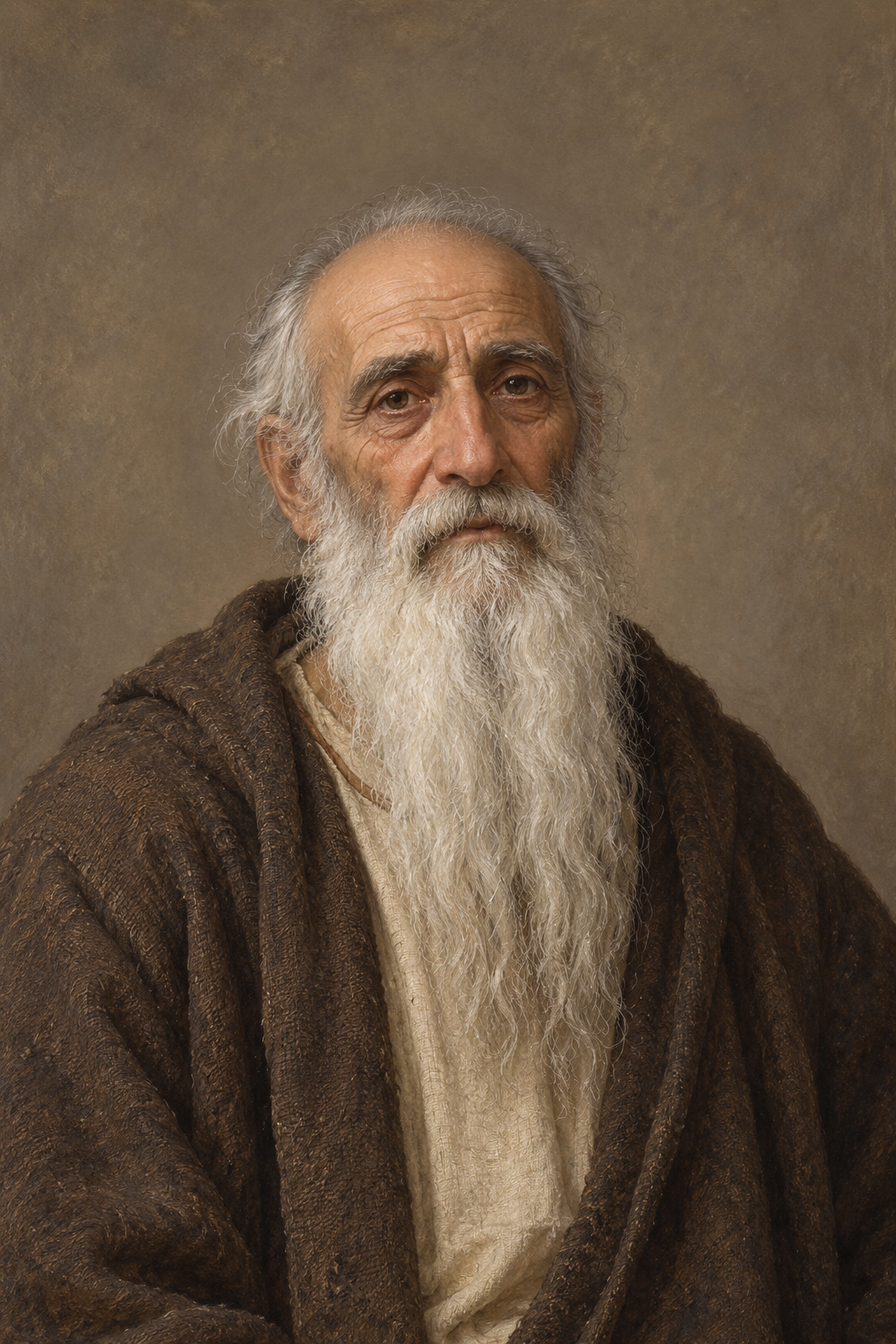
About Euthymius the Great
Euthymius the Great was a priest and monastic leader whose search for solitude helped shape Christian life in the Judaean desert. He came from Melitene in Lesser Armenia, where Bishop Otreius educated and ordained him and entrusted him with oversight of local monasteries. He later left for Jerusalem and joined the monastic settlement at Pharan.
There he formed a close friendship with Theoctistus. The two withdrew into the wilderness together, but visitors eventually discovered their retreat and a community gathered around them. Euthymius placed its daily supervision in his friend’s hands. The Orthodox life remembers him teaching monks to work for their livelihood, pray while working and avoid making a display of unusually severe fasting.
Basket weaving supported his early life in the desert. His friendship with Theoctistus also included regular journeys away from settled monastic life after the feast of Theophany. The Orthodox account presents their withdrawal as a shared discipline, sustained by affection as well as a common desire for prayer.
Their communities offered different settings for monastic formation. Newcomers could learn a shared rule under Theoctistus, while more experienced monks lived in the lavra associated with Euthymius. When the young Sabbas arrived, Euthymius sent him to Theoctistus’s community for training. The relationship between the two elders thus shaped the formation of another important monastic teacher.
His ministry also reached Arab communities. Christian tradition links the conversion of the leader Aspebetus with the healing of his son Terebon. Aspebetus later became a bishop and attended the Council of Ephesus in 431.
The Patriarchate of Jerusalem remembers Euthymius’s intervention with its patriarch on behalf of the new Arab bishop, known as Peter. His role extended beyond receiving individual disciples to helping establish church leadership for their wider community.
The communities also depended on relationships with people who supplied land, buildings and money. Historian Daniel Neary emphasizes the importance of Peter’s financial support and the close involvement of his family in the monasteries. The lavra stood near an established pilgrimage road between Jerusalem and Jericho, a setting that complicates any picture of complete isolation. Neary reads its history as an encounter between ascetic aims and the influence of powerful benefactors. He also questions Cyril’s efforts to minimize the connections between Euthymius and Eudocia. Monks associated with Euthymius received appointments through the empress, even while Cyril describes their teacher resisting further meetings with her. Neary suggests that Cyril’s later religious commitments helped shape this portrayal. This is a modern interpretation of a partisan narrative, rather than direct evidence of every motive behind the relationships. It usefully draws attention to the practical support without which a desert community could scarcely endure.
The early foundation needed more than separate cells. Meimaris lists a cistern, a bakery and a small chapel among the facilities attributed to Peter’s building work. Water, food and common worship gave the monks the means to remain in their chosen place. The account thus places the material needs of the settlement alongside its spiritual purpose. It also records the arrival of Martyrios and Elias, refugees from Nitria, showing how the monastery received people formed in another center of ascetic life.
Euthymius supported the Council of Chalcedon in 451. His standing among monks helped bring acceptance of its teaching, and he influenced Empress Eudocia’s return to communion with its supporters. The Orthodox account preserves a demanding image of his leadership, emphasizing obedience and steadiness in monastic life. It also remembers his final instructions as a call to love, humility, hospitality and practical help for the poor. He died on January 20, 473.
Much of his story comes through Cyril of Scythopolis, who lived at Euthymius’s monastery in the sixth century and wrote after the founder’s death. Archaeologist Yiannis Meimaris explains that the identification of the ruins at Khan el-Ahmar rests chiefly on Cyril’s topographical account, supported by medieval pilgrims’ descriptions. The site therefore connects written remembrance with a surviving monastic landscape.
After Euthymius died, his community was reorganized as a monastery with a shared daily life. A new church was dedicated in 482. The later buildings and successive alterations belong to the continuing life of his foundation, rather than all dating from his own years there.
The surviving monastery has been investigated in several stages. Excavations in the twentieth century exposed a site with buildings from both the Byzantine and Crusader periods. Creighton University’s archaeological overview records destruction in an earthquake in 659 and extensive rebuilding in 1150. Such changes help explain why the ruins cannot be read simply as an intact setting for the founder’s daily life. They preserve the later community’s repeated efforts to repair and continue a place associated with him.
His January 20 feast is kept in Jerusalem on the Julian calendar. The patriarchate also maintains a monastery dedicated to him in the Old City, distinct from the desert ruins.
Wondering how to weigh the stories and sources? Learn how to read a saint biography.