Biography
Eva Lee Matthews
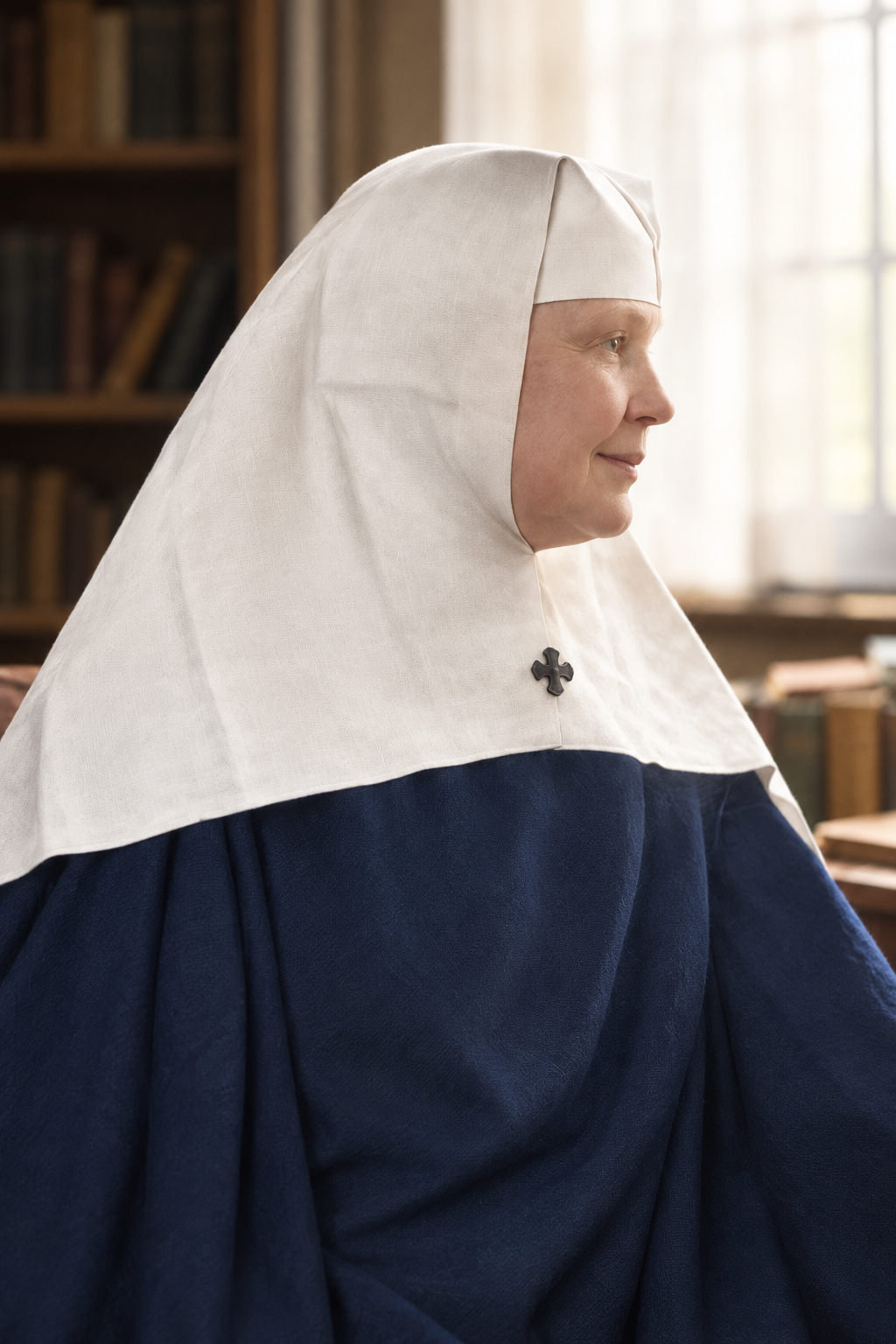
About Eva Lee Matthews
Eva Lee Matthews helped establish a religious community in which prayer and the care of children belonged to the same daily life. Born in Glendale, Ohio, on February 9, 1862, she grew up in a Presbyterian family. She attended Wellesley College, but fragile health brought her time there to an end. Her sister’s memoir describes an eager reader who continued studying after leaving college. That account is affectionate family testimony, written after Eva’s death, rather than an impartial record of every stage of her life.
Her sister recalled childhood stories written for younger siblings and hours spent reading aloud while their mother sewed. At Wellesley, Eva explored English and French literature and studied Latin and Greek. After illness ended her college attendance, the Congressional Library in Washington supplied books for her continuing studies.
Bishop Irving Johnson remembered meeting her in Oxford in 1890, when she accompanied her brother Paul and was still Presbyterian. Later, in their work together in Omaha, he discussed her developing vocation to religious life. She considered entering an existing order, but also hoped for a community shaped by Anglican worship and a generous understanding of personal freedom. Johnson described her ideal as disciplined without reducing its members to mechanical obedience. The Book of Common Prayer was to hold a central place, and devotion to Christ was to give discipline its purpose.
His recollections emphasize the character of leadership as much as the structure of the community. He remembered reverence joined to humor and an unwillingness to confuse obedience with servility. These were the impressions of a friend and spiritual adviser who admired her, and his account should be read with that closeness in mind. It nevertheless preserves an important part of her founding intention: a common life could demand sacrifice while allowing individual gifts and personalities to flourish.
With Beatrice Henderson, Eva developed work among mothers and children in Cincinnati. Their religious vows on August 6, 1898, formally established the Community of the Transfiguration. Eva became Mother Eva Mary. The community understood Mary and Martha of Bethany as complementary examples of prayer and service. Bethany Home moved to Glendale in the summer of 1898, and its children initially attended public schools. A boarding school developed later.
The same history records Eva’s life vows in 1903 and Beatrice’s in 1904. As the community grew, branch houses extended its work in education and care. Some served Ohio communities during Eva’s lifetime; many other foundations belonged to later decades. Her legacy should therefore include the direction she helped establish without making her personally responsible for everything her successors undertook. The sisters describe prayer as the continuing center of their shared life, sustaining practical ministries rather than competing with them.
Paul Matthews, Eva’s brother and the community’s chaplain general, left a particularly concrete account of the children’s village completed near the end of her life. He described houses for different age groups, an infirmary, a refectory, a library, and rooms for music practice. A small shop and savings bank gave the children experience in handling money. His description presents a home concerned with ordinary development and daily comfort as well as religious formation. It also records what remained unfinished: the new schoolhouse and chapel were still being completed when he wrote.
Paul’s description also includes the pleasures of the children’s surroundings. The contractor gave them a fountain with a jet that kept a ball dancing above the water. The cottages had shared rooms with pictures and music, while older girls had rooms of their own.
Paul remembered his sister’s satisfaction at seeing much of this work realized despite years of ill health. His afterword, dated in 1928, speaks of her eventual burial beneath the chapel altar as a future intention. It cannot by itself establish when that burial took place. The distinction matters in tracing a foundation that continued to develop after its founder’s death.
Eva died in Denver, Colorado, on July 6, 1928. Her sister’s book closes with a notice naming the place and date. The work she left was both an institution and a pattern of daily life: worship, shared responsibility, and attention to children’s needs.
The community’s educational legacy later took another form in North Carolina. A 2016 account by conservation worker Peter Barr reports that the sisters protected 410 acres at Bat Cave through a conservation easement and transferred ownership of 368 acres to Carolina Mountain Land Conservancy for a teaching and research reserve. Discussions had begun in 2008, long after Eva’s death. The project joined protection of streams, woodland, and wildlife with opportunities for students to learn outdoors. These decisions belonged to her successors, who described education and service as continuing purposes of their community, rather than to a conservation plan left by Eva herself.
The Episcopal Church remembers Eva Lee Matthews on July 6.
Wondering how to weigh the stories and sources? Learn how to read a saint biography.