Biography
Evaristus of Studion
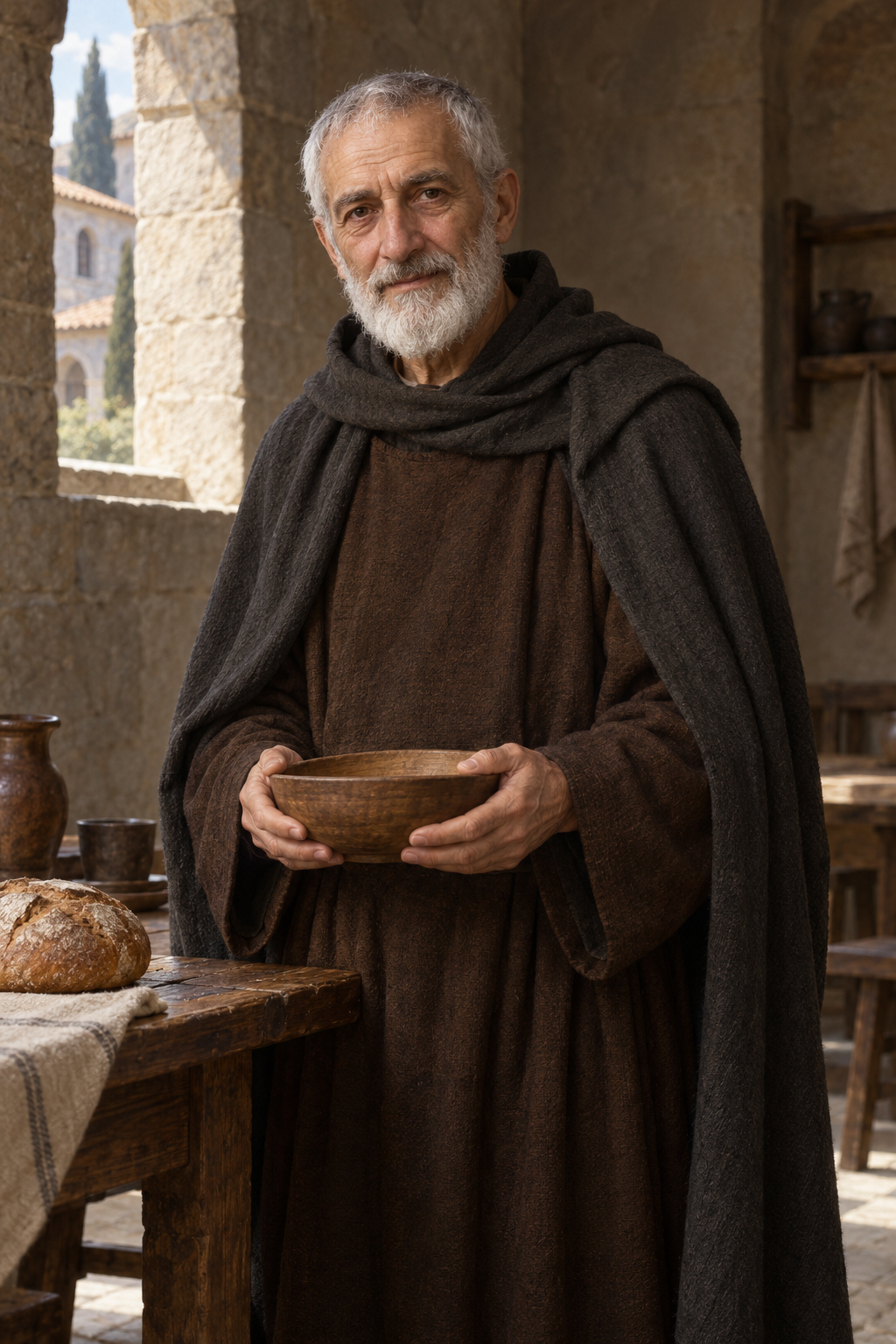
About Evaristus of Studion
Evaristus was a Byzantine monk who served at Studion before leading the monastery of Kokorobion in Constantinople. Born in Galatia on April 17, 819, he was baptized Sergios. As a young man he accompanied his father to Constantinople and entered the service of a relative by marriage, the official Bryainios.
His Life describes an attentive schoolboy who preferred study to other children’s activities. During the visit to Constantinople, he and his father went to churches and holy places before his father returned home. The young man remained with Bryainios, whose trust in him led to a place among his staff. These details place his monastic vocation within a life that had already offered opportunities for secular employment.
The Finnish Orthodox account describes a turning point during a diplomatic journey toward Bulgaria. Reading a discourse attributed to Ephrem the Syrian on the Last Judgment stirred his desire for monastic life. He left his companions and sought out an ascetic named John. After six months, John sent him to Studion with a letter of recommendation.
At Studion he received the name Evaristus and worked in the refectory. He briefly withdrew to an island with another monk, but the abbot Naukratios recalled them. Under Naukratios’s successor Nicholas, Evaristus held a senior assisting office for about ten years. Its title is ambiguous: scholars have interpreted it as deputy steward or deputy abbot.
The Finnish account gives his new name the meaning of being pleasing or acceptable. It also describes his close companionship with Eubiotos: they shared long periods of night prayer yet joined the community’s morning worship. Scripture study accompanied their work and fasting. These descriptions belong to the received portrait of their ascetic life, illustrating the practices through which the tradition remembers Evaristus’s early years as a monk. Their diet included oat bread and juice.
The account links his advancement to everyday conduct. It presents his work in the refectory as a test of character and describes him as willing to undertake the tasks assigned to him. When asked for counsel, he reportedly gave prudent answers. This is the community’s favorable portrait of his service, rather than a surviving administrative record of his duties.
The dispute over the patriarchate then disrupted the community. Evaristus left Studion with monks loyal to Nicholas, who would not recognize Photius. Samuel, a lay supporter, sheltered Evaristus and his companion Paphnutios. When Nicholas became ill, Evaristus joined him at Hexamilion and later accompanied him to an audience with Emperor Michael III.
This episode should not be reduced to a simple account of persecution. Historian Francis Dvornik notes that the Life of Evaristus describes the church quarrel discreetly and allows the dissenting monks considerable freedom to find shelter and establish a community. Nicholas himself faced government restraint, but that does not establish the same treatment for every monk.
Dvornik points out that the biographer avoids naming either Photius or Ignatius in describing the quarrel. He also notes that other abbots continued governing Studion after Nicholas left. The monastery’s members therefore cannot all be assumed to have followed Nicholas into separation, even though Evaristus did so.
Samuel provided property for the monks at Kokorobion. The Finnish church account remembers Evaristus remaining there when Nicholas returned to Studion. As the community’s abbot, he enlarged its buildings while keeping his own cell small. It also remembers him distributing what the monastery did not need to poor people and receiving visitors warmly. The monastery’s church was dedicated to the Virgin Mary.
According to the Life, Nicholas appointed Evaristus to lead Kokorobion before his own death, with Paphnutios as steward. Evaristus’s leadership thus continued a companionship formed during the monks’ displacement. The same narrative remembers him teaching and advising people who came to him, combining a demanding personal discipline with gentleness toward visitors. The prosopographical account dates this appointment to early 868, placing his leadership after years of service under Nicholas.
Most details of his later years come from an anonymous Life preserved in a tenth-century manuscript (Paris.gr.1171). Scholars disagree about when its author wrote, although some passages suggest personal knowledge of Evaristus. The work includes healings and prophecies; these belong to its account of sanctity and cannot be independently verified.
The Orthodox Encyclopedia reports that Kokorobion commissioned the Life, probably for presentation on the saint’s feast. The text thus preserves the memory of the community he led. It also indicates that Evaristus had become a priest by the time he was abbot, but does not identify who ordained him or when. His priesthood can be recognized without supplying an unsupported ordination date.
Evaristus died on December 25, 897. Accounts differ on whether his final illness ended at Studion or Kokorobion, where his remains were venerated. The Orthodox Encyclopedia records his principal commemoration on December 26, with December 28 and 29 in some calendars.
Wondering how to weigh the stories and sources? Learn how to read a saint biography.