Biography
Evermod of Ratzeburg
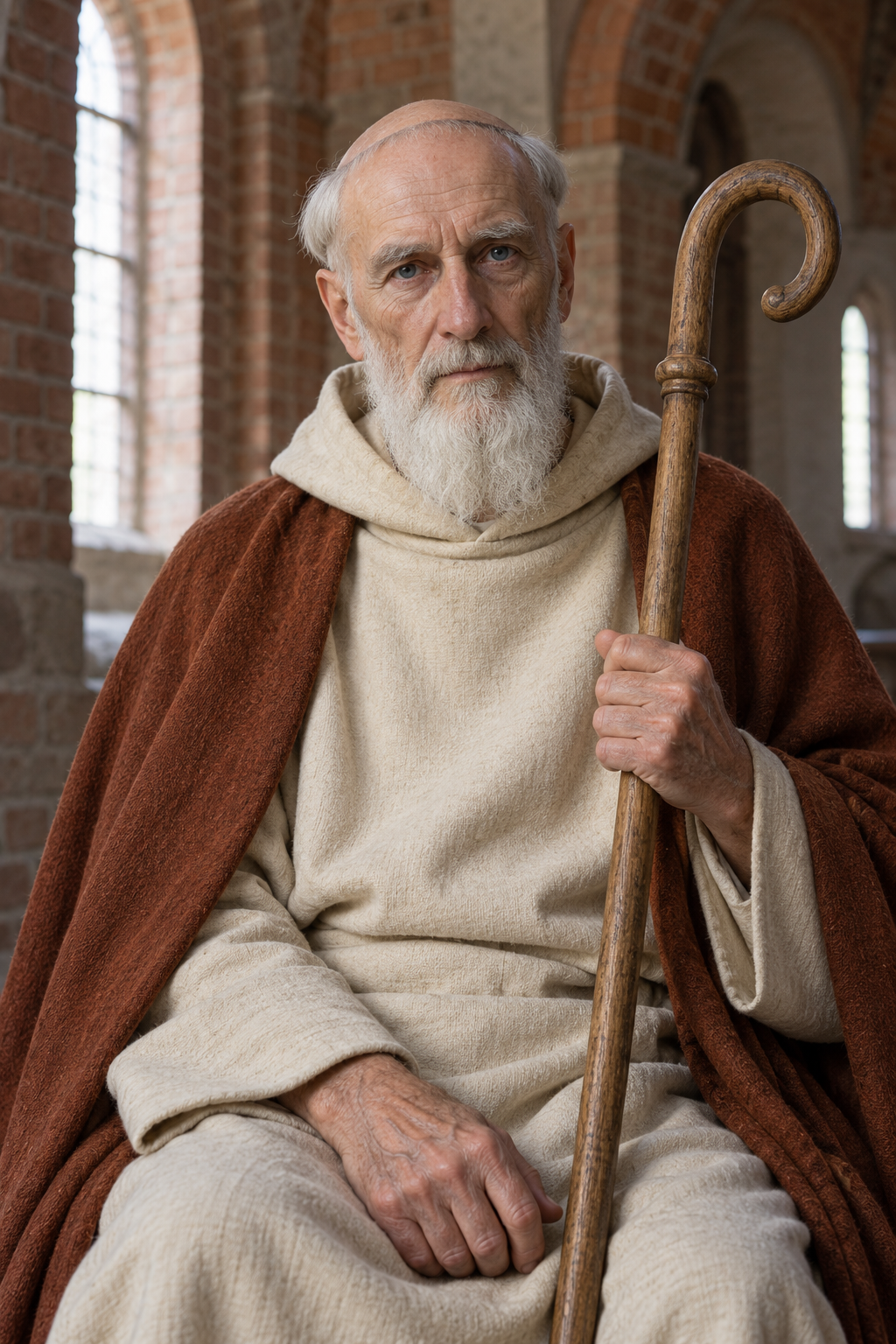
About Evermod of Ratzeburg
Evermod of Ratzeburg belonged to the first generation of followers of Norbert of Xanten. His early life is poorly documented, and even the place of his birth remains uncertain. The Norbertine tradition remembers him above all as a loyal companion who helped carry a new form of religious community from its beginnings into a wider field of service. When Norbert became archbishop of Magdeburg in 1126, Evermod accompanied him and worked alongside him.
One story places the beginning of that friendship at Cambrai. Evermod is said to have been so moved by Norbert’s preaching that, after the church emptied, he climbed into the pulpit and repeated the sermon himself. The episode conveys the enthusiasm with which his religious family remembered him; it is a received biographical story, not an independently verified account of his first meeting with Norbert. His priestly ordination by Norbert is likewise described as probable rather than certain.
He remained with Norbert until the archbishop’s death in 1134 and helped arrange his burial at the monastery of Our Lady in Magdeburg. From 1138 to 1154 he led that community. The shared life of the canons, shaped by the rule of Augustine, remained central to his work when he became a bishop and organized a Norbertine cathedral chapter.
Levāns connects Evermod’s religious formation with the demanding communal observance of the early Norbertines, including his association with Cappenberg. Their discipline and culture of reading helped shape the work of these communities. Yet enthusiasm for reform could also provoke criticism from contemporaries.
The diocese of Ratzeburg had a troubled earlier history. It was first established in 1062 but ceased to function in 1066, without its appointed bishop Aristo taking office. Its renewal in 1154 formed part of Henry the Lion’s reorganization of the region north of the Elbe. Evermod, formerly provost at Magdeburg, became the first bishop of this renewed diocese and remained in office for more than twenty years.
Helmold’s Chronicle gives a concrete account of the support provided for the bishopric. Count Henry supplied an island near the stronghold as a residence and surrendered land for the duke to grant as an endowment. Tithes were also assigned, with a portion returned to the count as a benefice. Evermod’s ministry therefore depended on arrangements with powerful lay rulers as well as on the life of his clergy.
The political setting requires care. Andris Levāns’s study accepts 1154 as the year of the diocese’s renewal while distinguishing that conclusion from unresolved questions about the legal steps involved. A document purporting to record a grant in 1158 cannot simply settle those questions: its text contains falsifications identified by modern diplomatic scholarship.
Evermod also appears in a quieter pastoral setting. When Bishop Vicelin died in 1154, the bishop of Ratzeburg was present at his burial at Faldera and celebrated the service.
Arnold of Lübeck preserves two stories about Evermod’s attempts to obtain mercy. In one, the bishop repeatedly asks Count Henry to release two imprisoned Frisians. At Easter, when the prisoners attend worship under guard, their iron restraint is said to break as Evermod sprinkles it with holy water. Arnold presents this as a miracle, reporting what he had heard from believers. The story records a tradition about intercession for captives, not independently established evidence of a supernatural release.
The other story is less comfortable. After a killing, Evermod pleads with the victim’s relative to forgive the offender. When prayers and entreaties fail, he strikes the man, who then agrees to reconciliation. Arnold praises the outcome and interprets it religiously, but the episode does not support a description of Evermod’s methods as invariably gentle.
Evermod died on 17 February 1178 and was buried in Ratzeburg’s cathedral. Pope Benedict XIII confirmed his cult in 1728. The Norbertines commemorate him on 17 February, remembering his fidelity to their founder and his work as a bishop.
Later religious art also associated him with prisoners. Sybe Wartena’s study identifies his representation at Osterhofen as that of a patron of captives, and lists a choir-stall scene showing him visiting a prison. This supports a qualified patronage rooted in that iconographic tradition.
Wondering how to weigh the stories and sources? Learn how to read a saint biography.