Biography
Faustina Kowalska
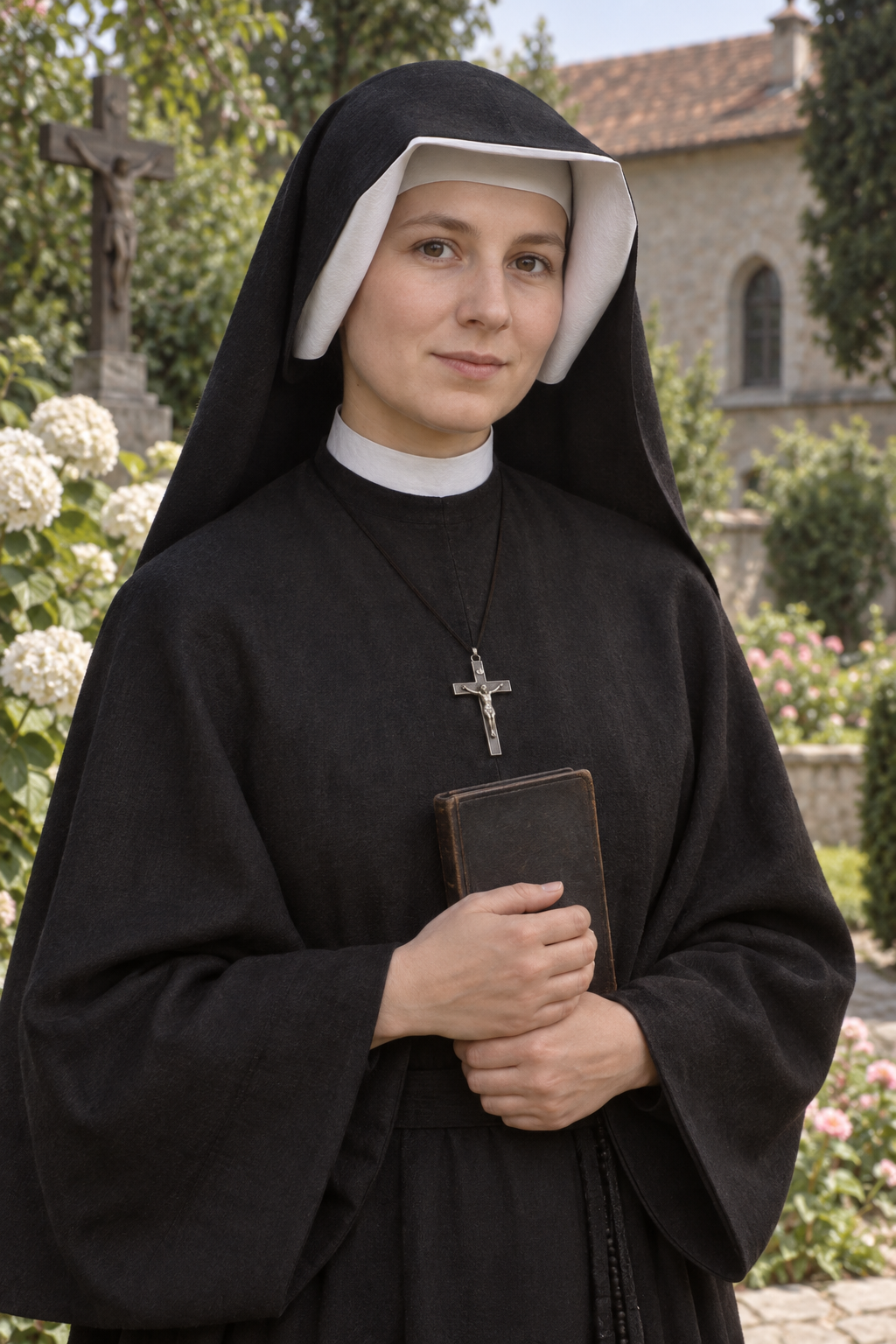
About Faustina Kowalska
Faustina Kowalska's work began far from the public recognition that later surrounded her name. Born Helena Kowalska in Głogowiec in 1905, she grew up in a farming family and received only three years of schooling. At sixteen she left home for domestic service, earning money for herself and helping her parents. She wanted to enter religious life, but her parents initially withheld permission. Household work and family obligations formed the setting in which she continued to consider that vocation.
In July 1924 she went to Warsaw to seek admission to a convent. The congregation's biography connects that decision with her reported vision of the suffering Christ. Acceptance still involved practical preparation: she worked for another year to save money for the modest possessions she would need. She entered the Sisters of Our Lady of Mercy on 1 August 1925. A desire she had carried for years was now taking the form of a shared religious life, with its own duties and discipline.
She received the name Faustina when she took the habit in 1926. Her first vows followed in 1928, and she made her perpetual profession in Kraków in 1933. These stages were separated by years of ordinary work in the congregation's houses. The official chronology records moves between communities and assignments in kitchens and a bakery shop. Her religious formation did not consist only of prayer or unusual experiences; it unfolded through jobs that other people depended upon being done.
Faustina's religious life included experiences she understood as encounters with Jesus and a call to make divine mercy better known. The Vatican biography describes a spirituality centered on trust in God and active care for other people. It associates her with the Divine Mercy image, chaplet and other forms of devotion. These claims describe her faith and the Catholic reception of her testimony; they do not turn her reported visions into independently observed events.
Giving visible form to the image required cooperation. In Vilnius she met the confessor Michał Sopoćko, and in January 1934 she began visiting the studio of Eugeniusz Kazimirowski with her superior. The painting was completed that June and was displayed publicly at the Gate of Dawn in 1935. A private experience had thus become the subject of discussions, artistic work and public worship, involving people whose roles were different from her own.
Writing became another part of this work. At the direction of her confessors and with her superiors' consent, Faustina recorded her experiences in notebooks while living in Vilnius and Kraków. She wrote between her duties and during time in hospital. The congregation's account of the manuscript explains that she reconstructed earlier material after destroying her first notes, so the surviving text does not always follow chronological order. Reading it as a spiritual record, rather than a continuous daily log, preserves the way she actually assembled it.
Her own prayer gives a concrete meaning to mercy. In Diary 163 she asks to look beyond appearances, listen to other people's needs and speak words of comfort rather than disparagement. She asks that her hands do good and that she be willing to take on difficult tasks. She also wants to help despite tiredness and to remain sincere even when kindness may be abused. The passage moves through eyes, ears, speech, hands, feet and heart, bringing a large religious idea into the small decisions of daily relationships.
Illness increasingly restricted her activity. The diocesan account from Łódź records recurring tuberculosis and a final stay in hospital before her return to the convent in Kraków. She died there on 5 October 1938. The same account places her within a network of remembered workplaces and communities, including the Łódź household where she had worked before entering religious life. Her story remained attached to particular rooms, streets and people, as well as to the spiritual writing for which she became known.
The reception of her work was not immediate or uncomplicated. The congregation's manuscript history describes errors in early typescripts and translations, and identifies them as one reason for restrictions on the devotion in 1959. Later work compared the text carefully with the notebooks. The restrictions were revoked in 1978. The first Polish publication of the Diary appeared in 1981. This history matters because the form in which readers encountered her testimony depended on the care taken by editors and translators after her death.
John Paul II canonized Faustina on 30 April 2000. In his homily he connected her witness with the suffering of the twentieth century and emphasized generosity, forgiveness and the dignity of each person. He also announced the name Divine Mercy Sunday for the Second Sunday of Easter. Her legacy was presented not simply as the spread of a devotion, but as an invitation to give mercy a practical place in human relationships. That connection between prayer and care for others remains central to the way the Catholic Church remembers her.
Wondering how to weigh the stories and sources? Learn how to read a saint biography.
Explore similar vocations
Prayers for Faustina Kowalska
Divine Mercy Prayer
Holy God, Holy Mighty One, Holy Immortal One, have mercy on us and on the whole world.
Jesus, I trust in You!
Saint Faustina, pray for us.
Faustina Kowalska: sourced prayer excerpt
May Your mercy, O Lord, rest upon me.