Biography
Felix of Nicosia
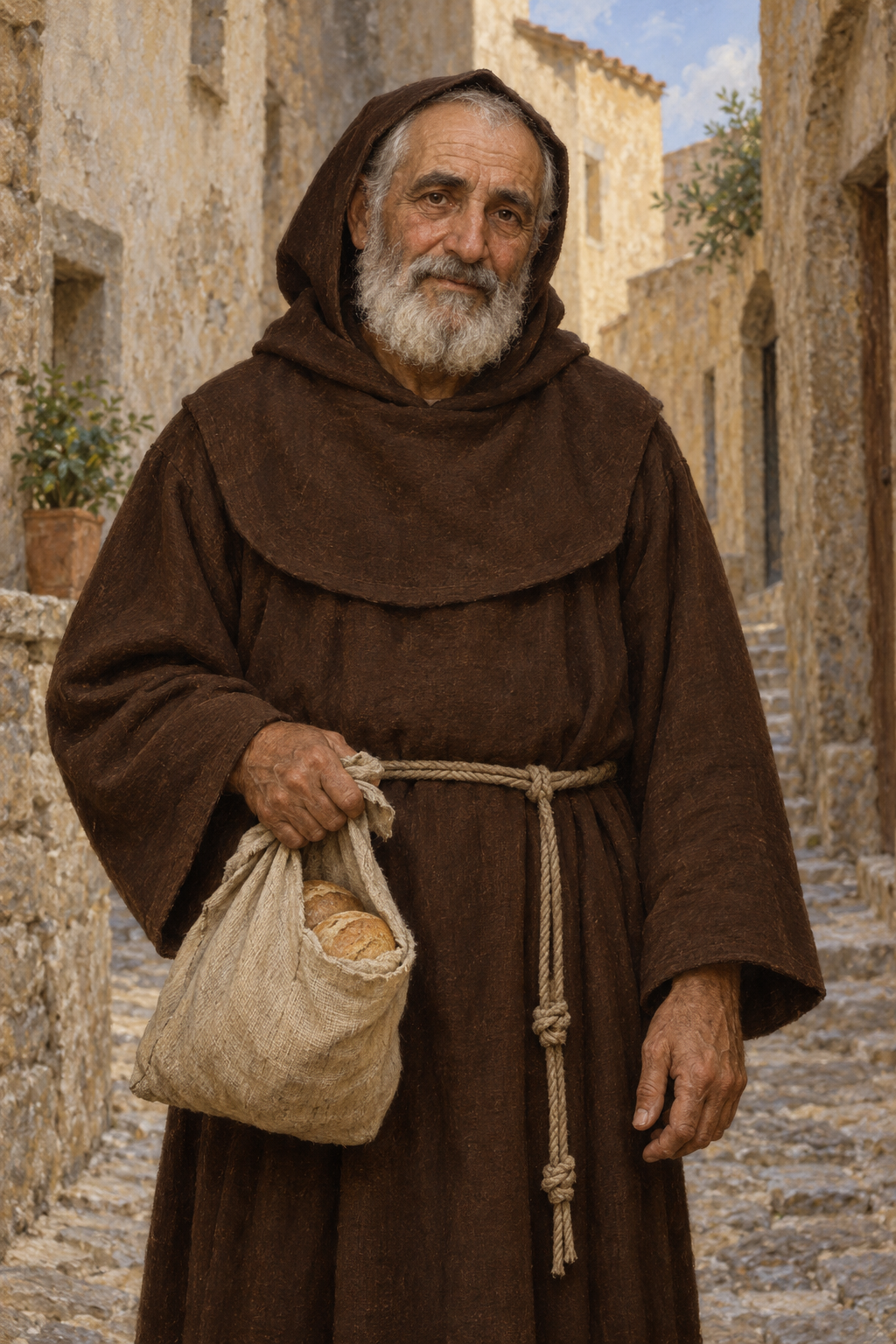
About Felix of Nicosia
Felix of Nicosia was born in the Sicilian town of Nicosia on 5 November 1715. The Holy See’s canonization biography names his parents as Filippo Amoroso and Carmela Pirro and says he was baptized that day as Philip James. His father, a shoemaker, had died shortly before the birth, leaving Carmela with three children. The family’s poverty shaped the kind of work available to him as he grew up.
As a boy he worked in a shoemaker’s workshop close to the Capuchin friary. He received no formal schooling, but regular visits let him observe the brothers’ prayer and service. At about twenty he asked to enter the order as a lay brother. The biography says that his request was refused repeatedly for eight years. Those refusals did not end his wish to join this particular community.
In 1743 the provincial minister finally accepted him and sent him to Mistretta for his novitiate. He took the name Brother Felix on 10 October that year and made his profession a year later. After profession, his superiors sent him back to the friary in Nicosia. The Holy See’s account remarks that assigning a new friar to his own hometown was unusual because family ties might distract him. Felix nevertheless spent the rest of his religious life there.
His main assignment was to seek alms. He walked through Nicosia asking those with resources to share them and offering comfort in households with less. The Vatican City Governorate describes this as about forty years of work among the town’s people. The Capuchin general minister later emphasized that Felix met prisoners, children, labourers and people who were ill through those rounds.
The canonization biography reports that he could not read or write, but listened closely when Scripture and devotional books were read in his friary and when sermons were preached in the churches of Nicosia. It describes his devotion to the crucified Christ and the Eucharist. Those practices explain how he learned and prayed without printed books of his own. The biography includes accounts of strict fasting and long vigils; these belong to a devotional portrait of his life and should not be prescribed as a model of health.
Felix’s ordinary response to people also became part of his memory. The Holy See’s biography says that he thanked those who gave to him and answered harsh dismissal with patience. A Capuchin letter written in 2015 presents him as a brother who tried to meet very different people with care. That later assessment is the order’s own interpretation, but it rests on the daily work remembered in the canonization account.
Near the end of May 1787, Felix developed a fever while working in the friary garden. The Holy See’s biography says he was ordered to rest and died at about two in the morning on 31 May. The Capuchin minister’s letter gives the same date and hour. These late accounts do not disclose a contemporary medical record, so the illness is best described only at the level they preserve.
Leo XIII beatified Felix in 1888. Benedict XVI canonized him on 23 October 2005, calling attention the following day to the value of daily duty and quiet service. The pope’s remarks connect Felix’s remembrance to ordinary acts performed faithfully, not to public office or formal learning. The order’s 2015 reflection likewise treats his lay vocation as a full religious calling. He remains significant as a brother whose work of asking, sharing and listening kept him close to the needs of his neighbours.
Wondering how to weigh the stories and sources? Learn how to read a saint biography.