Biography
Felix, Regula and Exuperantius
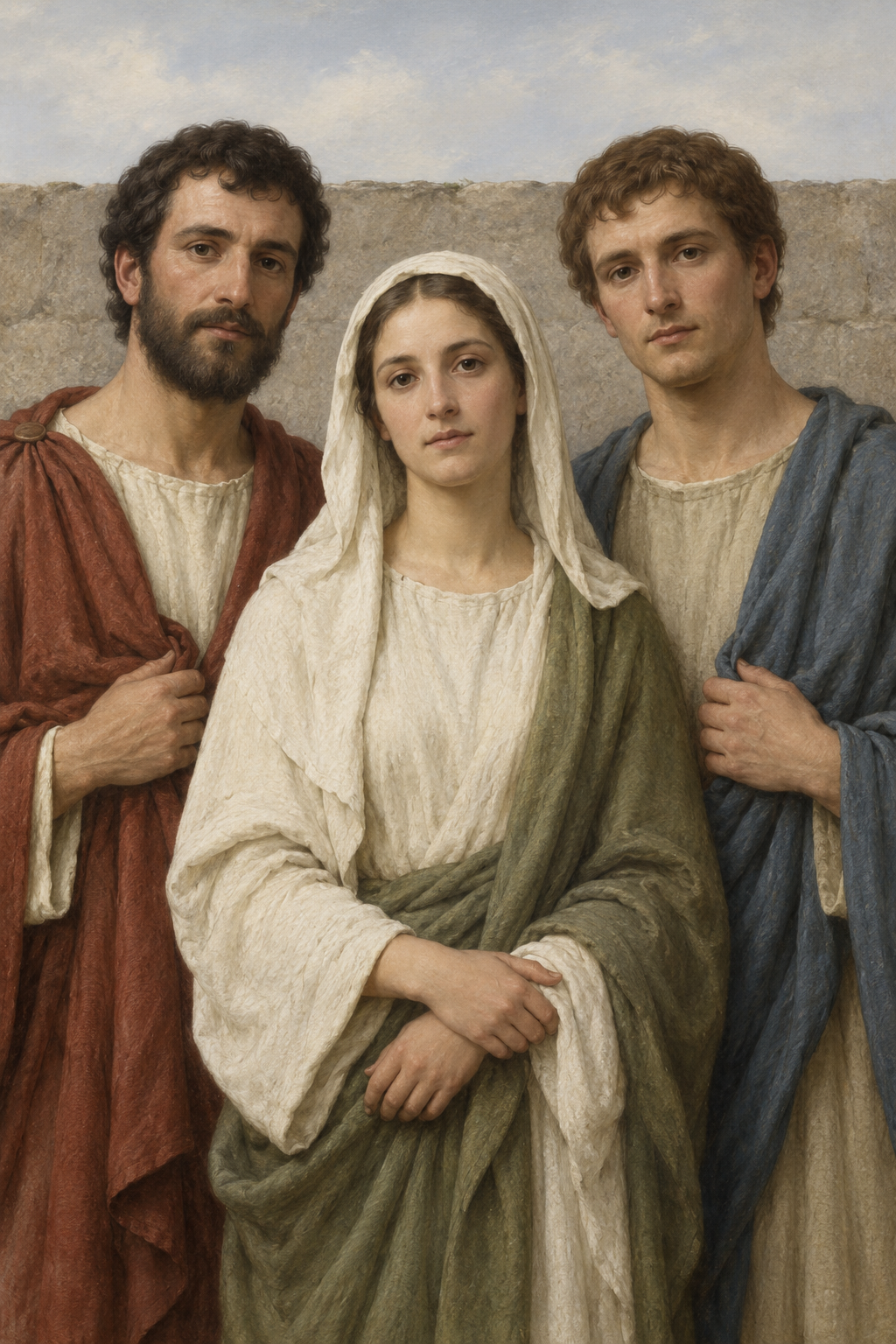
About Felix, Regula and Exuperantius
Felix, Regula and Exuperantius are remembered together as patrons of Zurich, but their names entered the city’s tradition at different times. The Historical Dictionary of Switzerland identifies a late eighth-century Passion by a writer called Florencius as the earliest witness for Felix and Regula. Exuperantius appears as a third patron only in the thirteenth century. There is no surviving contemporary account from an alleged Roman-era martyrdom. The profile therefore follows the history of the cult rather than presenting the three as securely documented companions.
The early Passion says Felix and his sister Regula escaped the destruction of the Theban Legion and reached Roman Zurich by way of Glarus. It describes their torture and beheading under a governor called Decius, followed by the wonder of their carrying their heads to their chosen burial place. These are claims within a text written centuries after the events it depicts. Even the date and route of their supposed journey cannot be recovered from that story alone.
Zurich’s city archaeology guide presents the tale explicitly as legend. At the Wasserkirche, an archaeological crypt preserves the site long venerated as the place of their execution. The Grossmünster is traditionally associated with their burial. Material remains and later buildings can show where people worshipped and what they believed; they do not prove that the dramatic events happened in the way the Passion describes. The city’s guide also makes clear that the figure called their servant, Exuperantius, was added much later.
The cult shaped Zurich’s major medieval churches. Historian Joan Holladay describes the Grossmünster rising over supposed graves on one side of the Limmat and the Fraumünster, founded in 853, dedicated to the same saints on the other. Twelfth-century reliefs depicted scenes from the legend. By the thirteenth century Exuperantius appeared alongside the older pair. Holladay interprets these developments in the setting of competition between religious institutions, each using art and relic claims to express its standing.
The Historical Dictionary adds that the trio’s images appeared on Zurich coins and seals. The state archive still describes Felix, Regula and Exuperantius on the cantonal seal, with Regula in the centre. Its explanation explicitly calls their head-carrying an image from legend. The seal continued through political and religious changes, even after saintly images disappeared from coins at the Reformation. The imagery shows how a local religious story also became a civic emblem.
A humanist poem written in the early sixteenth century retold the trio’s martyrdom. The University of Fribourg edition places it in the long growth of the legend and again notes the thirteenth-century addition of Exuperantius. This later literature is valuable evidence for how Zurich remembered its patrons. It cannot independently turn Exuperantius into a person attested in the early Passion. The scholarly distinction between literary witness and ancient biography is especially important for a record bearing all three names.
The Reformation changed their public veneration. The Historical Dictionary records the suppression of the cult in 1524 and later claims that relics moved to Andermatt. A Catholic church dedicated to Felix and Regula opened in Zurich in 1950 and renewed local devotion. The city feast on 11 September also survived in civic memory. Different communities have therefore related to the saints through worship, architecture, calendars and public symbols in different ways.
The Catholic Church in Canton Zurich reports contemporary processions with Orthodox, Catholic and other Christian participation for the city patrons. Those gatherings demonstrate living devotion to the trio, even where the historical evidence for their supposed Roman lives is thin. A careful account can honour that practice while making the record clear: Felix and Regula first appear in an early medieval Passion; Exuperantius is a later addition; the head-carrying scene belongs to legend. Their shared place in Zurich’s memory is documented more strongly than their individual biographies.
Wondering how to weigh the stories and sources? Learn how to read a saint biography.