Biography
Fintan of Clonenagh
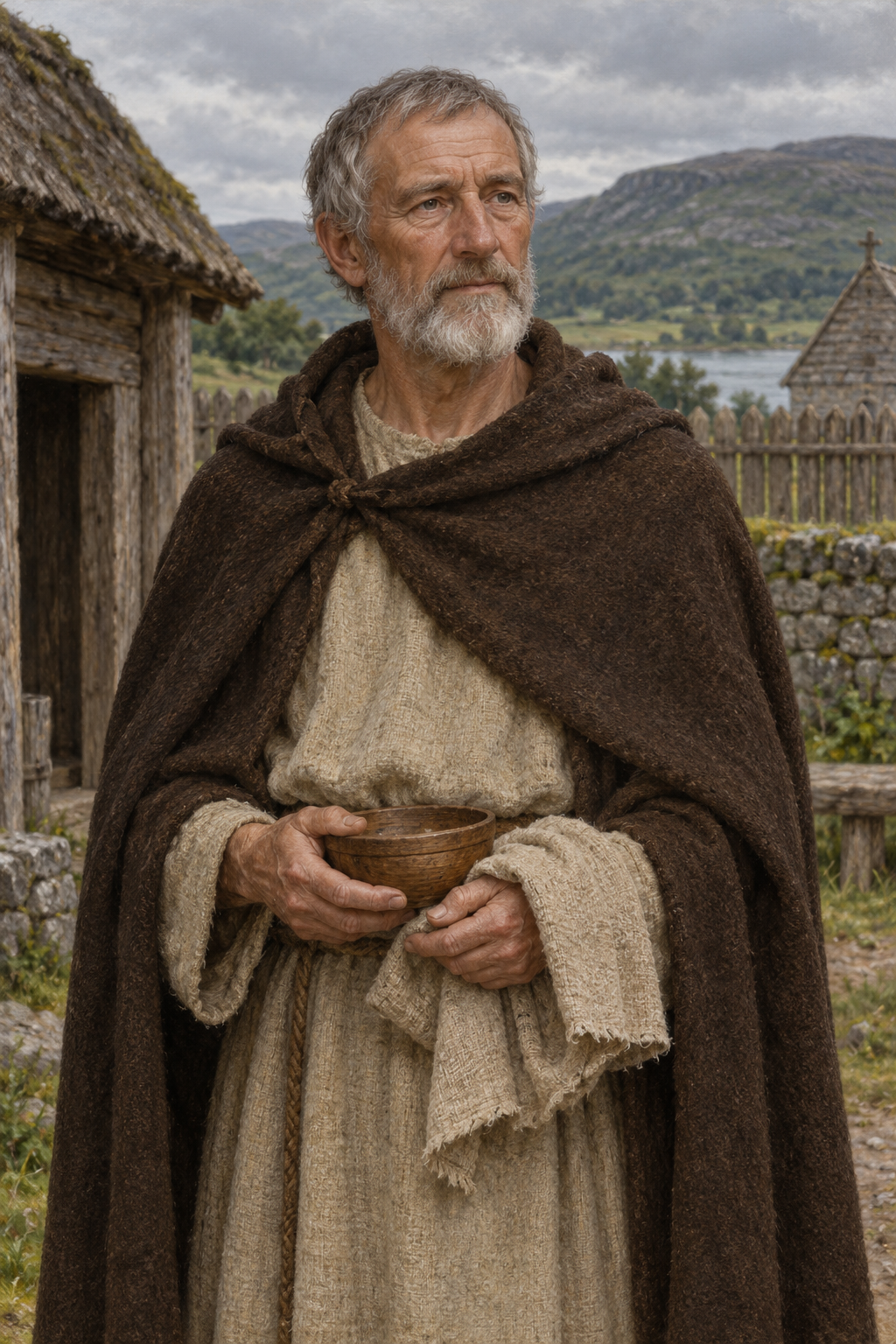
About Fintan of Clonenagh
Fintan of Clonenagh was an Irish abbot whose community grew in the region of today’s County Laois. Aidan Breen’s Dictionary of Irish Biography entry places his death in 603 and identifies him as the founder of the monastery at Clonenagh. An annal remembers him as abbot of Cluain Eidnech, an Irish form of the place name. These references give a firmer frame than the many later tales about his childhood.
Breen says that Fintan trained in religious life under Columba of Terryglass in County Tipperary. The Irish calendar commentary used by Universalis repeats that training tradition. Accounts of his family are less stable: different genealogies name different fathers. Rather than choosing one, this profile begins with the monastic setting that the better references share.
With disciples from Terryglass, Fintan established Clonenagh. Breen describes a rule marked by severe fasting and the exclusion of domestic animals and their products from the monastery. The New Catholic Encyclopedia likewise characterizes Clonenagh’s observance as unusually strict. This discipline is a historical feature of the tradition, but its extreme diet should not be recommended as a model for modern readers.
The medieval account says that other church leaders, among them Cainnech of Aghaboe, asked Fintan to ease the conditions for his monks. Breen reports that Fintan welcomed them and changed the community’s diet while continuing his own austerity. The episode presents a leader capable of listening when others challenged a burdensome practice. It comes through later hagiographic transmission, so its details should be held as tradition rather than an eyewitness meeting record.
The monastery nevertheless attracted many monks. A tract in the Book of Leinster calls Fintan the head of all the monks of Ireland, as Breen notes. Such language is praise, not a census or proof of authority over every monastery. The Dictionary of Irish Biography also mentions Fintan in a litany of pilgrim saints, interpreting his pilgrimage as renunciation within monastic life rather than a documented itinerary overseas.
The Fragmentary Annals place Fintan’s death under a heading marked 603, while the same line contains another number, 610. The entry calls him abbot of Cluain Eidnech and preserves a short verse attributed to Colmán son of Fergus. Its praise of his leadership is evidence for how the tradition remembered him. The conflicting numerals in the transmitted heading mean that the date deserves caution even though modern reference works commonly use 603.
Other early monastic traditions link Fintan with Comgall of Bangor. Breen’s biography of Comgall explicitly calls that early training a tradition. This is evidence of Fintan’s remembered influence, not proof that every feature of Bangor’s later life came directly from Clonenagh. The surviving Latin Lives of Fintan contain much semi-legendary material, according to Breen; they cannot fill every gap in his personal history.
Fintan is commemorated on 17 February in the Irish calendar. He remains associated with a community known for demanding discipline and for the debate over how strict a monastic rule should be. The detail that its rule was moderated, even in the later story, gives this remembrance a human tension: care for the community mattered alongside the founder’s chosen austerity.
Wondering how to weigh the stories and sources? Learn how to read a saint biography.