Biography
Flavian of Constantinople
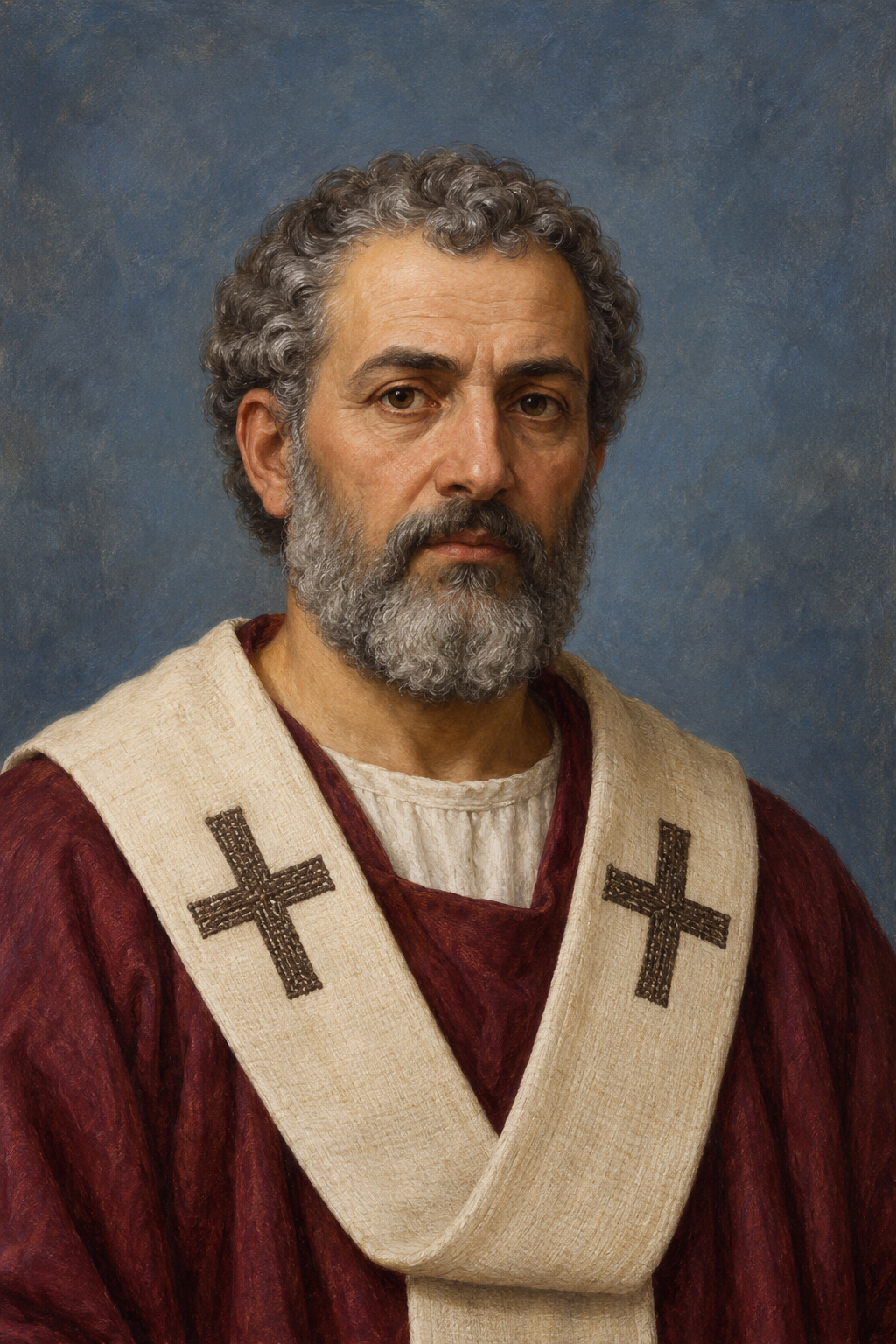
About Flavian of Constantinople
Flavian was a priest of Constantinople before succeeding Proclus as its bishop in 446. His short episcopate became entangled in the controversy surrounding Eutyches, a monk whose teaching about Christ was challenged by Eusebius of Dorylaeum. A synod under Flavian condemned Eutyches in 448, bringing the bishop into conflict with powerful supporters of the monk at the imperial court.
Pope Leo initially complained that Flavian had not referred the dispute to him. After receiving the proceedings, he supported Flavian’s position in the doctrinal letter known as the Tome to Flavian. The decision was nevertheless reversed at Ephesus in 449. Under Dioscorus of Alexandria, that council reinstated Eutyches and deposed Flavian, who appealed to Rome before his death.
Historian Rafał Kosiński describes Flavian seeking refuge in a sacristy at Ephesus because he feared for his life. He was eventually sent into exile at Hypaipa in Lydia, where he died. The chronology remains disputed: the familiar account places his death in August 449, shortly after his mistreatment at the council, while some scholars have argued for February 450.
The Orthodox Church in America’s devotional account remembers a violent assault by monks and describes Dioscorus as taking part. It honors Flavian as a confessor who suffered for his teaching. This is the church’s received account; the details of the attack should not be confused with a settled reconstruction of the date and immediate cause of death.
At Chalcedon in 451, the bishops reconsidered his teaching. The surviving proceedings record Anatolius of Constantinople and other bishops affirming that Flavian had taught the faith correctly. His condemnation was repudiated. His veneration later took root in Italy. A presentation issued for a study by the Diocese of Conversano-Monopoli’s religious studies institute explicitly identifies the patriarch as patron of the church and city of Conversano.
Giulianova likewise honors Flavian as its patron and identifies him with the patriarch of Constantinople. Its local November 24 observance commemorates the reported arrival of his relics. The public celebrations include worship, a procession and cultural events.
The relic history is less certain than the existence of this devotion. A historical discussion published by Conversano Cathedral records arguments that some Italian remains and earlier cults belonged to local bishops named Flavian. These competing identifications caution against treating every reported transfer as established history.
The Orthodox Church in America keeps his feast on February 18.
Wondering how to weigh the stories and sources? Learn how to read a saint biography.