Biography
Flavius Latinus of Brescia
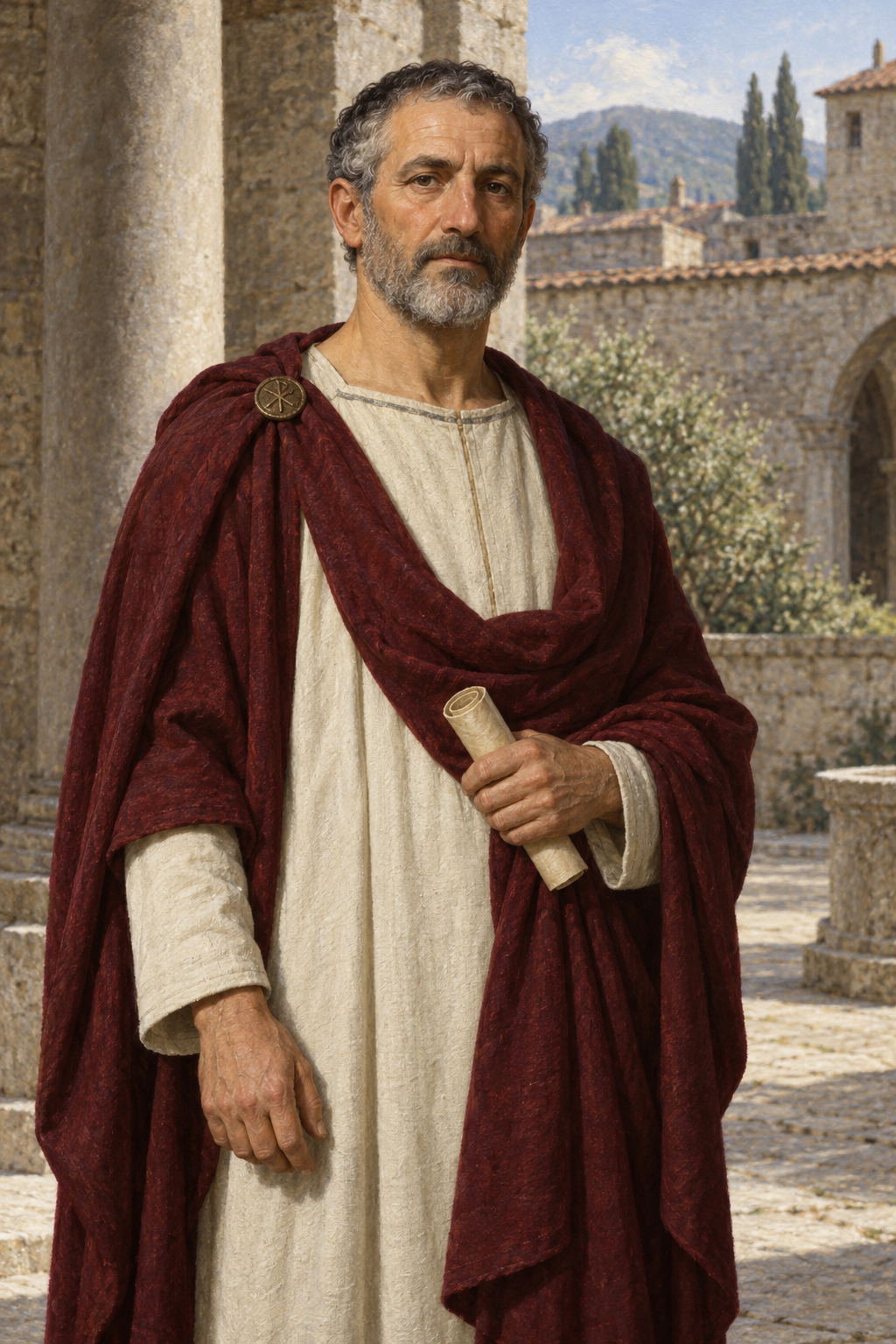
About Flavius Latinus of Brescia
Flavius Latinus is remembered among the early bishops of Brescia in northern Italy. His name survives in the local list after Clauteus and Viator, and a cemetery later carried the name San Latino. The strongest personal evidence is an epitaph, known through a manuscript transcription. That limited record gives a more responsible starting point than accounts that place him in the second century and call him a martyr.
The epitaph says that Latinus served twelve years as an exorcist, fifteen as a priest and three years and seven months as bishop. It also names Latinilla and Flavius Macrinus, described as a lector, and says Flavia Paulina set up the memorial. The exact family relationship depends on how its Latin terms are read. A modern epigraphic study argues that Latinilla may have been his sister and Paulina his niece, rather than Paulina being his granddaughter. The inscription itself is lost and survives only in a later manuscript copy.
The memorial presents a man with a long progression through church service before becoming bishop. It does not say when he was born, when he died, or that he was killed for his faith. Nor does it describe his preaching, travels, or actions as bishop. Those gaps should not be filled with invented scenes. The inscription records offices and remembrance, rather than a full narrative of his character.
A Brixia Sacra review of Antonio Rimoldi’s research places his episcopate in the early fourth century. It explicitly contrasts that historical assessment with a legend that had assigned him to the time of Domitian. The Diocese of Brescia likewise calls him a fourth-century bishop and cautiously suggests that a site of devotion to Faustino, Giovita and Afra may have arisen through his initiative. The word “perhaps” in that notice matters: the connection with the shrine is not an event documented by the epitaph.
The wider early history of Brescia is not fully secure. Brixia Sacra notes that the first episcopal list preserves names without dependable individual chronology. It identifies Ursicinus, present at the Council of Sardica in 343, as the earliest bishop with a secure external reference. The list and the epitaph together support Latinus as an early bishop, but they do not justify a precise year of office or an unbroken set of dated predecessors.
The older story of a second-century martyr under Trajan is especially difficult to reconcile with these sources. An early-fourth-century setting, the sequence of church offices in the epitaph and the absence of martyrdom language point in another direction. Brescia’s own historical accounts discuss him as a bishop and do not supply evidence for a violent death. His profile therefore records the bishop’s role without a martyr classification or an invented execution date.
Brixia Sacra reports his burial at the church of Sant’Afra and notes a local commemoration on 24 March. The Diocese of Brescia remembers a cemetery of San Latino along the road to Cremona. Together they show that the name remained attached to places of Christian memory in the city. They do not prove that every later story about nearby martyrs happened during his own episcopate.
Flavius Latinus matters as one of the few early Brescian church leaders for whom a personal memorial offers any detail. Its list of successive offices gives a glimpse of the community that chose him as bishop. The history of its transmission also calls for restraint: a lost inscription, a later copy, and devotional traditions are different kinds of evidence. Keeping them distinct lets his genuine place in Brescia’s memory stand without requiring a legendary martyr’s death.
Wondering how to weigh the stories and sources? Learn how to read a saint biography.