Biography
Floribert Bwana Chui Bin Kositi
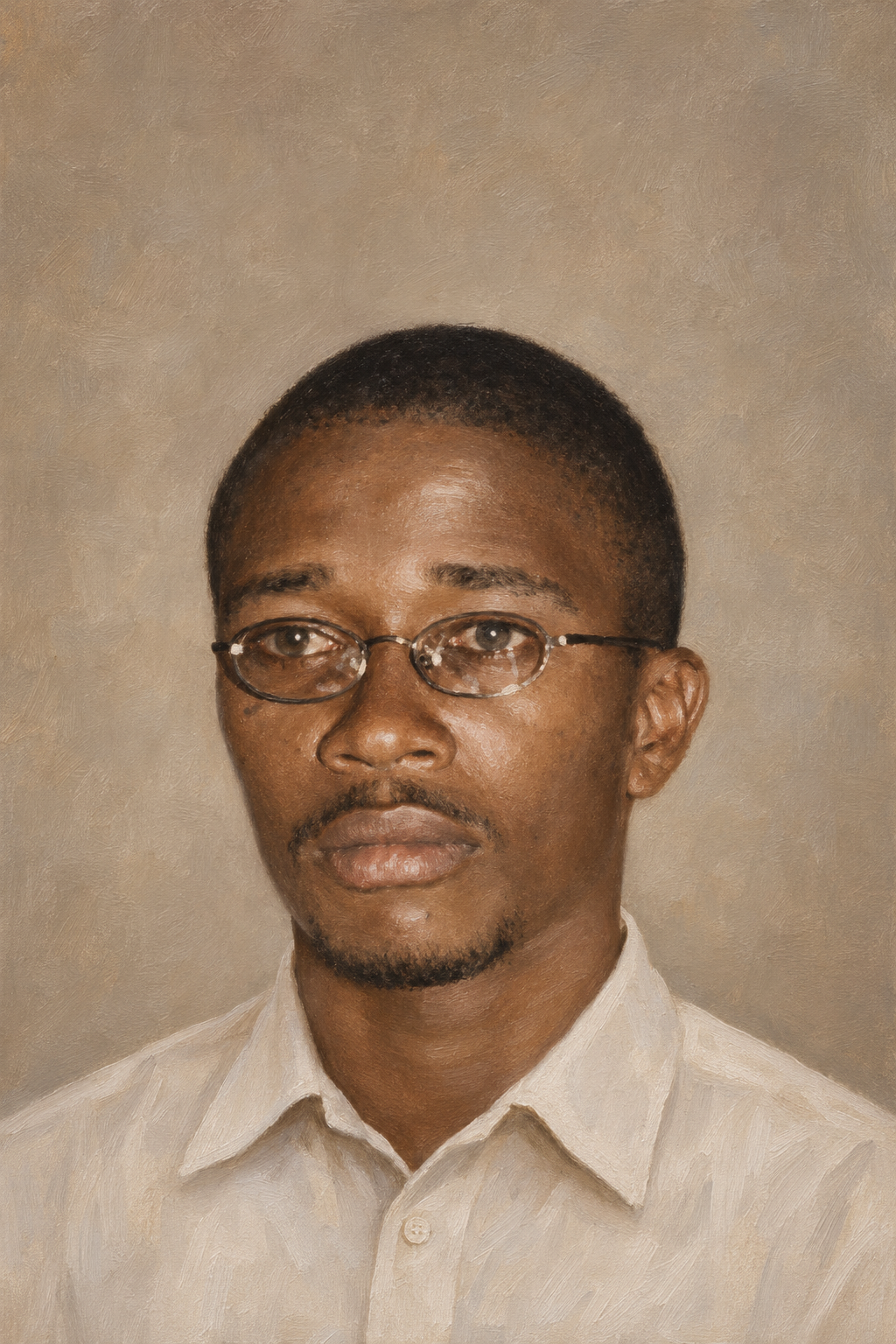
About Floribert Bwana Chui Bin Kositi
Floribert Bwana Chui bin Kositi grew up in Goma, in eastern Congo. Born in June 1981, he attended local schools and also studied at the Jesuit-run Alfajiri institute in Bukavu. He returned to Goma for the later part of his secondary education and then studied law at the university there. Parish life accompanied his studies: he served at worship, sang in the choir and took on other practical responsibilities.
The official profile also records his involvement in student associations and a provincial youth role with RCD-Goma. These public activities formed part of his life before his later work in product-quality control. The surviving Catholic account therefore presents a young adult involved in education, civic organizations and parish life, rather than a life confined to one institution.
Through the Community of Sant’Egidio, he became close to children living on the streets. He helped with its School of Peace and developed individual friendships with young people who lacked stable support. One of them, Jonathan, later recalled being suspicious when a well-dressed man approached him with an invitation to the school. The friendship developed over time, and Floribert offered to help pay for his studies. This remembered relationship gives a concrete example of the service that occupied him before his death.
His employment took him to the Office Congolais de Contrôle, the state agency responsible for checking the quality of goods. After a period of training in Kinshasa, he returned to Goma. Sant’Egidio’s account connects that return with his friends, his fiancée and the children to whom he was attached. At the border his work required decisions about the safety of food intended for sale. It placed an ordinary administrative responsibility within a setting where commercial pressure and the needs of consumers could collide.
The Catholic cause remembered a connection between his religious life and those responsibilities. At the beatification, Cardinal Marcello Semeraro referred to his well-used Bible, kept at Rome’s sanctuary of new martyrs at San Bartolomeo. He also recalled Floribert’s concern for the children of Goma and his work at the School of Peace. The homily described these commitments through Sant’Egidio’s emphasis on prayer, poor people and peace. These were the terms in which his community interpreted the pattern of his life.
The defining conflict arose when he refused to permit spoiled food to pass into circulation. Pope Francis later recalled that refusal while speaking to young people in Kinshasa. He presented it as a decision to consider other people’s health instead of accepting the advantages offered by corruption. The pope’s account explicitly connected that decision with Floribert’s Christian faith and prayer. This is an account of conscience expressed through a public duty, with consequences for people who would never have met the official inspecting their food.
Floribert was abducted on 7 July 2007. His body was found two days later, bearing evidence of torture. The cause linked the killing with his refusal to approve the spoiled food. The official narrative places death during the night between 8 and 9 July.
His beatification was celebrated at Saint Paul Outside the Walls in Rome on 15 June 2025. Semeraro explained that security conditions prevented holding the celebration in Goma. The location joined Congolese pilgrims and Sant’Egidio members in a public remembrance of someone whose own work had remained closely tied to his home city. The homily also recalled his wish to make a pilgrimage to Rome. That remained a hope during his life, distinct from the later journey made by others for his beatification.
The following day, Leo XIV received pilgrims who had come for the beatification, including Floribert’s mother and relatives. In his own remarks, the pope emphasized his friendship with children displaced by war and his determination not to give up on the possibility of peace. He identified the witness as that of a layperson and a young adult. The address drew its recollections from the cause’s collected testimony, while setting his memory within the continuing suffering of Kivu. Leo also recalled his efforts to encourage friends who had lost hope. The address quoted testimony about his desire to help change the world around him and his expectation of a future in which children could grow without war. These hopes gave his refusal of corruption a place within a larger commitment to the people of his region.
His name also remained connected with education in Goma. Reporting on the beatification, the Associated Press spoke with Charles Kalimba, director of the School of Peace bearing Floribert’s name. Kalimba described his life as a challenge to corruption and a point of reference for a new generation. This continuing local use of his memory keeps the account connected with students and teachers, as well as with the ceremony of Catholic recognition. The school’s stated concern with social justice connected the remembrance with the public consequences of choices made about money, health and responsibility.
Wondering how to weigh the stories and sources? Learn how to read a saint biography.