Biography
Florus Hyeon Gye-heum
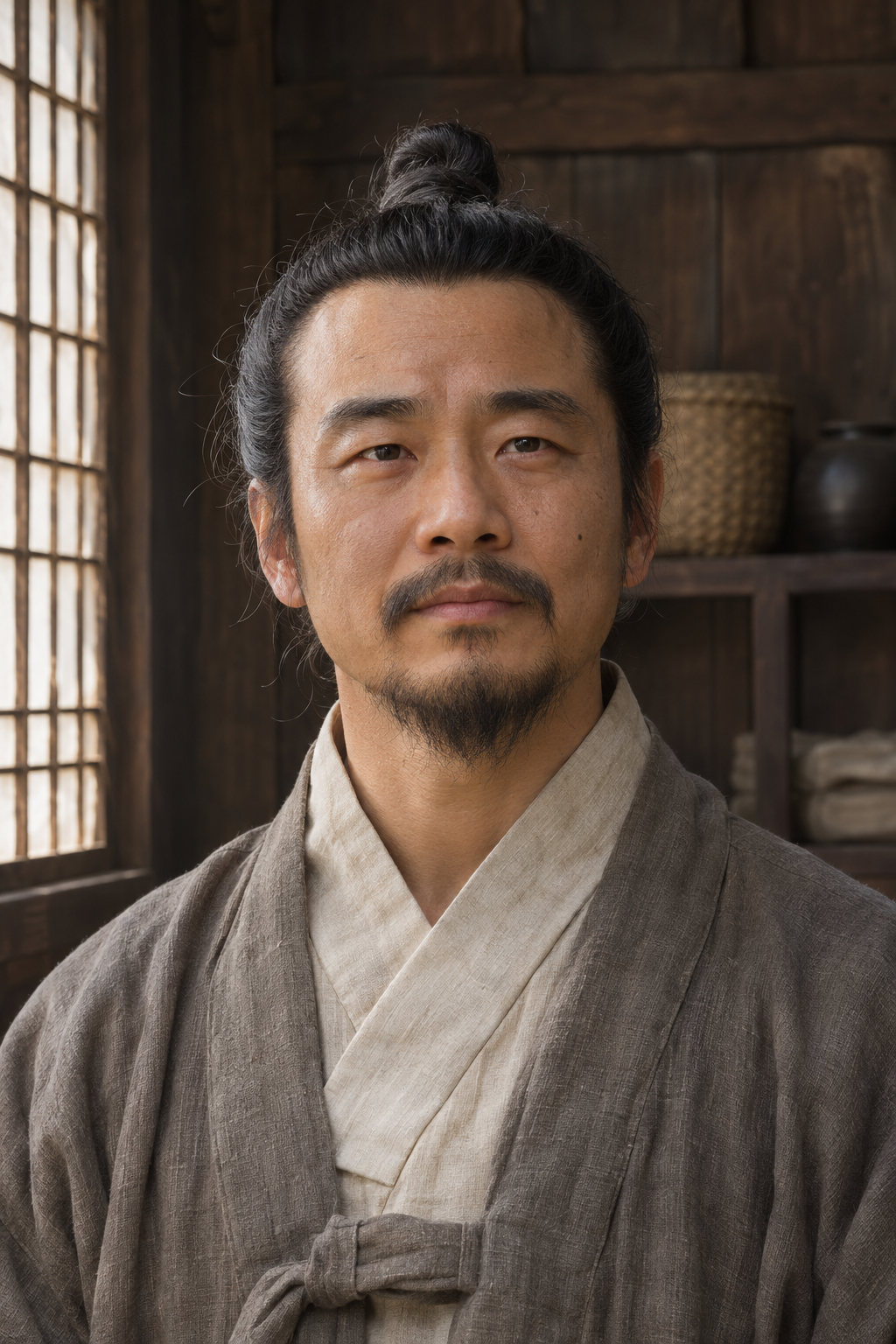
About Florus Hyeon Gye-heum
Florus Hyeon Gye-heum was born in 1763 into a Seoul family that had supplied interpreters to the government. He chose a different livelihood and operated a pharmacy. He was also known as Sa-su or Gye-on. He became a Catholic early in the Korean Church’s history. Arrested during the persecution of 1791, he was released and returned to an active religious life.
Jeong Min locates the family home near today’s Hoehyeon-dong in Seoul. Many members of the Cheonnyeong Hyeon clan worked as interpreters of Japanese, and others passed the examinations for medical posts. Kim Beom-u and his brother had married two daughters of Florus’s uncle. Florus’s own son-in-law, Son Gyeong-mu, was also in the pharmacy trade.
After Father James Zhou Wen-mo arrived at the end of 1794, Florus helped the priest’s work. He met regularly with Gervase Son Gyeong-yun, Barnabas Kim I-u and Thaddeus Jeong In-hyeok for prayer and religious instruction. He helped new believers and offered his home as a refuge when Zhou was in danger. His house also served as one of the meeting places associated with the Myeongdohoe, a lay teaching organization.
An earlier account by reporter Oh Hye-min calls him Paul in its heading identifying him as the father of Benedicta and Charles.
In 1797 he visited Dongnae, in the south of Gyeongsang Province, where his younger brother lived. He saw a British ship there. After returning to Seoul he described it to Alexis Hwang Sa-yeong. The encounter later acquired a significance beyond a traveller’s curiosity: Florus’s knowledge of a foreign vessel became part of the investigation that connected him to Hwang. The Catholic Encyclopedia records the visit in the ninth lunar month, without supplying a day.
Jeong identifies the younger brother as Hyeon Gye-tak and the anchorage as Yongdangpo. The ship was the Prince William Henry, a small British survey vessel commanded by William Robert Broughton. Jeong suggests that Florus may have been in the port on business connected with medicinal supplies. The purpose remains uncertain.
Broughton left his own description of the October visit. Local fishing boats helped his crew find an anchorage. People crowded aboard, and men from the shore brought provisions, including salted fish and rice. The crew needed fresh water and wood. Officials tried to learn what had brought the strangers to the coast, but neither party could understand much of what the other said. Broughton’s account records those exchanges without identifying Florus among the visitors.
When the persecution began in 1801, Florus initially escaped. He then learned that his relatives were being harassed because he remained in hiding. He came out voluntarily and surrendered to the police bureau. The encyclopedia places this surrender around the fourth lunar month and says he was then transferred to the Ministry of Punishments. His family’s vulnerability had brought him back within the reach of officials.
The surviving accounts differ about what happened after his surrender. Jeong reconstructs two arrests in 1801, with a release between them. He reports that Florus promised to abandon Christianity when he first surrendered. In this reconstruction, the discovery of Hwang’s letter then caused investigators to seek Florus again, this time to establish who had seen the foreign ship. Jeong notes that Florus’s own interrogation is missing from Sahakjingui, so he reconstructs the story from statements about him and other records.
Hwang’s questioning brought Florus’s name before the authorities again. He was transferred to the Royal Tribunal, where his case became part of the inquiry into attempts to obtain foreign assistance. The historical dictionary identifies the legal charge as knowing about Hwang’s attempt to bring in foreign forces and failing to report it. This was the authorities’ judgment of his knowledge and silence, rather than proof that he personally commanded a foreign expedition.
Florus was beheaded outside Seoul’s Small West Gate on December 10, 1801. His daughter Benedicta Hyeon Gyeong-nyeon and son Charles Hyeon Seok-mun survived him. The household did not remain settled after his death. Benedicta’s official biography says that she moved frequently with her mother during these years.
Benedicta later married a son of John Choe Chang-hyeon, another martyr of 1801. Widowed after three years, she returned to her family and became a women’s catechist. Her own death came during the persecution of 1839. These later events belong to her life, but they also show how Florus’s family remained connected to the community after losing its father.
Charles likewise became a lay leader. His official biography records his appointment as a catechist in 1839 and his work collecting the accounts of that persecution’s martyrs. He continued to visit and encourage scattered Catholics while evading the police. He was arrested and executed in 1846. Florus’s children thus became known both for preserving the Church’s memory and for sustaining its living members, long after the prosecution that had ended their father’s life.
Wondering how to weigh the stories and sources? Learn how to read a saint biography.