Biography
Folquin of Therouanne
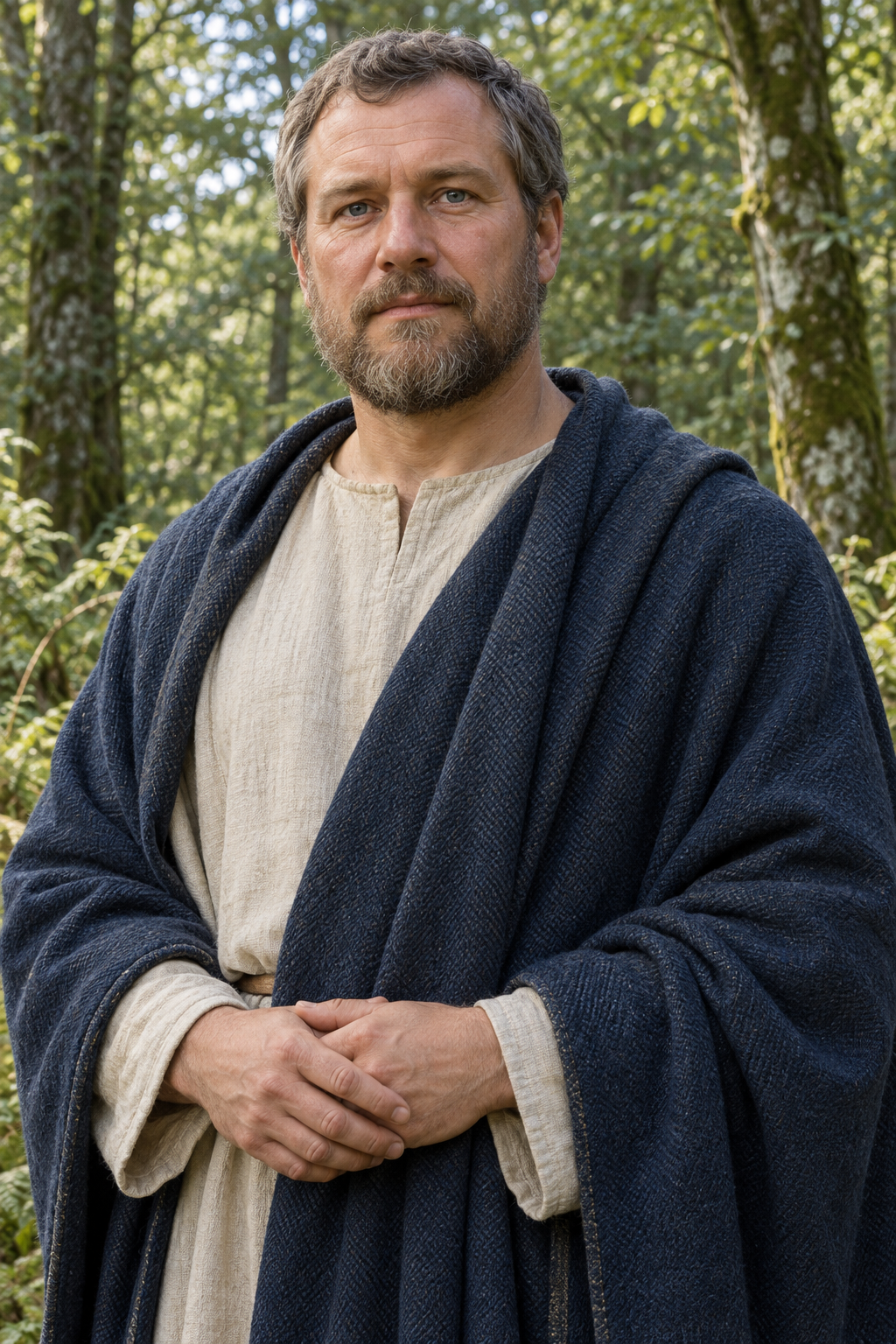
About Folquin of Therouanne
Folquin served as bishop of Thérouanne from about 816–817 until 855. His episcopate connected the church of Thérouanne with the religious community at Saint-Bertin. The New Catholic Encyclopedia records his participation in councils at Paris in 846, Quierzy in 849 and Soissons in 853, placing him within the wider work of the Frankish bishops.
His surviving life was written more than a century later by another Folcuin, a monk of Saint-Bertin who became abbot of Lobbes. The scholarly repertory Narrative Sources dates that work to the period 970–984 and identifies its dedication to Abbot Walter and the community of Saint-Bertin. The bishop and his biographer were different people. The account preserves the monastery’s memory of the bishop rather than an eyewitness biography.
That later life presents Folquin as a pastor concerned with both discipline and generosity. It says he shared resources with the poor instead of reserving them for his own table. Its account of his election describes agreement among clergy, leading men and people, followed by the consent of Emperor Louis. These details belong to the author’s portrait of an exemplary bishop and require the caution appropriate to a later saint’s life.
Relics formed an important part of his connection with Saint-Bertin. In 843, he helped bring the relics of Omer to the abbey. Folquin himself was later buried there, and his remains were transferred in 928 and again in 1181. These acts of remembrance joined his episcopal career to the monastery’s own history.
The medieval life places his final illness during a visit to Esquelbecq. It says that he summoned his disciples, encouraged them to remain faithful and had previously requested burial at Saint-Bertin. Its prose dates his death to December 15, 855, but a verse epitaph included later in the same work gives December 14. The conflicting days are preserved here as uncertainty rather than silently reconciled.
His local remembrance continues at Esquelbecq, where the church is dedicated to him. The municipality describes the traditional invocations of Folquin against fevers and for women in difficult childbirth. These are practices of religious devotion, not claims of medically established effects.
The later biography already reports people visiting his altar with candles during fevers and seeking his intercession in childbirth. This shows that those forms of devotion have a medieval witness, while leaving the reported cures within the language of the hagiographic account.
Wondering how to weigh the stories and sources? Learn how to read a saint biography.