Biography
Franca da Vitalta
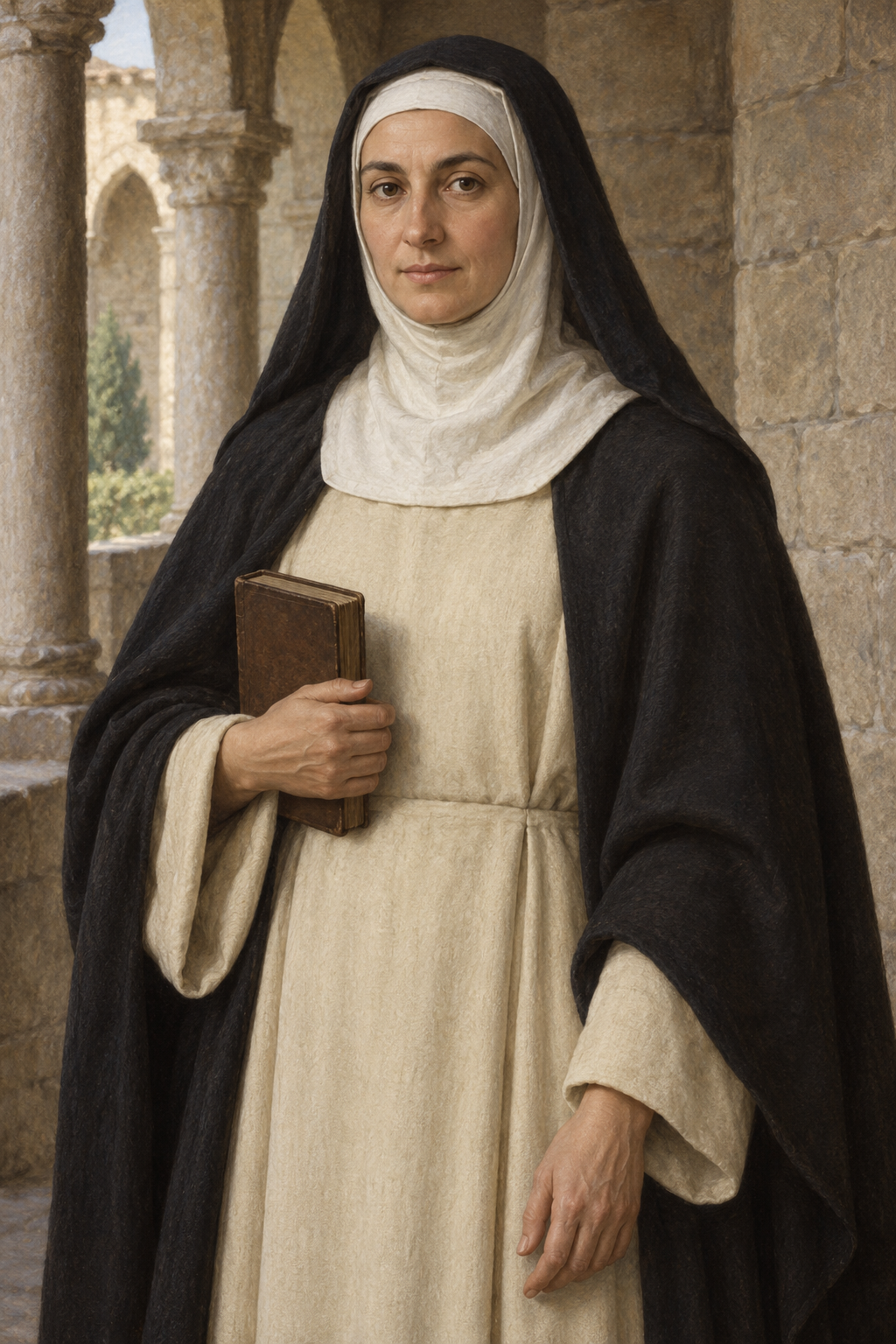
About Franca da Vitalta
Franca da Vitalta was a religious leader in and around Piacenza during the early thirteenth century. She belonged to the noble Vitalta family and entered the Benedictine community of San Siro as a child. Caterina Bruschi’s study in the Dizionario Biografico degli Italiani gives 1175 as the year handed down by most sources, but the New Catholic Encyclopedia gives 1173. Her birth year is therefore entered as approximate, and no exact day or secure birth settlement is supplied.
Bruschi records her entrance to San Siro in 1182 and her permanent profession at fourteen. A document from 1191 names Franca among the nuns witnessing a transaction involving the community. That administrative record gives firmer footing than a general description of early piety. It places her within a functioning monastery that owned property and took part in the civic and ecclesiastical life of Piacenza. Later accounts praise her disciplined observance, but the signed transaction is especially useful for the chronology of her adult life.
Older biographies date her election as abbess to 1198. Bruschi checks that against property records showing her predecessor Brizia still active in September 1199, and places the election after that date. Franca’s leadership met opposition from within the convent and from families involved in the city’s struggles over church authority. The conflict did not end her tenure. She appears as abbess of San Siro in a May 1216 land transaction, even though later narrative accounts sometimes make her transfer to a new house seem simpler and earlier.
Carenzia Visconti became important to Franca’s later work. She sought a Cistercian religious life and her family supported a women’s foundation at Montelana. Bruschi attributes the founding initiative to Carenzia and her family, with episcopal permission in 1214. A record from that year names a Franca but does not identify her as “da Vitalta,” so the precise extent of this abbess’s presence at the earliest foundation remains uncertain. This is a case where a repeated name must not be treated as decisive identification.
The women’s community moved among Montelana, Vallera and finally Pittolo, where the house of Santa Maria del Terzo Passo took shape. The regional history also describes security and practical needs behind the move. Franca led the group in its final setting and died at Pittolo on 25 April 1218. Carenzia succeeded her there. The movement between houses was part of a larger network of family support, monastic reform and the daily work of sustaining a women’s community.
The earliest accounts stress prayer, fasting and wakefulness. Bruschi treats those descriptions as part of a medieval Life and also notes how severe austerity affected Franca’s health. Modern readers need not idealize physical harm to understand her commitment. The records show her managing property and a community, while the devotional narrative celebrates the spiritual intensity that its authors saw in her. Those are related but different kinds of evidence.
A traditional report says Pope Gregory X approved her cult orally in 1273, but Bruschi observes that no document confirms the reported canonization. The New Catholic Encyclopedia states the approval more directly; the critical biographical study warrants caution. Her local feast is listed on 26 April, the day after her recorded death. Her remains are now kept at the church of San Raimondo in Piacenza after earlier transfers. These are signs of a lasting local cult, without requiring certainty about the reported papal ceremony.
Franca’s story is especially valuable when the record is allowed to remain uneven. A 1191 witness list and a 1216 land transaction establish aspects of her leadership, while a later Life supplies remembered character and devotion. The disagreements over her birth year and exact sequence of transfers are not grounds to erase her work. They ask for careful wording about a woman who governed institutions at a time when their survival depended on legal ties, donors, religious ideals and the trust of other women.
Wondering how to weigh the stories and sources? Learn how to read a saint biography.