Biography
Francis Choe Bong-han
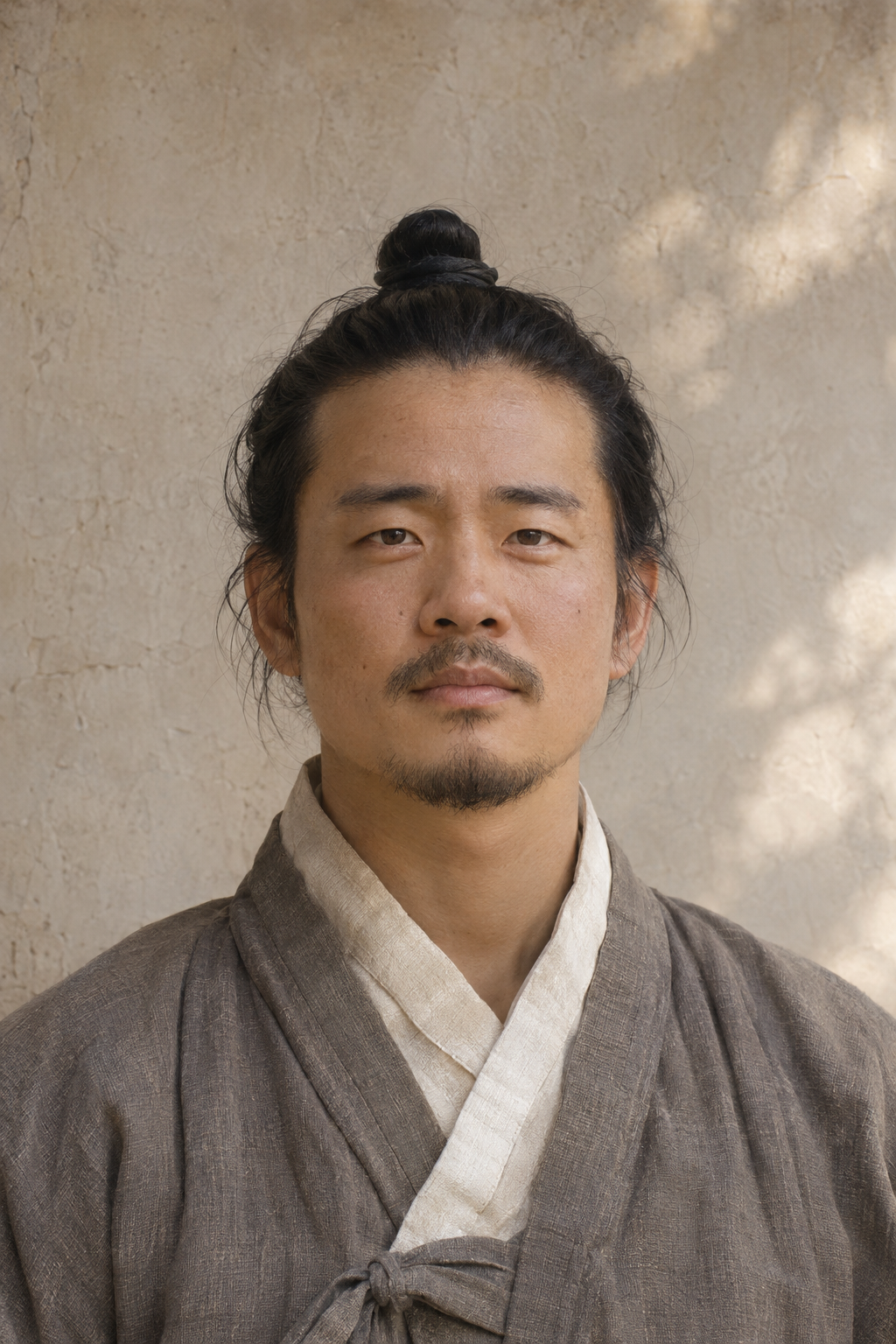
About Francis Choe Bong-han
Francis Choe Bong-han came from Daraegol in the Hongju district of Chungcheong-do. He was known as Jin-gang in childhood and also used the name Yeo-ok. His father taught him Catholic doctrine while he was young. The family later lived at Museongsan in Gongju. Francis’s first instruction therefore came within his own household, before the journey that brought him into contact with a priest and several leading Catholics in Seoul.
When the family heard that Father James Zhou Wen-mo had entered Korea, Francis travelled to Seoul with his mother and sister. His father died around this period. In the capital he received the sacraments from Zhou and stayed in the house of Augustine Jeong Yak-jong. He became close to Alexius Hwang Sa-yeong and Thomas Choe Pil-gong. The names link his early religious life with people who were studying, teaching and maintaining contact with the priest.
Museum historian Kang Yu-sin adds that Francis’s mother received the last sacraments from Zhou before her death. After she died, Francis arranged for his sister to remain at Jeong Yak-jong’s house and returned to the countryside himself. The priest’s ministry had brought the family to Seoul, but the household did not leave the capital together. His sister stayed within the Catholic home in which they had found lodging.
Francis had considered remaining unmarried. Relatives repeatedly urged him to marry, however, and he changed his plans. He married a daughter of Andrew Seo Seok-bong. Barbara Ku Seong-yeol was his mother-in-law. Francis and his wife then moved with her parents to Noraesan, a Catholic village in Cheongsong. The family into which he married became part of both his life in the village and his later imprisonment.
Oh Se-taek places this household within the movement of Catholics from Naepo into the mountains of Gyeongsang-do. In his account, settlers who had left their homes during the persecutions were joined by people converted within the province. Noraesan became a village built around shared Catholic observance. The name of their village was later misread as Moraisan, leading readers to a different settlement. Oh identifies Noraesan from Bishop Daveluy’s earlier account and locates it near today’s Norae-ri in Andeok. The year the family arrived remains uncertain.
The Daegu diocesan biography describes Francis collecting religious books and devotional objects after the persecution of 1801 had killed several Catholic leaders. He took these materials into the mountains of Gyeongsang-do and taught the believers living there. The books connected his earlier associations in Seoul with his work in the village. He was remembered not only as a person who had sought refuge, but as someone taking responsibility for religious instruction where he settled.
Officers raided Noraesan during the Easter celebration in 1815, accompanied by an informer. Francis was taken with other Catholics and sent to Gyeongju. At the time of capture, he told his companions that they could lay responsibility on him when questioned. The offer became known to the authorities, and he received more severe punishment.
In Gyeongju prison Francis noticed his mother-in-law’s courage failing under punishment. He repeatedly encouraged Barbara to remain faithful. The bishops’ account places this support alongside his own endurance of questioning and torture. Francis was subsequently transferred to Daegu, where the provincial authorities continued examining the case.
At Daegu he was identified as a leader of the Catholics. The encyclopedia describes repeated punishments in which he lost consciousness, followed by continued refusal to abandon his faith. Being treated as a leader made the examination more severe. The account does not end with an execution at a public ground. Francis died inside the prison after the repeated punishments had weakened him beyond recovery. The governor’s written statement identified Francis as the leader of the Catholics in prison. It looked back to the books he had collected in 1801 and accused him of using them to teach a community he had gathered in the mountains. The books that villagers had kept for worship thus figured in the official case for punishing their teacher.
Kang Yu-sin’s study considers the significance of that leadership. He links Francis’s contacts with Catholic teachers in Seoul to his later work gathering a village community. The study also cautions against treating the length of imprisonment as a simple measure of a prisoner’s courage. A person classified as a ringleader could be subjected to exceptionally violent punishment early in the proceedings.
The received accounts place his death around the fifth lunar month of 1815. That wording does not supply a Gregorian day. His birth year is likewise given approximately as 1785 in the Holy See’s official martyrdom decree. He was about thirty when he died. The family and community remembered in his life had accompanied him through conversion, relocation and prison: he learned from his father, entrusted his sister to a Catholic household and continued supporting his mother-in-law after their arrest.
Wondering how to weigh the stories and sources? Learn how to read a saint biography.