Biography
Francis Kim Jong-gyo
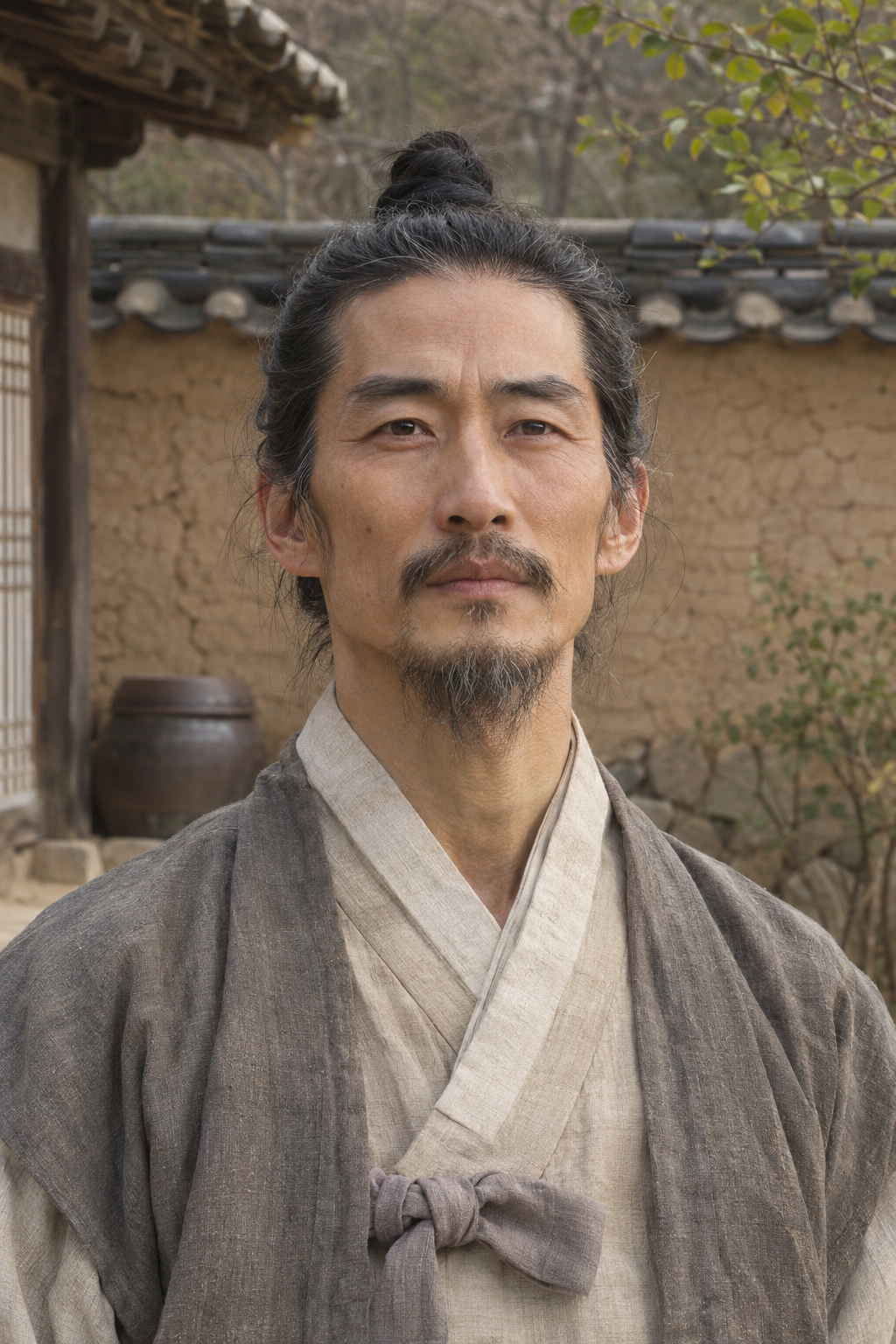
About Francis Kim Jong-gyo
Francis Kim Jong-gyo was a physician in Seoul, also known as Chi-hoe. The Korean bishops date his birth to 1754. He belonged to a jungin family and had little money, but his interest in study brought him the respect of John the Baptist Yi Byeok, one of the first Korean Catholics.
The Catholic Encyclopedia gives 1753 instead. Its account places him among the people borrowing Christian books from Thomas Kim Beom-u in 1784, while distinguishing this early reading from formal reception into the Church. Francis studied alongside Matthias Choe In-gil, John Choe Chang-hyeon and Thomas Choe Pil-gong.
When Father James Zhou Wen-mo began his ministry, Francis visited him at Choe In-gil’s house. He received the Christian name Francis. The bishops’ biography places this encounter early in 1795, before the persecution that summer. The encyclopedia instead places his baptism after his release from that persecution. Both accounts remember the arrest, his denial under pressure and his subsequent return to Catholic practice.
A still earlier account by Cha Gi-jin puts his first arrest in 1791. That date differs from the 1795 persecution described in the bishops’ life and the encyclopedia. The discrepancy reaches beyond a single anniversary: it affects where the accounts place his return to practice and his meeting with Zhou.
His work belonged to a wider medical network in Seoul. Historian Jeong Min distinguishes Francis from men who owned pharmacies: he identifies him as an itinerant practitioner without a shop of his own. Jeong places such practitioners alongside pharmacy owners whose working relationships also supported religious contacts. This does not establish that Francis operated one of the named meeting places. It identifies a livelihood through which he knew a community of fellow Catholics.
Bang Sang-geun’s study places Francis among fourteen Catholics associated with medicine. It distinguishes ten pharmacy owners from three people, including Francis, who came from medical families, clarifying his professional setting.
One person whom Francis taught can be identified by name. According to Seo Jong-tae’s encyclopedia entry, Jang Deok-yu learned Catholic doctrine from him in 1796. Jang made horsehair hats and lived outside Namdaemun. He continued to study and pray with other believers and became close to Kim Guk-bin. This individual notice provides a concrete example of Francis passing on the teaching he had first encountered in borrowed books.
When persecution began again in 1801, Francis saw the arrest of his friend Choe Pil-gong and fled briefly to Gyeonggi Province. His name emerged during Jeong Yak-yong’s questioning, and he too was arrested. At the police bureau he again said he would give up the faith. After transfer to the Ministry of Punishments he withdrew that answer. He maintained his Catholic profession despite further punishment.
The historical dictionary identifies Yangcheon as his place of refuge. Its account of the proceedings makes his changed answers part of the prosecution’s case: officials treated his renewed attachment to Catholic teaching as an offense, not a private decision they were willing to leave alone.
A contemporary ministry report supplies another version of that sequence. It says Francis had studied Christianity for several years before being arrested in 1794. Officials had released him after taking his statement in the hope that he would change. The report then accuses him of seeking out Zhou, receiving baptism and a Christian name, and remaining unrepentant despite severe interrogation. Its demand for punishment places his renewed religious allegiance at the center of the case. The earlier year is not reconciled by the report itself. It is an official accusation against a prisoner, whose chronology must be compared with the later accounts rather than silently corrected to match them.
Lee Dae-geun includes Francis in a study of the relationship between Confucian learning and Christian martyrdom. Lee’s argument concerns how believers and officials judged the same religion differently. The state condemned it as false teaching; the Christians in his examples understood it as a true and binding moral path. He sees elements of the learned tradition’s concern for principle contributing to Christian steadfastness, while distinguishing Christian belief in salvation from a concern for earthly reputation. This is a historian’s interpretation of the convictions expressed in the trials, rather than evidence that Francis followed every feature of a general philosophical ideal.
Cha also brings Francis’s final confinement into contact with Philip Hong Pil-ju’s story. He describes the two men meeting in prison and encouraging one another after their earlier weakness under questioning. The account presents companionship inside the prison as part of Francis’s last period of religious life.
Francis was sentenced to death and beheaded with Philip Hong Pil-ju outside Seoul’s Small West Gate on October 4, 1801. He was about 47. His known religious activity had extended from reading and discussing books to teaching another craftsman. His final imprisonment also preserved a less comfortable part of that history: he had denied his faith under punishment before choosing to affirm it again.
Wondering how to weigh the stories and sources? Learn how to read a saint biography.