Biography
Francis Kim Sa-jip
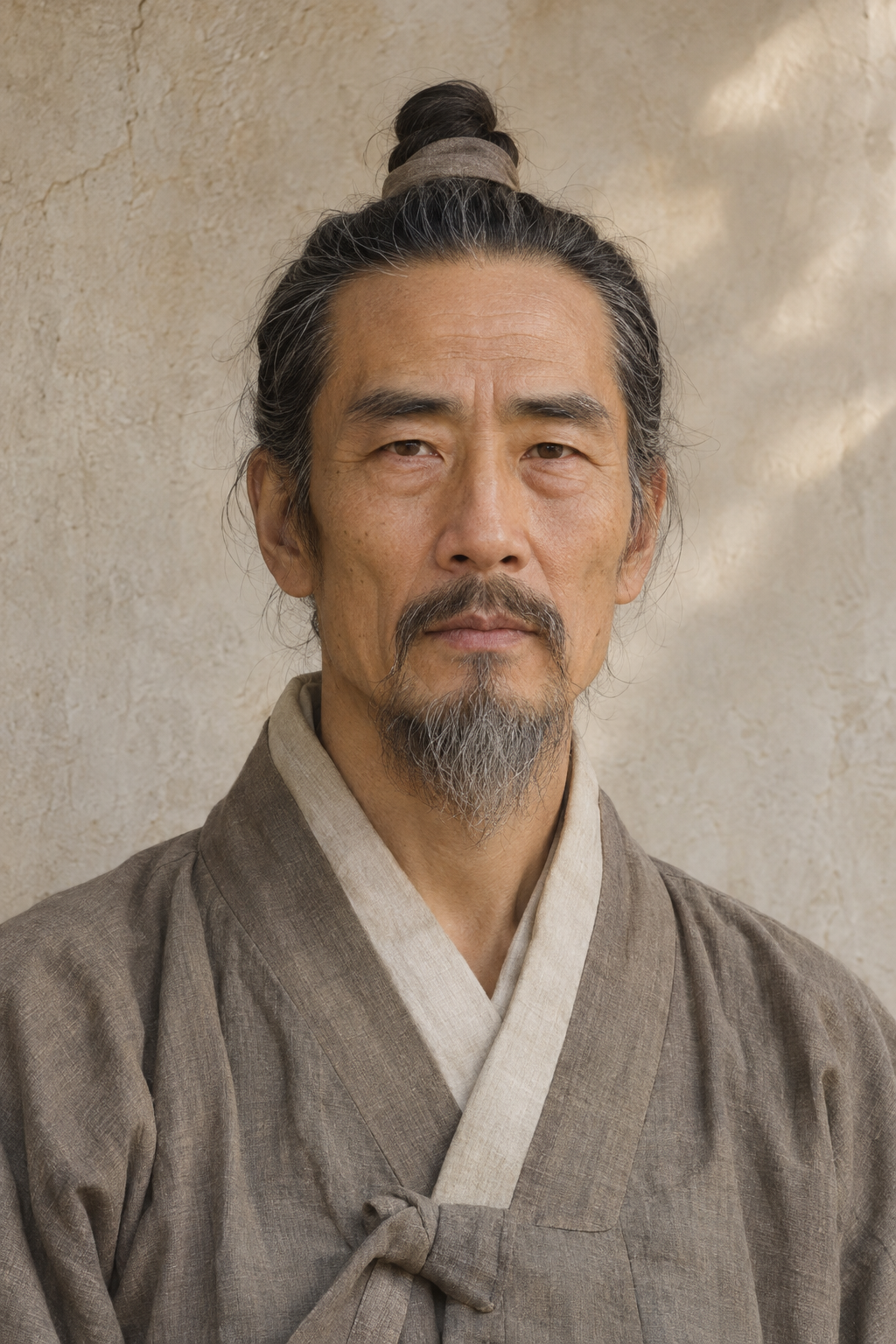
About Francis Kim Sa-jip
Francis Kim Sa-jip studied for Korea’s civil-service examinations before turning to Catholicism. He came from Bibanggoji in the Deoksan district of Chungcheong Province and was also called Seong-ok. His education became a practical resource for the Catholic community: he copied religious books and gave them to believers who could not afford to buy them. Prayer, reading and teaching took the place once held by preparation for an official career.
The Catholic Encyclopedia places Bibanggoji in Hapyeong-ri, Yesan, within the historical district of Deoksan. The bishops locate it in Changmal in present-day Hapdeok.
Francis gave his former clothes to poorer neighbours when he obtained replacements. He also sent necessities to women who lacked supplies for childbirth. Yeo Jin-cheon remembers these practical forms of charity.
Francis mourned his parents by abstaining from meat for two years.
Scholar Lee Min-hui places Francis within the history of Korean-language reading. He distinguishes free distribution from the commercial copying through which other Catholics supported themselves. In Francis’s case, the ability to write helped people obtain religious texts without purchasing them. Lee interprets the ensuing arrests as evidence that officials treated circulation itself as a serious danger, not simply the writing or translation of Christian works.
Handwriting still did the work of a press for Korean Catholics. The Church would open its first woodblock printing establishment in Seoul only in 1859. The Catholic Encyclopedia counts eighty-six Korean manuscript titles among the books seized and burned in the persecution of 1801, alongside thirty-seven in literary Chinese. These figures belong to the collection confiscated by the authorities. They give an idea of the range of reading in which Francis’s copies circulated, although they tell us nothing about which individual titles came from his hand.
During the persecution of 1801, confiscated manuscripts led officials to Francis. The encyclopedia records that his copying and distribution became the evidence that exposed him. He was taken first to Deoksan, where the magistrate pressed him to abandon Catholicism. He continued to profess the faith through prolonged punishment. He was then transferred to Haemi and, near the end of the year, to the provincial military headquarters at Cheongju.
Two former believers visited Francis’s house at the authorities’ request before the officers arrived. At Deoksan the magistrate tried to humble him by assigning him to beat fellow prisoners.
In his prison letter Francis asked his children to rely on God and Mary’s help and to live as Christians. He did not tell them to seek his release. He asked them to give up the expectation of seeing him again. The request to continue in the faith and the farewell came in the same message.
The Korean Catholic Encyclopedia traces Francis’s letter through records collected by Bishop Antoine Daveluy. Charles Dallet later drew on those records for his French history of the Korean Church. Much of the correspondence that Catholics sent out of prison reached later readers in copies or translations. In Francis’s case, what his children were asked to remember can still be read, although the letter in his own hand is unavailable.
The official biography describes the winter transfer to Cheongju as a three-day journey made while his injuries were still unhealed and a wooden collar weighed around his neck. Soon after his arrival, he was sentenced to death. He was taken to the marketplace and beaten until he died on January 25, 1802. The Church’s account gives his age as fifty-eight.
Cheongju remembers two places in Francis’s last journey. The diocesan site guide places the provincial military headquarters in the area now occupied by Central Park. James Won Si-bo and Francis Bae Gwan-gyeom had died there before him. Francis Kim, by contrast, was questioned there and taken on to the market to die. The city’s Catholic memorials mark several places connected with interrogation and execution, including the jail and the market. The park monument commemorates people whose last days took different courses through the same city.
On September 26, 2002, Bishop Jang Bong-hun blessed the stone in Central Park before a gathering of local Catholics, priests and city officials. The front bears a dedication to the martyrs. On the reverse, Francis is named together with James Won, Francis Bae and Paul O Ban-ji. A contemporary account of the dedication records both inscriptions. Someone standing at the former military compound can therefore read Francis’s name there even though the place where he died was elsewhere.
Tak Hui-seong chose the winter road for his painting of Francis. The prisoner has white hair and walks with his wrists bound behind him. A guard in front carries a staff. Another holds the rope, and a third figure follows the party across a landscape almost covered by snow. The caption identifies the road as the three-day journey from Haemi to Cheongju. The painting remembers the interval between two interrogations, when a man already badly hurt still had to make the journey on foot.
Wondering how to weigh the stories and sources? Learn how to read a saint biography.