Biography
Francis Yun Ji-heon
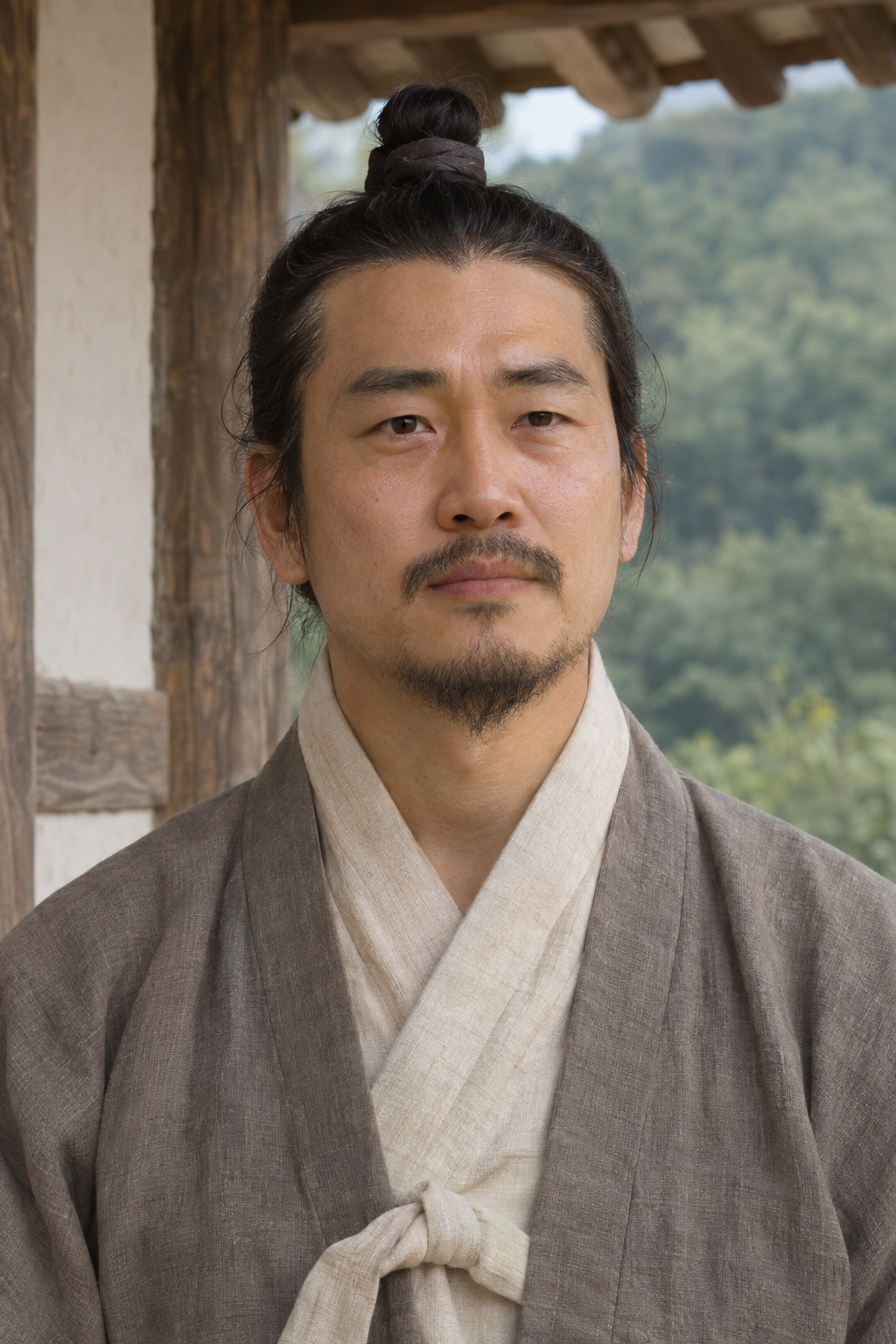
About Francis Yun Ji-heon
Francis Yun Ji-heon was born in 1764. Ha Seong-rae’s biographical account identifies his father as Yun Gyeong and his mother as a member of the Andong Gwon family. It places his birth in the Jeonju area and describes a move with his father to Jinsan.
His elder brother was Paul Yun Ji-chung, one of the first Korean Catholics executed for refusing ancestral rites. Francis learned Catholic teaching from his elder brother in 1789. His conversion did not protect his household from the consequences of Paul’s death in 1791. He left Jinsan with his family and settled at Undong in Gosan, where he copied religious books and taught people who came to see him.
After Paul’s execution, Francis apparently interrupted contact with other Catholics for a time before renewing his religious activity. He supported himself by selling medicines.
The book work connected his mountain home with people far beyond Gosan. Bang Sang-geun’s study of Catholic reading in Jeolla interprets the surviving evidence as a coordinated circulation of copied books between Gosan and Jeonju, rather than isolated private reading. Yun’s contacts included the households of Hyeon Gye-heum, Gang Wan-suk and Jeong Yak-jong in Seoul.
Medicine selling provided a practical livelihood alongside this religious work. Historian Bang Sang-geun infers from this trade that Yun operated a pharmacy, while identifying that conclusion as an inference.
A recent account by Ri Gil-jae names people whom Yun taught in Muan, Gosan, Jinsan, Geumsan, Yeonggwang and Gangjin. Among them were Go Si-yun, Yang Hae-ju, An Mu-san, Yun Jong-baek and Yun Je-hyeon. The same account describes Yi Jon-chang’s arrival in Gosan in 1795 as strengthening the local Catholic community. These relationships place Yun’s teaching within an expanding network of households and travelers, rather than confining it to the books kept in his own home.
In 1795 the Chinese priest James Zhou Wen-mo visited the area, and Francis received the sacraments. Francis also helped arrange contact with the Church in Beijing through the envoy Thomas Hwang Sim. His work continued to draw him to Seoul. In the spring of 1800, while there to take an examination, he met Zhou at Gang Wan-suk’s house; in November he again met the priest at the house of his cousin Jeong Yak-jong.
A reproduced interrogation records Zhou rebuking Yun over his failure to stop drinking, invoking the Ten Commandments when they met at Jeong Yak-jong’s house. Bang treats this encounter as evidence that the commandments shaped the community’s expectations of ordinary conduct.
Historian Kim Du-heon interprets the settlement around Yun as a continuation of the earlier Jinsan Janggu-dong community, broken up by the 1791 persecution. His 2025 presentation describes a community that included Catholics from northern Jeolla and some parts of Chungcheong before 1801. After the persecution its dispersed members helped carry Catholic belief into parts of Gyeongsang and Gangwon. This later movement was the work of surviving followers; Yun himself did not live to accompany it.
Kim also places the community within a wider effort to obtain foreign missionaries, undertaken with Chonam and Seoul Catholics under Zhou’s leadership. He interprets the request for a foreign ship as an attempt to secure religious freedom, while acknowledging its reliance on outside power.
During the persecution of 1801, Francis was arrested and confined at Jeonju. Officials questioned him repeatedly and subjected him to punishment before sending him to Seoul. There he passed through the Police Bureau and Ministry of Justice to the State Tribunal. The foreign contacts that had helped sustain the Catholic community now became a central concern of the prosecution.
The royal annals record officials treating Yun’s collaboration with the Yu brothers and his participation in requests for foreign assistance as treason. They ordered that he be returned to Jeolla for execution.
Francis was returned to Jeonju and executed on October 24, 1801. The official Catholic account remembers him affirming heaven and hell and saying that his faith had taken deep root. His wife and children were subsequently sent into exile.
The punishment separated his family across the country. His wife Yu Jong-hang was enslaved and exiled to Heuksando. His sons Jong-won, Jong-geun and Jong-deuk were sent respectively to Jeju, Geoje and Haenam; his daughters Yeong-il and Seong-ae were sent to Gyeongheung and Byeokdong.
In 2021 the Diocese of Jeonju announced the identification of remains attributed to Francis at Bau-baegi, near Chonam. His grave lacked an identifying inscription. Investigators combined burial context, anatomy, historical records and paternal-line genetic evidence. The diocese recognized the remains in a September 1 decree. The genetic finding supported a Yun-lineage relationship, rather than uniquely identifying one person.
Jeong Min’s account of the examination reports sharp-force damage to a neck vertebra and to bones of the arms and leg, with some limb bones absent. He draws on anatomist Song Chang-ho’s investigation. These physical observations were considered alongside the historical account of Francis’s execution.
Wondering how to weigh the stories and sources? Learn how to read a saint biography.