Biography
Frodobert of Troyes
About Frodobert of Troyes
Frodobert, also called Frobert, was a monk of Luxeuil and the founder of Montier-la-Celle near Troyes. Nominis remembers him as the community’s first abbot and lists a local feast on January 1. His death is placed around 673, although other estimates differ.
The surviving Life was written long after the events it describes. Thomas Spencer dates Adso of Montier-en-Der’s composition between 968 and 992. It is therefore a later account of a seventh-century monk, shaped by the monastery’s memory of its beginnings.
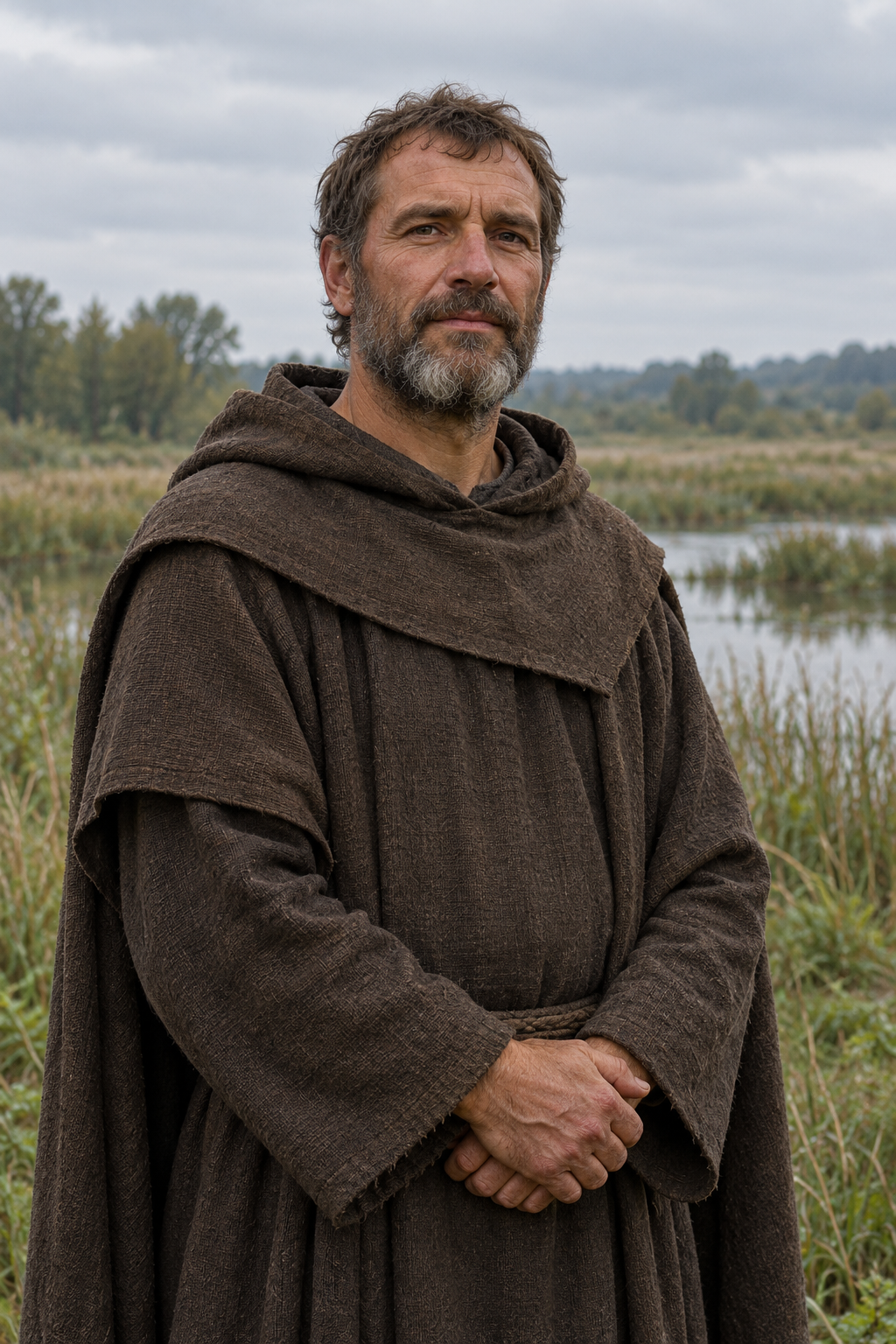
Adso describes Frodobert’s formation at Luxeuil and his return to Troyes. He then presents the founder seeking royal land rather than relying on a local noble whose claims might trouble the future community. On marshy ground, he cleared vegetation, drained water, and established a small dwelling and oratory with companions.
The account of the monastery’s growth also names purchases of male and female enslaved people alongside fields and vineyards.
Wilhelm Levison’s edition distinguishes the documentary evidence from the later story. He accepts the foundation’s royal confirmation while noting that its text survives through copies of a lost medieval cartulary, with defects in the transmitted wording.
Frodobert’s remembrance can also be followed through books used in worship. A breviary cataloged by Les Enluminures, made for Montier-la-Celle around 1510–1520, identifies him and Aygulphus as the abbey’s patron saints. Its calendar includes Frodobert on January 8 and a translation commemoration on October 16. These are historical observances recorded in that manuscript, rather than proof of a present universal calendar.
His name also survives in the former church of Saint-Frobert in Troyes. Jean-Luc Liez cautions that its dedication cannot securely be placed in the seventh century: documentary evidence begins in the eleventh. Rebuilt in the sixteenth century and sold in 1791, the building later served several other purposes and was converted into housing. The surviving structure witnesses a later history of devotion, not an intact church from Frodobert’s lifetime.
Wondering how to weigh the stories and sources? Learn how to read a saint biography.