Biography
Fulgentius of Ruspe
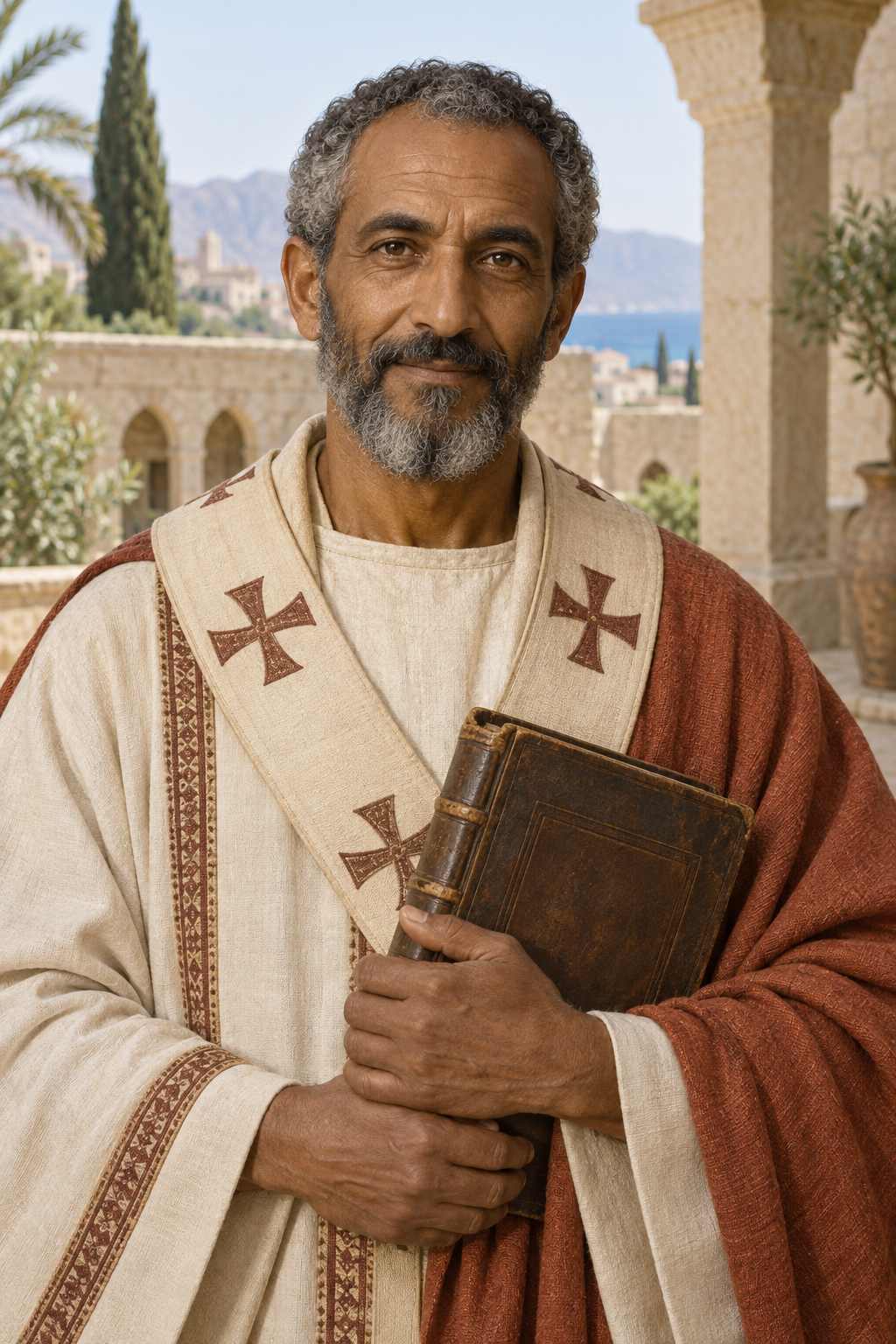
About Fulgentius of Ruspe
Fulgentius of Ruspe left a career collecting taxes to become a monk, but he did not leave responsibility for other people behind. Born at Thelepte in North Africa around 462, he served as a procurator in the Vandal administration before choosing religious life. Augustine's exposition of Psalm 36 helped turn him toward the monastery. He later set out for the Egyptian desert, but stopped in Sicily after hearing concerns about the teaching prevalent among its monks. His travels also brought him to Rome in 500.
As bishop of Ruspe, Fulgentius opposed King Thrasamund and was exiled to Sardinia. Recalled in 515, he was exiled again in 520. Hilderic, Thrasamund's successor, allowed him to return in 523. Back in Africa, he continued defending Augustinian teaching against Arianism and arguments that diminished the need for grace.
During exile, Fulgentius helped other displaced bishops prepare their correspondence. His early biographer describes colleagues trusting his judgment, while also bringing their own corrections to what he wrote. At Calaris he shared a household with fellow bishops, combining common meals, reading and prayer with help for poor people. Exile had separated these men from their churches, but they still worked and worshiped together.
Answering Thrasamund also meant explaining what Fulgentius believed Christians were defending. In his books addressed to the king, he insisted that Christ's humanity was complete and that his divinity had not been diminished by taking human life. He resisted imagining God as a body contained within a place. Something small could not hold less of God, nor could something large contain more. For Fulgentius, Christ's entrance into time did not mean that the Son had ceased to be eternal. His argument joined the reality of human weakness to the conviction that divine power had not been lost in accepting it.
Fulgentius's correspondence also shows the slower work of attending to an individual question. Monimus had sent him several letters, and his reply began by acknowledging the delay caused by other duties. He had recovered two of the letters, but his notary had been unable to find a third. Rather than pretend to remember every detail, he listed the questions he understood and asked Monimus to remind him if anything had been missed. Questions about predestination, sacrifice and the Holy Spirit required separate answers. Their exchange rested on an older friendship: Fulgentius recalled reading theological texts with Monimus when they were together at Carthage.
Other letters met different needs. In one, he explained that he had received a request several months earlier, but a sudden, severe fever prevented an immediate reply; after his recovery, winter weather delayed its dispatch. In another, addressed to Proba, he received her letter with gratitude rather than treating her request as an interruption. He praised the humility and good works that her words disclosed, and encouraged her to continue growing rather than rest in what she had already achieved. He asked for perseverance as a gift from God. These replies joined concern for a correspondent's circumstances to an insistence that a faithful life still required attention and effort.
When Euthymius asked whether forgiveness belonged only to this life or could also be obtained after death, Fulgentius answered at length. He repeated the question so that other readers could understand the discussion. He recognized Euthymius as someone who listened in church and read at home, yet still needed help with a difficult point. His own task as teacher, he wrote, did not excuse him from listening humbly to what he taught. He urged repentance during life, resisting both despair about forgiveness and the presumption that conversion could safely be postponed. The answer was meant to move a reader toward action, not merely settle an argument.
Peter approached him with another practical request: before traveling to Jerusalem, he wanted a brief account of Christian faith. Fulgentius accepted the task while admitting that its breadth made brevity difficult. Peter had not identified one particular error that troubled him, so the reply needed to set out a foundation rather than answer a single objection. Fulgentius promised the help he could give and treated the journey as an occasion for preparing the traveler's understanding. The resulting guide addressed Peter directly, keeping a personal request at the center of a work concerned with what Christians should believe.
In preaching, Fulgentius placed himself under the demands he explained to others. His sermon on faithful service calls teaching an entrusted responsibility, requiring the minister's own obedience. The congregation needs instruction suited to its needs, and the speaker must give what has been entrusted to him. Bishop and hearers remain accountable to the same Lord.
Near death, according to his biographer, Fulgentius asked forgiveness from clergy who might have suffered from his severity and arranged further distributions to people in need.
He died at Ruspe on January 1, probably in 532.
Wondering how to weigh the stories and sources? Learn how to read a saint biography.
Explore similar vocations
Prayers for Fulgentius of Ruspe
Fulgentius of Ruspe: sourced prayer excerpt
Lord, grant patience here, forgiveness hereafter.