Biography
Gabrielia Papayanni
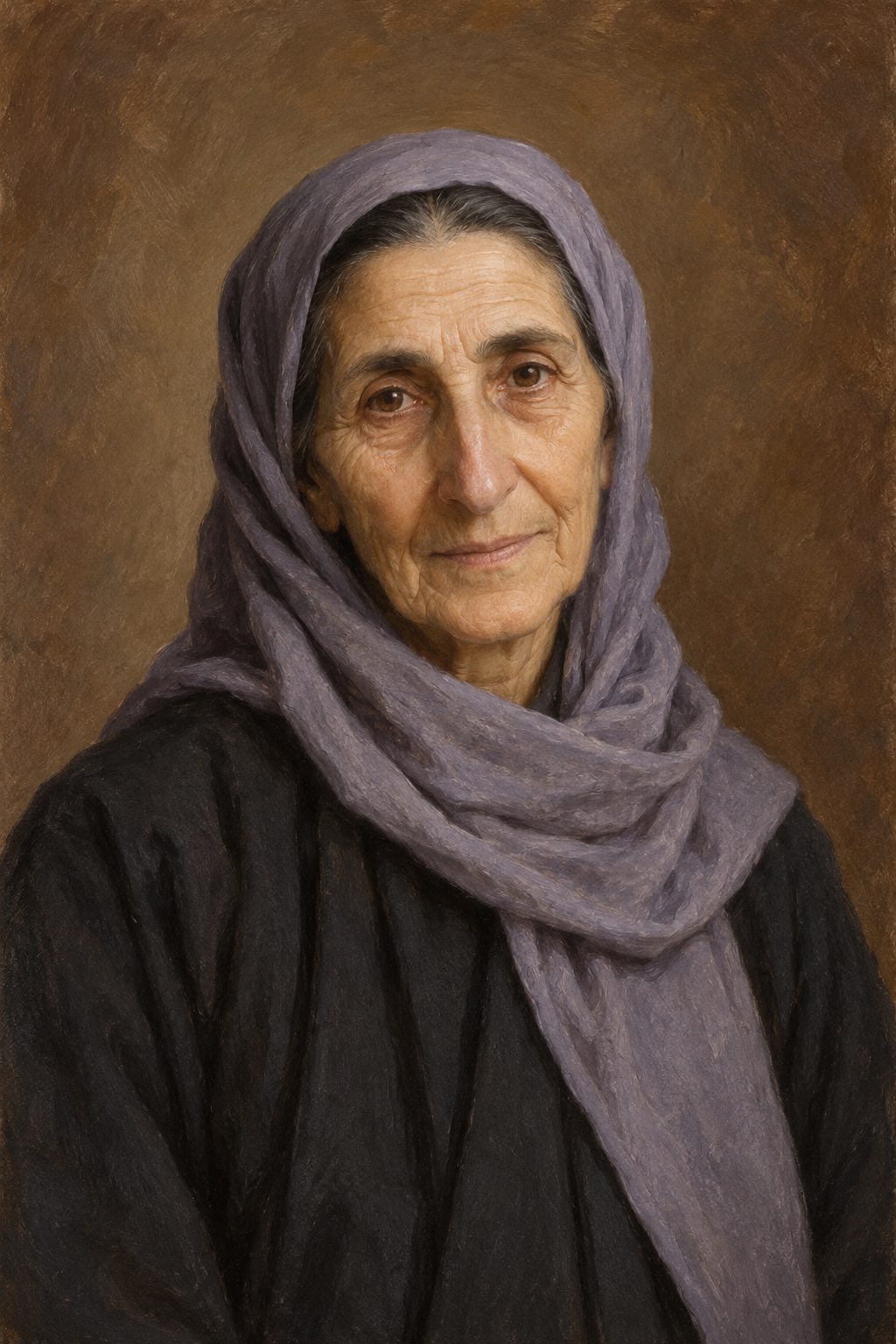
About Gabrielia Papayanni
Gabrielia Papayanni was born in Constantinople in 1897. She trained in physical therapy and chiropody in England and later opened a practice in Athens. In her treatment room, an image of Christ washing his disciples’ feet remained within sight as she worked. She prayed silently while caring for patients.
Abbess Philothei, who knew her in later life, recalled the importance Gabrielia attached to her family’s affection. She regarded the love received at home as a foundation for her care of other people. Philothei’s account also describes difficult work in England, including service in psychiatric settings, and her decision to remain there during the war. After returning to Greece, income from her practice helped support students, patients, and others in need. Financial success did not put an end to this practical assistance.
After her mother’s death, she gave away her inheritance and went to India, where she treated poor patients without charging them. Her spiritual daughter, also named Gavrilia, later described the varied work she undertook in India. Physiotherapy was only part of it. She washed patients’ clothing and taught English when asked, accepting tasks according to the needs around her. Her daughter emphasized that she worked in dispensaries associated with ashrams while remaining an Orthodox Christian. She welcomed people of other religions and spoke about her faith when they asked, rather than making care conditional on agreement with her beliefs.
She entered the community of Mary and Martha in Bethany and subsequently received monastic tonsure from Amphilochios on Patmos. Her religious life included active service beyond the monastery. A quieter part of her life was spent at New Jerusalem, a small monastery at Kouvaras in Attica. Timotheos Angelis’s study places her stay there in 1966–1968 and identifies the community through its monastic records. The monastery’s church was consecrated in 1967. Among the names recorded for placement within the altar were those of Gabrielia and her companion Thomais, together with Gabrielia’s deceased parents, Elias and Victoria. These records locate her within a particular community, alongside the accounts of her extensive travels.
The same study describes an unsigned, undated typescript discovered at Kouvaras containing sayings of Amphilochios of Patmos. Entries concerning his last days identify the elder, but do not establish who copied or transported the text. Angelis suggests that Gabrielia may have brought it from Patmos, where she had maintained a spiritual relationship with him. The suggestion remains a hypothesis, not a documented act by Gabrielia. The distinction matters because her connections with spiritual teachers are better established than the history of this particular notebook.
The younger Gavrilia remembered first meeting her in 1984 after a period of spiritual uncertainty. Gabrielia directed her toward confession and the life of the Church. When the younger woman later considered becoming a nun, Gabrielia encouraged her to visit different monasteries before choosing. She did not insist that closeness to a spiritual guide should replace a personal vocation. Her daughter also recalled that telephone calls continued late into the evening, leaving the quietest hours of the night for solitude. Hospitality and withdrawal both had a place in the rhythm of her days.
Philothei remembered that her advanced age had not extinguished her energy or delight in meeting people. She described a woman who received visitors without immediately trying to correct them, listened closely, and spoke honestly in a manner intended to encourage rather than reject. These are the recollections of someone who knew her, not a claim that every encounter followed an identical pattern. They help explain why people continued to seek her company after her years of travel and professional work.
In later years she welcomed people seeking spiritual guidance in Athens and on Aegina. She died on March 28, 1992. The Ecumenical Patriarchate added her to the Orthodox calendar of saints on October 3, 2023. Its announcement identifies her as a nun from Constantinople who died on Leros, and praises her charity and trust in God.
The formal act records that Metropolitan Paisios submitted written testimony about her life to the patriarchate. It identifies her philanthropy, mercy, prayer, and dedication to service as reasons for the Church’s decision. It also establishes July 18 as an annual commemoration associated with the translation of her relics. That observance is distinct from the March anniversary of her death celebrated locally. The document expresses the Orthodox Church’s recognition of her holiness; it does not turn every later story about her into an independently verified event.
The local diocese names her as a patron and protectress of Leros. Her grave is at the monastery of Panagia of the Castle. In March 2026, the island’s clergy gathered there for her annual commemoration, joined by local officials and pilgrims from Leros and elsewhere in Greece. Services also took place at the chapel of Saint Sophronios in Alinda, where her relic was offered for veneration.
Wondering how to weigh the stories and sources? Learn how to read a saint biography.