Biography
Gall of Switzerland
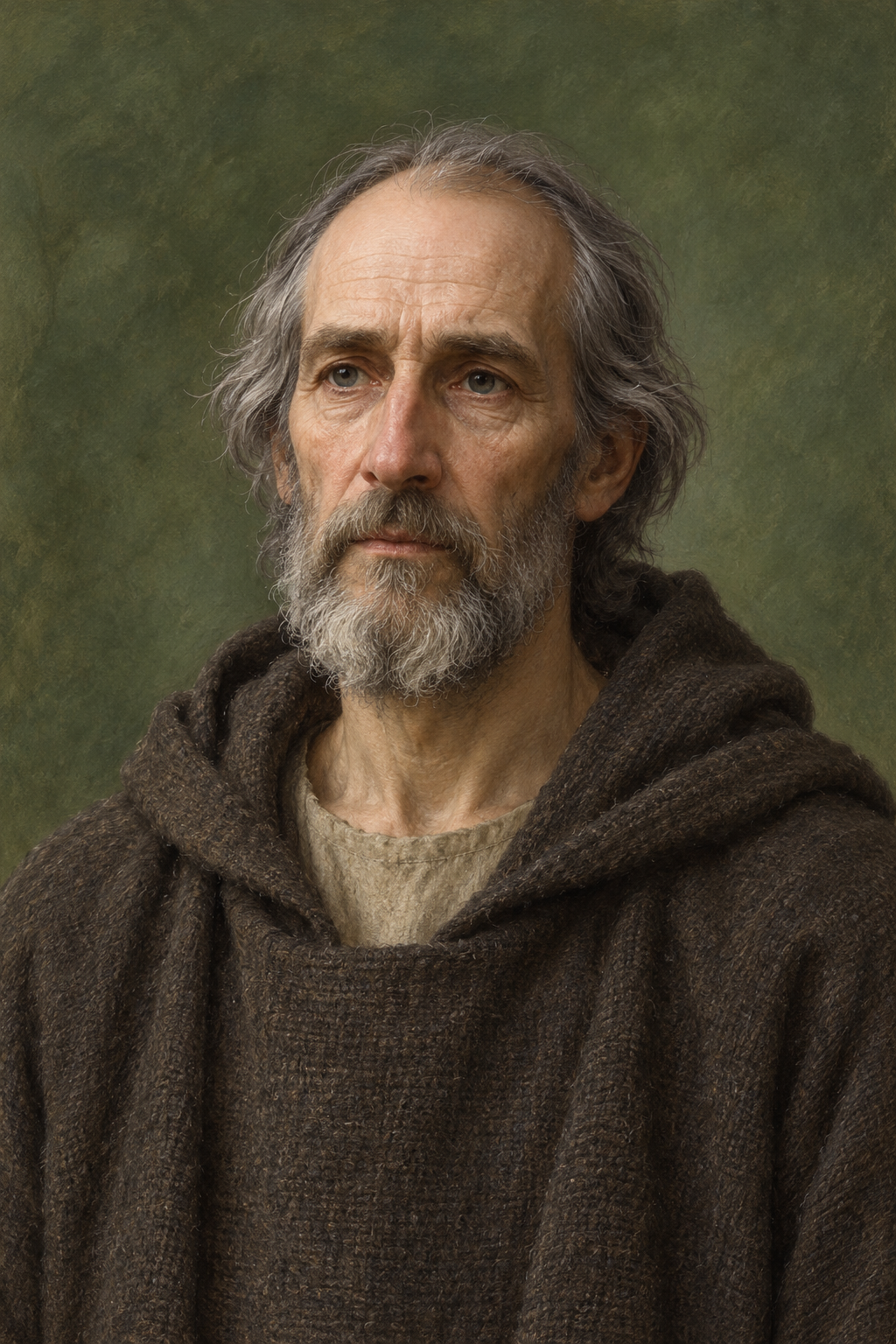
About Gall of Switzerland
Gall was a companion of Columbanus whose hermitage became the starting point of St Gallen’s monastic history. After living with Columbanus at Luxeuil, he reached the Lake Constance region. The traditional account says illness kept him from following his teacher into Italy. He remained near Arbon and later established a small community beside the Steinach.
His origins are debated. The familiar Irish account connects him with Bangor, while historian Max Schär argued for Alsace, pointing to his ability to preach in German. Interviewed in 2012, abbey librarian Ernst Tremp considered both arguments plausible. He emphasized Gall’s attachment to Columbanus and the Irish monastic tradition rather than a certain birthplace.
The separation was not entirely peaceful. An early life says Columbanus forbade Gall to celebrate Mass while his teacher lived. The tradition also tells of Columbanus sending his staff as a sign of forgiveness before dying. This account preserves a rupture and reconciliation within their relationship; it does not establish the identity of a surviving staff.
Gall’s community was initially a hermitage, not the later great Benedictine abbey. Johannes Duft’s scholarly account places his death at Arbon and explains that the monastery developed around his burial under Otmar in the eighth century. The surviving traditions do not support a precise, universally agreed chronology of Gall’s life.
One important witness to his memory survives in the abbey library as Codex Sangallensis 553. The manuscript contains the only surviving copy of the life written by Wetti in the early ninth century. The catalog therefore points to a written account produced long after Gall’s lifetime.
No securely authentic writings by Gall are known to survive; the letter and sermon attributed to him are considered doubtful. His best-known legend tells of a bear gathering firewood and receiving bread in return. A ninth-century ivory carving already depicts the story, and the bear became part of the city’s arms. Gall’s grave also became a pilgrimage destination, although the original burial place is no longer identifiable.
He remains patron of the city, canton and Diocese of St Gallen, whose cathedral celebrates his feast. The Catholic parish of Steinach also records his traditional patronage of geese, chickens and people suffering from fever. These are devotional associations, not claims about medical treatment. His feast is October 16.
Wondering how to weigh the stories and sources? Learn how to read a saint biography.