Biography
Gaugericus of Cambrai
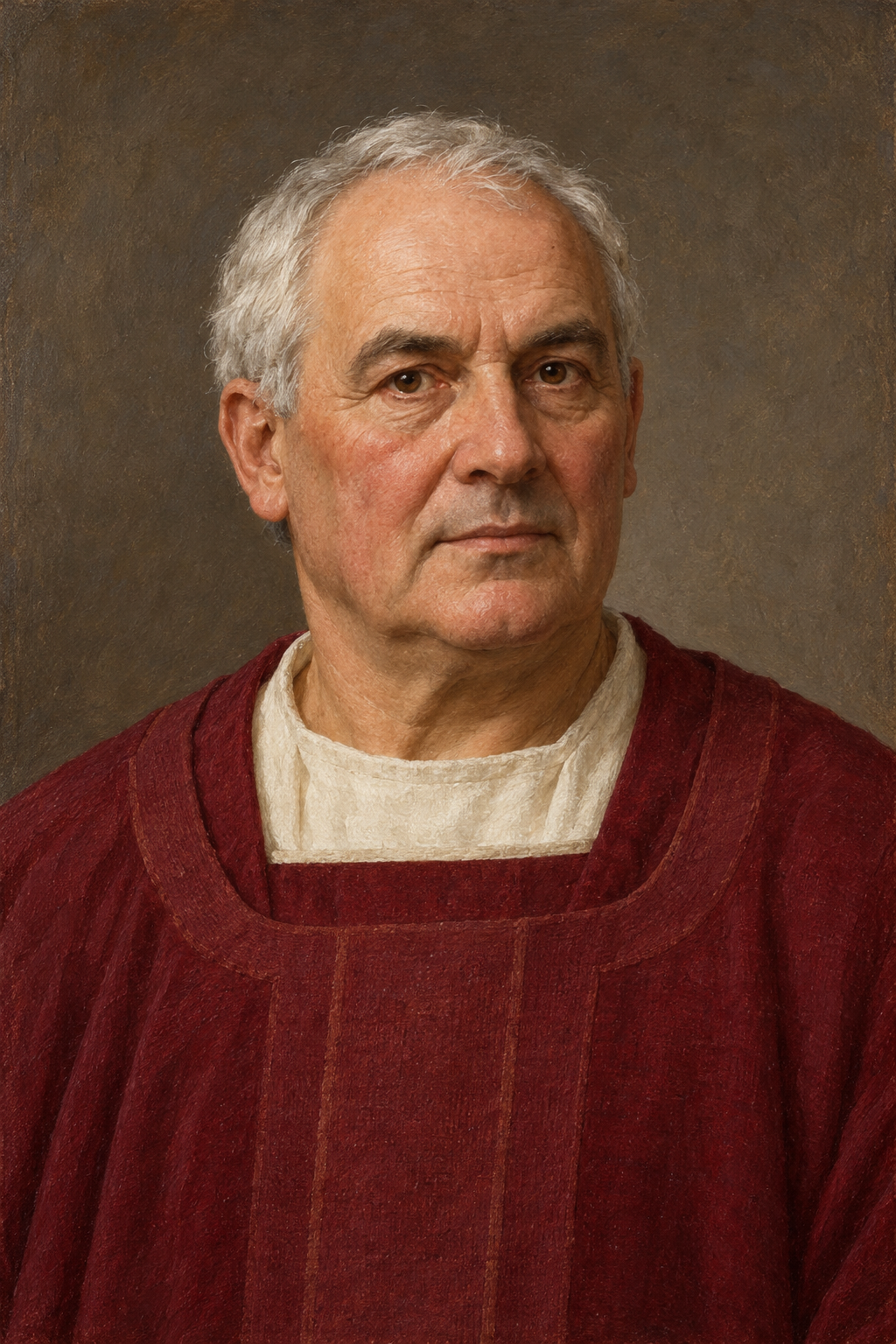
About Gaugericus of Cambrai
Gaugericus, usually called Géry in French, was bishop of Cambrai during the late sixth and early seventh centuries. He came from Yvois, now Carignan, and was trained for church service under Magneric of Trier. With royal approval, he was consecrated by the bishop of Reims. He attended the Council of Paris in 614 and is remembered for care of poor people and prisoners.
The early life translated by historian Michel Rouche presents Géry as the child of Christian Roman parents who were neither among the highest nor lowest ranks. It describes a young man who gave his food to poor people and learned the Psalter before becoming a deacon. These details come from a devotional biography, not a surviving personal memoir.
Its prison stories repeatedly set him against officials or owners who refuse his requests for mercy. In one, he seeks freedom for twelve prisoners; in another, he intercedes for two enslaved youths threatened with death. The narrative attributes their release to prayer and miraculous intervention. At Famars, enslaved people escape a merchant and reach the church where Géry is present. Rouche suggests that ransom may lie behind that account, while distinguishing this interpretation from the miracle story.
His missionary activity also included opposition to pagan worship and the destruction of idols. Historian Anne-Françoise Labié places that activity alongside his work to release prisoners and organize his diocese. Remembering his compassion does not require overlooking the forceful religious conflicts within his story.
The life says that his burial church, dedicated to Medard, stood where he had ordered idols destroyed. The exact chronology remains uncertain. The New Catholic Encyclopedia places his death around 625 and notes uncertainty about whether Géry or his predecessor moved the episcopal residence from Arras to Cambrai. His feast is August 11.
His association with freeing captives led to his recognition as a patron of prisoners. The Diocese of Cambrai continues to honor him as its patron alongside Our Lady of Grace. Its catechetical guide uses his remembrance to encourage practical works of mercy and identifies churches bearing his name in Cambrai and Valenciennes.
Wondering how to weigh the stories and sources? Learn how to read a saint biography.