Biography
Gennadius I of Constantinople
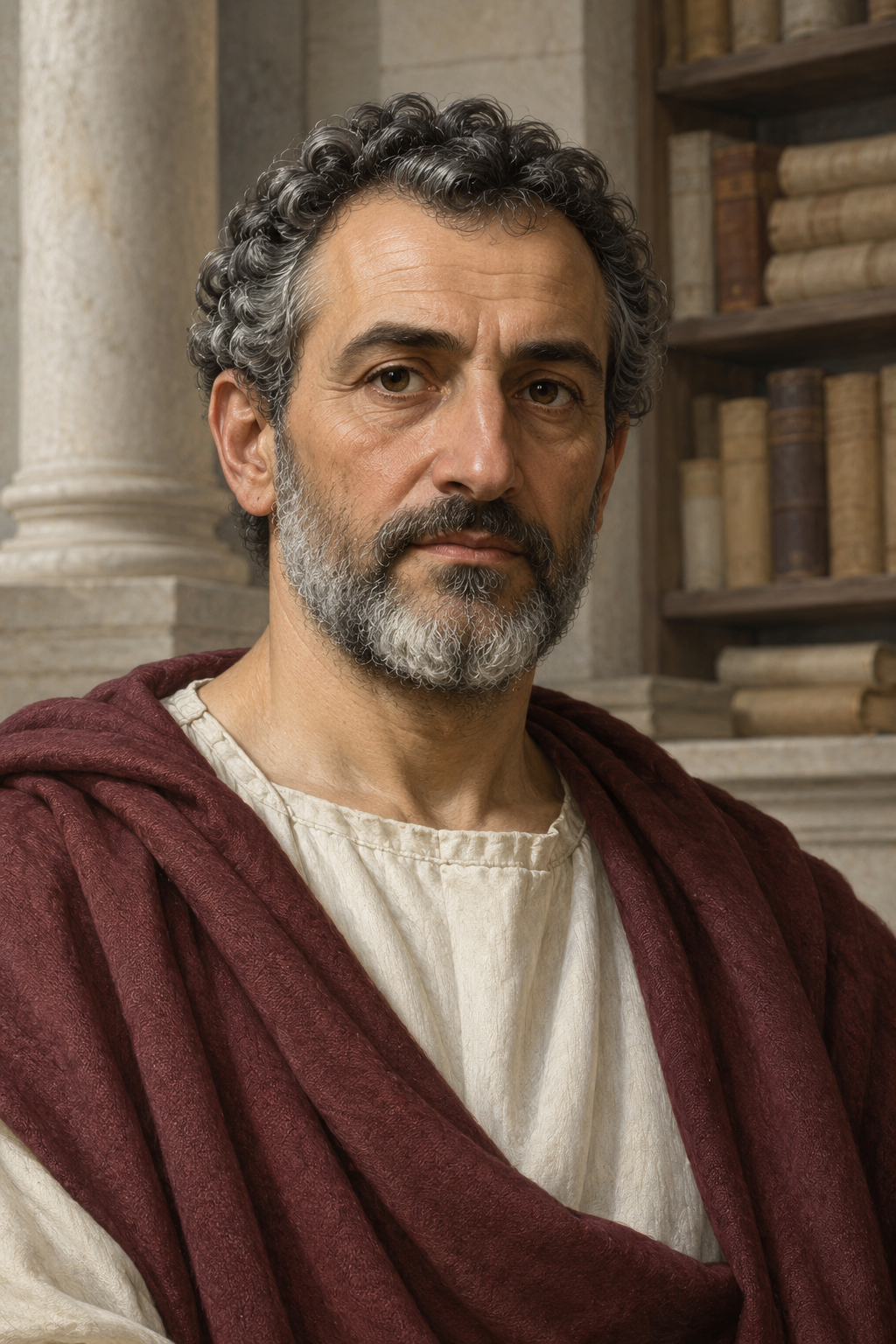
About Gennadius I of Constantinople
Gennadius led the Church of Constantinople from 458 until his death in 471. The Orthodox Church in America remembers him as a bishop whose expectations of his clergy included a thorough knowledge of Scripture and the Psalms. Its account also associates his patriarchate with the beginnings of the monastery founded by the senator Studius, later known as the Studion. Marcian served as the church’s steward during his leadership.
He succeeded Anatolius in a period of continuing theological conflict. John Chapman’s account records that Gennadius had earlier written sharply against Cyril of Alexandria, probably in 431 or 432. A possible reconciliation rests on identifying him with the recipient of a letter from Cyril in 434; that identification is uncertain. During his patriarchate he assembled a council of eighty-one bishops, including some displaced from their Egyptian sees. Chapman dates this gathering no later than 459.
The council’s opposition to simony survives in a letter sent in the names of Gennadius and the assembled bishops. Its argument is direct: ordination should not be bought, because Christ had appointed his apostles without demanding payment. It treats this as a responsibility of those who stand in the apostles’ place, and rejects ingenious arguments that might evade it. The letter appeals both to the Gospel and to the Council of Chalcedon. This surviving passage gives a concrete example of the standards Gennadius defended for church office.
A different picture of his responsibilities appears in the Life of Daniel the Stylite. In that account, Emperor Leo orders Gennadius to ordain Daniel, an ascetic living on a pillar outside the city. Gennadius initially delays, but goes after a second, more forceful message. Daniel will not allow a ladder to be raised, leaving the bishop and the waiting crowd below. As the day passes and the people grow thirsty, Gennadius prays at the foot of the pillar and declares Daniel ordained. Only afterward does Daniel permit him to climb up, and they share Communion. Gennadius then reports to the emperor. These details belong to Daniel’s hagiography, whose narrative presents the encounter through admiration for the ascetic.
Historian Maurits de Leeuw places this unusual episode within the relationship between spiritual authority and imperial power. Daniel’s standing at court preceded his ordination; becoming a priest confirmed a reputation that he already possessed. De Leeuw also cautions that saints’ lives combine historical material with miracles and recurring literary patterns. He describes Daniel’s Life as comparatively rich in details that can be checked against other evidence, while treating its presentation as something that still requires interpretation. The account therefore illuminates Gennadius’s dealings with an emperor and a celebrated ascetic without giving direct access to all of his motives.
Gennadius was also remembered as a writer. His namesake, Gennadius of Marseilles, praises his learning and says that he explained the entire Book of Daniel and composed numerous homilies. This short literary notice preserves a reputation for scriptural scholarship, although it provides little personal biography.
Only fragments of his biblical interpretation remain. Chapman identifies material on Romans and Genesis preserved in later collections of commentary, and describes his approach as belonging to the Antiochene tradition of literal interpretation. His article also records Gennadius’s historical inclusion in the Roman Martyrology on August 25. This is evidence of an older commemoration, rather than a claim about every present-day Catholic calendar.
The Orthodox Church in America commemorates him on August 31 and records a peaceful death in 471. Its devotional account includes stories of answered prayer and a warning about danger to his flock. Those stories are part of his religious remembrance; they are not independent evidence for the details of his public career.
Wondering how to weigh the stories and sources? Learn how to read a saint biography.