Biography
Gerasimus of the Jordan
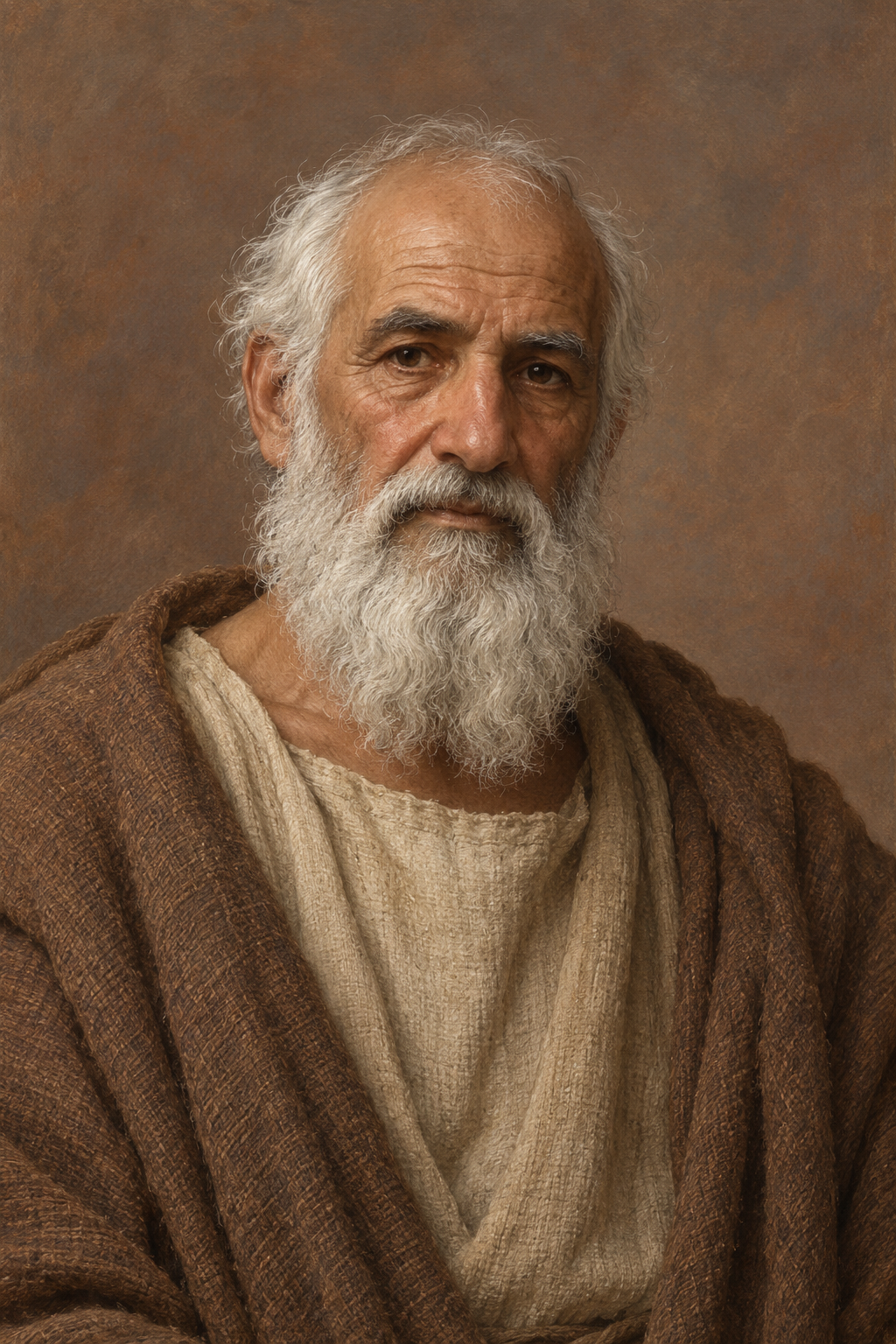
About Gerasimus of the Jordan
Gerasimus of the Jordan was a fifth-century monk remembered for organizing ascetic life near the Jordan River. He came from Lycia in Asia Minor and settled in the Holy Land. The Jerusalem church’s account places him among the monks affected by the disputes surrounding the Council of Chalcedon. It describes his initial opposition to the council and his later acceptance of its teaching with the guidance of Euthymius the Great.
The community associated with him combined solitude with regular common worship. In the Orthodox life, its monks spent five days working and praying in their cells, then gathered on Saturdays and Sundays for the liturgy and a shared meal. Their daily work included weaving baskets. The same account describes severe restrictions on food, clothing and possessions, together with a requirement to leave their cells open to anyone who needed to enter.
Archaeological remains help place this way of life in a physical setting. Amnon Ramon’s guide describes traces of a communal center east of the present monastery, with scattered monks’ cells and other cells cut into the nearby cliffs. The center supported those living separately and prepared newcomers for that life.
A different kind of testimony appears in John Moschus’s Spiritual Meadow. Moschus introduces the famous lion episode as a story told to him by monks of Gerasimus’s monastery. Gerasimus removes a reed from an injured lion’s paw, and the animal stays with him. When a donkey disappears, the lion is wrongly blamed and made to carry water in its place. Its innocence becomes clear when it brings back the stolen donkey. The story ends with the lion dying at Gerasimus’s grave. Moschus presents the episode as a sign of the harmony between humanity and animals before the fall; it is a religious narrative, not an eyewitness account of Gerasimus’s life.
The Jerusalem tradition dates his death to 475. His feast is March 4 in the church calendar; Jerusalem observes that date according to the Julian reckoning. The monastery visited today belongs to a later architectural history. Ramon records its rebuilding by the Greek Orthodox Patriarchate in 1885 after a period of abandonment and destruction. Its surviving buildings should therefore not be mistaken for an intact fifth-century foundation.
Wondering how to weigh the stories and sources? Learn how to read a saint biography.