Biography
Gerland of Agrigento
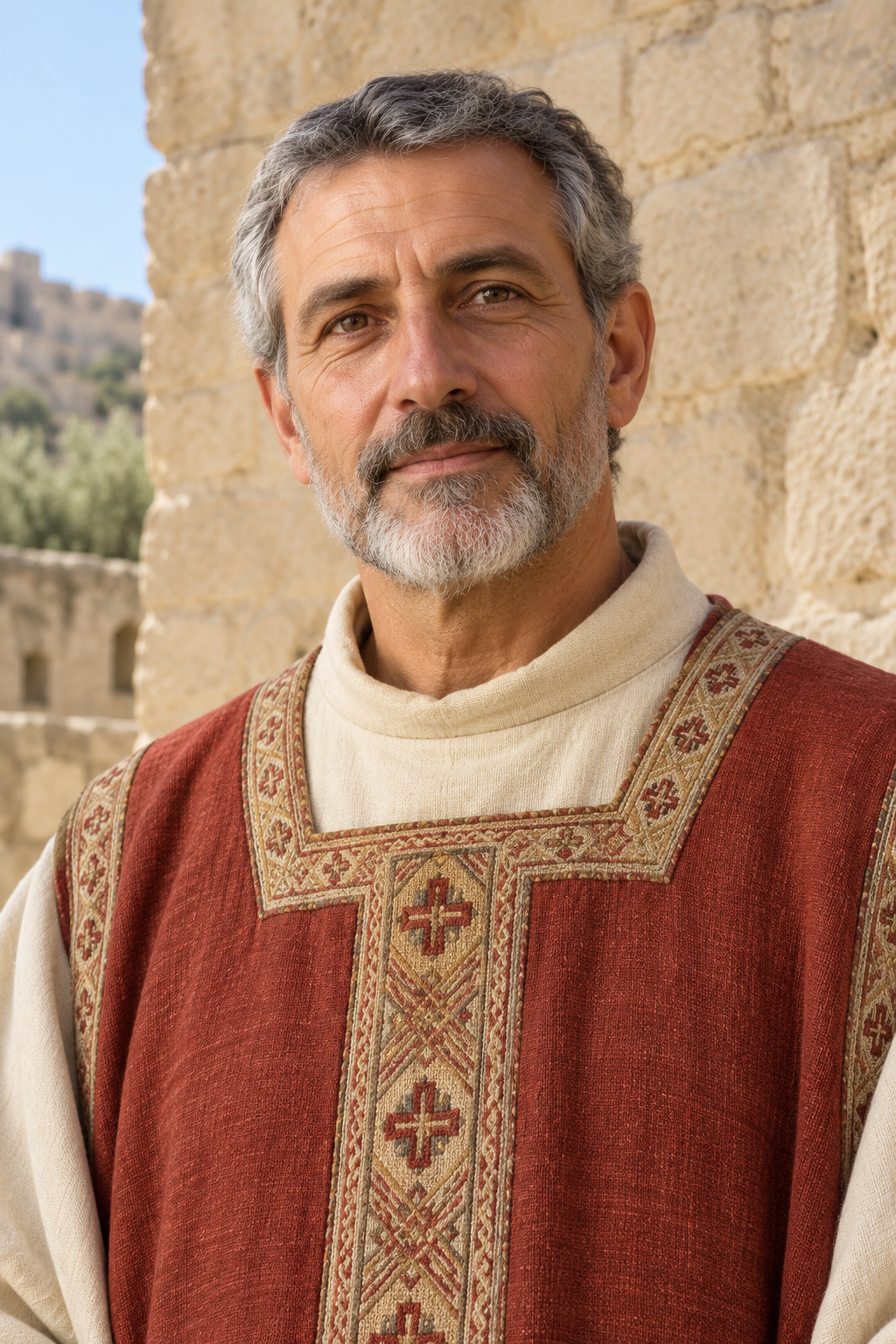
About Gerland of Agrigento
Gerland came from Besançon and became bishop of Agrigento during the Norman transformation of Sicily. The Archdiocese of Agrigento remembers him as the restorer of its church after the Norman conquest. His journey joined two communities far apart: the city of his birth and the Sicilian city that still honors him as its patron.
Before his episcopal ministry, Gerland served at Mileto in Calabria as head of the church’s schola cantorum. The archdiocese’s account says that he returned to his native city before Count Roger called him to Agrigento. It does not establish why he left Calabria. This interval should not be filled with a confident account of his motives.
Paolo Collura places Gerland’s selection as bishop around 1088, his consecration at Rome by Urban II, and papal confirmation in 1098. Collura also dates the diocese’s endowment to 1093. The foundation evidence needs caution. In his review of Julia Becker’s critical edition, Graham A. Loud reports that Becker treats Agrigento’s supposed foundation charter as a forgery. Collura’s account of the endowment should therefore not be read as the testimony of an uncontested original charter.
The setting was a city with a long Muslim history. In L. Di Mauro’s account, the Norman conquest of 1086 brought the restoration of the episcopal see. Roger repaired the walls, while Gerland established the cathedral, episcopal residence and a tower near the castle on the highest ground. Di Mauro explains the location in terms of security within a population that remained Muslim.
The building work was accompanied by the organization of a cathedral community. Collura records a cathedral dedicated to Mary and Saint James and a chapter supported by twelve prebends. He regards Gerland’s participation in the meeting at Mazara in 1098 as probable. That qualification matters: the meeting should not be treated as a securely documented personal appearance.
The cathedral visible today should not be mistaken for an unchanged building from Gerland’s lifetime. Di Mauro dates its surviving structures chiefly to the thirteenth and fourteenth centuries and its bell tower to the fifteenth. His account connects Gerland with the earlier episcopal complex while distinguishing it from the later architecture.
Agrigento’s official account dates Gerland’s death to February 25, 1100. It remembers his preaching and charity alongside his work of reorganizing the diocese. Those qualities belong to the local Church’s received account of his ministry, rather than a detailed record of individual sermons or charitable transactions.
His memory remains part of Agrigento’s public and religious life. In his message for the feast in 2023, Archbishop Alessandro Damiano named him patron of both the city and the archdiocese. Damiano used the story of a bishop arriving from another country to speak about welcome and integration in the present. This is a modern pastoral reading of Gerland’s life, not evidence for otherwise undocumented medieval events.
Wondering how to weigh the stories and sources? Learn how to read a saint biography.