Biography
Gertrude the Great
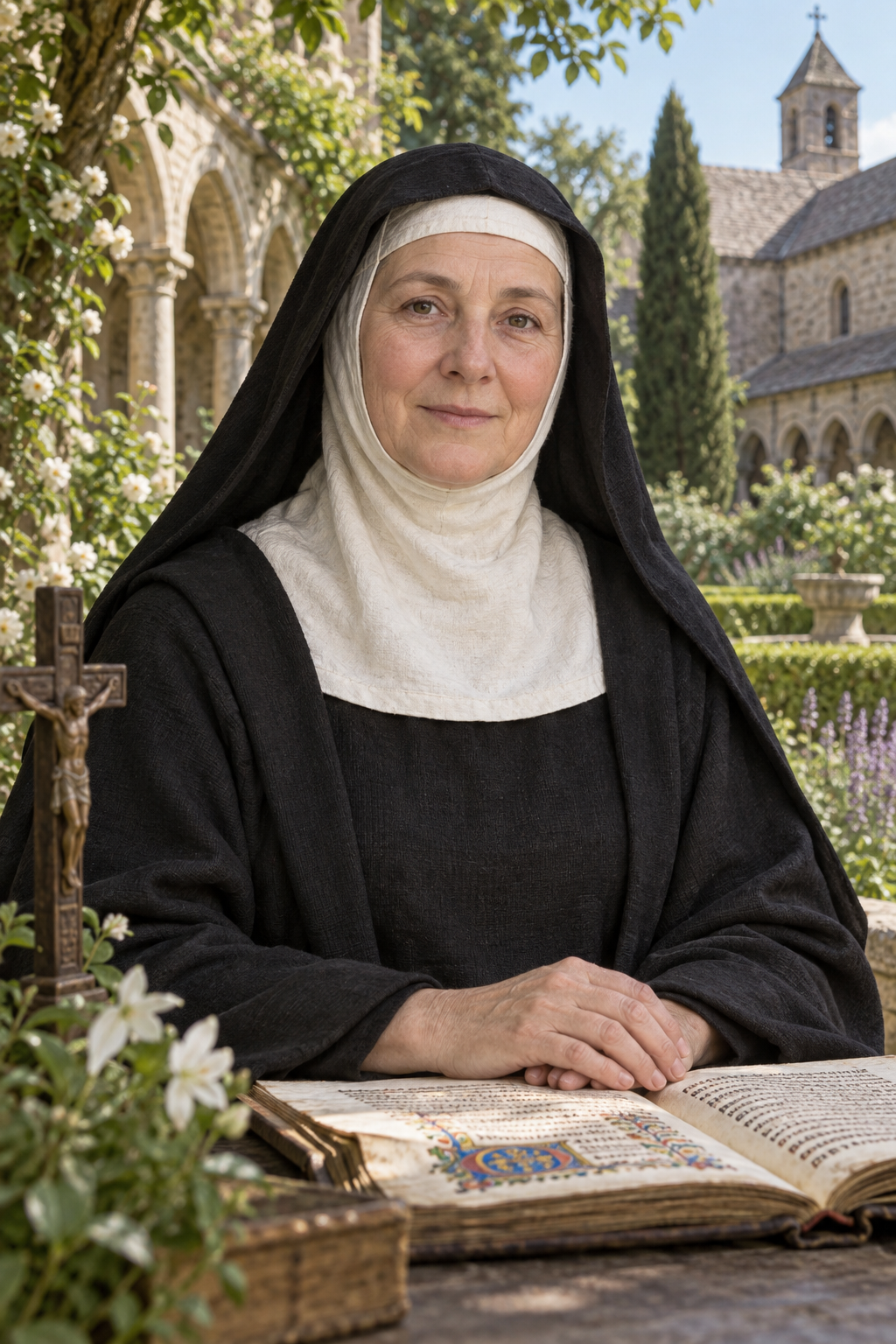
About Gertrude the Great
Gertrude the Great grew up at Helfta, a monastery where women studied, taught and wrote about the life of prayer. She was born on 6 January 1256. She entered its school as a small child in 1261 and remained within its religious community. Her family and birthplace are unknown. Her interests included literature, music and the decoration of manuscripts. The education that first absorbed her attention later became a means of explaining her faith to other people.
Helfta had its own history before Gertrude arrived. The community had moved there in 1258 because its previous home lacked sufficient water. Its nuns followed Benedict's Rule and Cistercian customs. Abbess Gertrude of Hackeborn placed considerable importance on theological and intellectual education, and the monastery maintained a school. This abbess was a different woman from Gertrude the Great. Mechthild of Hackeborn, a teacher and musician, was another important member of this circle. Learning, singing and the shared rhythm of worship therefore belonged together in the environment in which the younger Gertrude developed her gifts.
Gertrude later identified a particular evening, 27 January 1281, as the turning point in her spiritual life. She described an encounter with Christ that began a sustained series of visionary experiences. The account records her understanding of those experiences, rather than independent confirmation of a supernatural appearance. For several years she kept this part of her life private. According to the biographical tradition, she began to speak and write about it in Holy Week 1289, believing that she had been directed to do so. Her learning also made her a person whom others, including people outside the monastery, consulted for advice.
Her change of direction did not mean abandoning the disciplined work of a reader and writer. She turned her attention more fully toward Scripture, the Fathers of the Church and theology. She copied, translated and composed material for other people's spiritual benefit. The older Catholic Encyclopedia cautions against reading her severe criticism of herself as a record of an earlier life of grave wrongdoing. Her outward vocation had remained continuous as she moved from the monastery's school into its community. What changed was the purpose and intensity with which she pursued study and prayer, not a sudden escape from an entirely different way of life.
The surviving Herald of God's Loving-Kindness preserves both Gertrude's voice and the work of another woman. Gertrude wrote the second book in Latin herself. The other four books were recorded by a close companion, often called Sister N by modern scholars. This makes the collection a collaborative witness rather than a single uninterrupted autobiography. Its fourth book arranges experiences around the feasts of the Church's year. Illness sometimes prevented Gertrude from joining the community's worship, and the accounts describe the prayers and visions associated with those absences. The compiler organized this material through the calendar of Mass and the daily office.
Gertrude's Spiritual Exercises offered a different kind of book. Its seven exercises combine brief prayers, gestures and spiritual counsel, inviting repeated recollection of gifts already received. They include the renewal of baptismal innocence, conversion and the cultivation of divine love. The writing seeks to bring prayer into the passing hours of an ordinary day. Its language moves between Christ in glory, Christ in humility and Christ present in the Eucharist. The work is therefore more than a record of extraordinary experiences: it supplies words and practices through which another person can enter the same broad tradition of devotion.
Theologian Francisco Asti traces a deliberate progression through the Exercises. Baptism begins the journey; conversion, consecration and monastic profession develop it; renewed love leads into praise and thanksgiving. The final movement concerns repentance and preparation for death. Asti emphasizes that Gertrude was not writing only for women who shared her monastery. Her reflections address believers seeking to deepen the life they already have, through participation in worship and the sacraments. In this reading, personal contemplation does not compete with communal prayer. The two belong to the same life, and the writing repeatedly joins inward devotion to the forms of worship practiced by a Christian community.
Gertrude died on 17 November, in either 1301 or 1302. Her attention to Christ's humanity and heart should not obscure the wider shape of her thought. The monastic community of Bose stresses the place of the Trinity in her account of God's presence in believers and in the Church. Her legacy is preserved not only as the memory of a visionary but in writings shared with others: words for prayer, reflection and a life formed within a community.
A printed edition of the Herald appeared at Cologne in 1536. That edition confused its author with the abbess, an identification that persisted for centuries. Her feast was extended throughout the Catholic Church in 1738, long after the women who had preserved her experiences were gone.
Wondering how to weigh the stories and sources? Learn how to read a saint biography.
Explore similar vocations
Prayers for Gertrude the Great
Gertrude the Great: petition from the Exercises
O Jesus, you who are immensely dear to me, be with me always