Biography
Gregory of Nazianzus
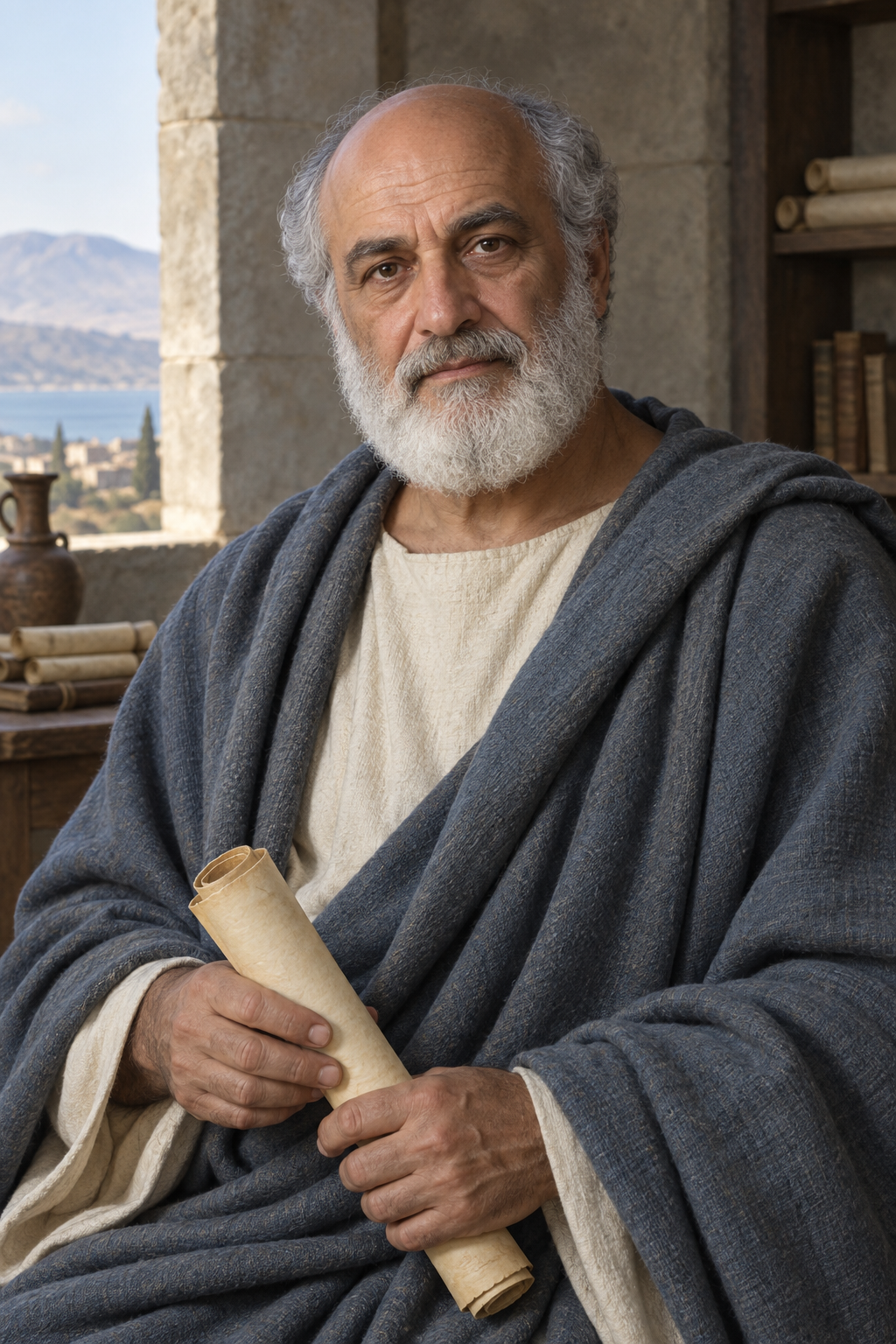
About Gregory of Nazianzus
Gregory of Nazianzus was a Christian teacher whose public ministry repeatedly drew him away from the quiet life he desired. Born in Cappadocia around 330, he studied in several centers of learning, including Athens. His surviving speeches and letters preserve theological argument alongside the difficulties of friendship, family duties, and leadership.
At Athens, Gregory developed a close friendship with Basil, the future bishop of Caesarea. In his later funeral oration for Basil he recalls their shared studies and religious commitments. He presents their companionship as an encouragement toward a common way of life. The speech is affectionate commemoration, and its language of friendship must be read in that setting. It records what Gregory wished to honor about Basil, rather than supplying a neutral history of every agreement or disagreement between them.
Their correspondence supplies a less formal picture. In his first letter to Basil, Gregory explains that his obligation to his parents prevents him from fully keeping a promise to join his friend. He proposes dividing their time so that neither family duties nor friendship are abandoned. Other letters joke about Basil's uncomfortable retreat and its poor meals. Gregory later clarifies that the teasing was affectionate, recalling with longing their shared prayer and study. The exchange preserves humor alongside serious commitment.
Gregory's reluctance to assume pastoral responsibility also appears in Oration 2, his defense of leaving and then returning after priestly ordination. He acknowledges that his conduct had invited criticism and attempts to explain it to his listeners. The speech treats ministry as a demanding responsibility for other people, not simply a position of honor. His account is a personal defense, and its claims about his own intentions cannot be checked independently in the way an externally recorded appointment might be.
In the same discussion, Gregory compares pastoral work with medical care. People differ in circumstances and character, so guidance requires judgment about what each person can receive. He argues for persuasion and willing response, observing that an imposed change may disappear when the pressure ends. The comparison does not make his ministry a modern therapeutic practice. It does show his attention to differences among people and his insistence that holding authority alone does not provide the knowledge needed to guide them.
Basil later ordained him for Sasima, but Gregory did not take possession of that see. Around 379 he went to Constantinople to serve a minority community committed to Nicene teaching. There he delivered the five speeches known as the Theological Orations. Their argument addressed questions about the Father, Son, and Holy Spirit that divided Christian communities. The move placed a man drawn to contemplation in a public setting where preaching and ecclesiastical conflict were closely connected.
The first Theological Oration criticizes religious debate pursued as entertainment or a display of cleverness. Gregory asks speakers to consider their preparation, their audience, and the limits of a discussion. He connects responsible theology with the speaker's conduct and with time given to reflection. His attack on opponents can itself be sharp. The speech therefore preserves both an argument for disciplined conversation and the forceful rhetoric of a participant in controversy, rather than an example of consistently gentle disagreement.
In the second Theological Oration he considers the limits of knowing God. Using the biblical image of Moses approaching the divine presence, he distinguishes signs of God's action from complete understanding of God's nature. Even an unusually learned or devout person, he argues, cannot contain that mystery in a definition. This acknowledgment of limits is not a withdrawal from belief. Gregory explicitly distinguishes confidence that God exists from a claim to comprehend everything that God is.
The fifth Theological Oration develops his defense of the Holy Spirit's divinity. Gregory associates Father, Son, and Spirit with one divine light while maintaining their distinction. He also describes revelation as a gradual preparation of human understanding. In his argument, the teaching of Scripture and the church's experience of the Spirit belong together. The discussion explains why debates over words mattered to him: what Christians said about the Spirit was inseparable from how they understood worship and baptism.
His letters on the Apollinarian controversy defend Christ's full humanity, including a human mind. Yet these texts also reveal limits to his willingness to accommodate disagreement. Writing to Nectarius, he objects to opponents being allowed to assemble and teach. His concern for what he regarded as true doctrine could therefore lead to demands that restricted other Christians. This evidence complicates an account that remembers him only as a peaceful thinker, and preserves the harder consequences of the religious authority he defended.
His farewell speech at Constantinople asks to be released from office and recalls the congregation gathered around his preaching. Gregory defends his conduct and rejects expectations that a bishop should display the wealth and ceremony of powerful officials. The ending addresses churches, listeners, and the city itself before entrusting his people to God. It is a public act of departure as well as an argument about the character of ministry, and its pointed judgments remain those of an involved participant.
The received chronology places his death near the end of the fourth century; the OCA calendar gives 389. His later reputation rests on a substantial body of speeches, letters, and poetry. Benedict XVI's discussion of his teaching emphasizes both the Trinity and Christ's full humanity. Those connected concerns explain why Gregory's writings continued to matter: he gave Christian readers language for speaking about God while insisting that human life, thought, and action were involved in what that language meant.
Wondering how to weigh the stories and sources? Learn how to read a saint biography.
Explore similar vocations
Prayers for Gregory of Nazianzus
Gregory of Nazianzus: prayer excerpt
The grace of our Lord Jesus Christ be with you all.