Biography
Gregory of Nyssa
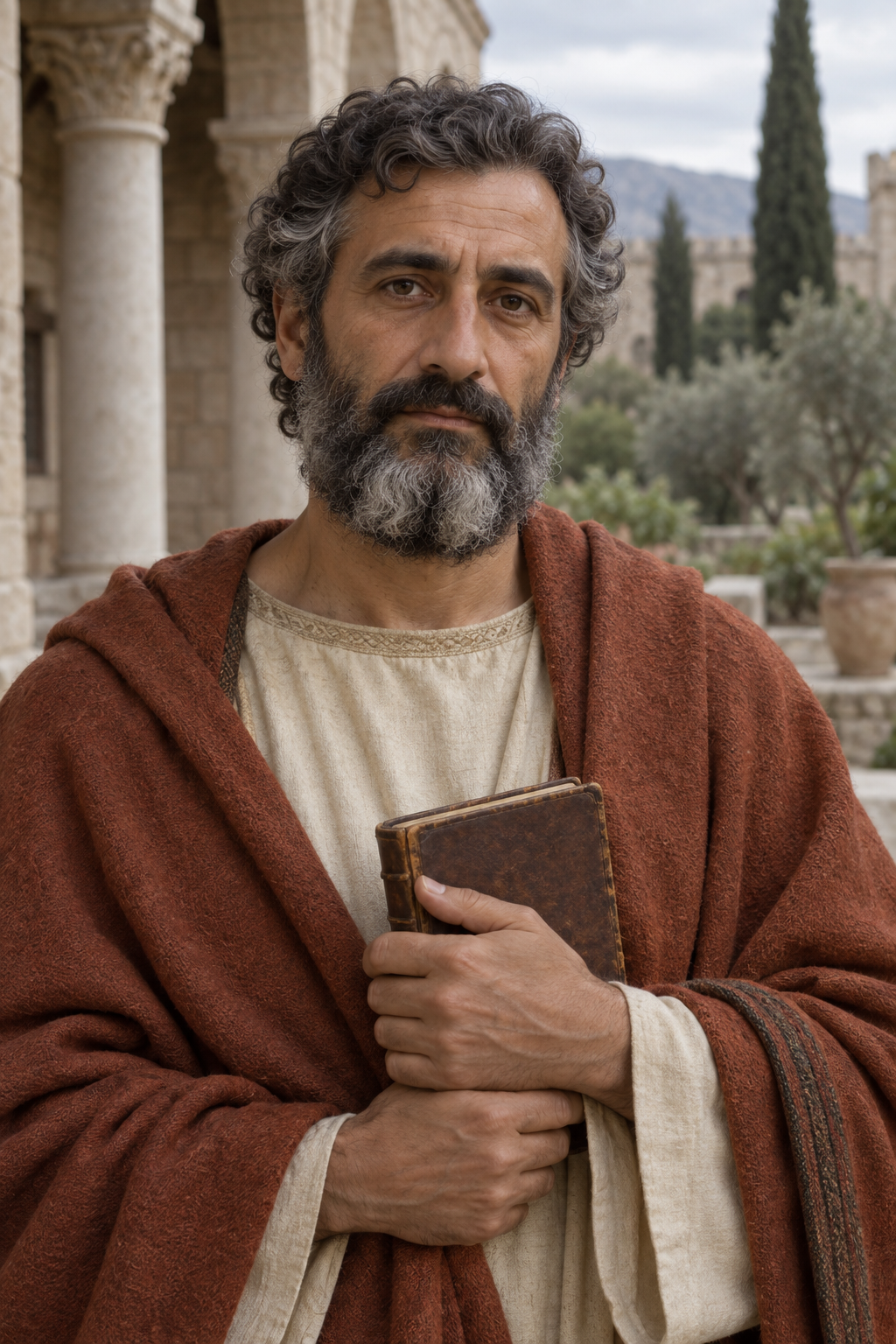
About Gregory of Nyssa
Gregory of Nyssa was a bishop and writer whose Christian thought took shape within a remarkable family in fourth-century Cappadocia. Born around 335, he learned from his brother Basil and his sister Macrina, and developed an interest in philosophy and rhetoric. Benedict XVI's account describes an early career in teaching and a marriage before Gregory turned more fully toward ascetic life. The outline is clearer than the details of his household: it does not justify filling in a wedding date or treating disputed family identifications as certain.
Gregory became bishop of Nyssa in 372, according to the Orthodox Church in America's account. His episcopate was interrupted by accusations over the handling of church property, made during the conflicts over Christian teaching that divided the churches. The same account places his restoration after the emperor Valens died in 378. These episodes put his intellectual work in a demanding public setting: he had a congregation to serve and opponents who challenged his authority to do so.
His writing also continued a conversation with his brother Basil's teaching. In On the Making of Man, addressed to their brother Peter, Gregory set out to supplement Basil's account of creation with a discussion of humanity. He carefully distinguished this new contribution from Basil's own work, refusing to put his words into his teacher's mouth. His introduction presents the book as a gift shaped by gratitude, but also as an undertaking for which he must accept responsibility. He proposes to bring scriptural interpretation and reasoning into a coherent account, including questions that initially seem difficult to reconcile.
His preaching could challenge familiar claims of ownership and rank. Commenting on Ecclesiastes, Gregory singled out the speaker's possession of enslaved men and women as a claim more serious than owning gardens or buildings. He argued that one human being could not rightfully assume mastery over others who shared the same nature. The surviving sermon is evidence of this criticism; it does not establish that he brought slavery to an end or that his hearers acted as he urged. Its force lies in the challenge itself, directed at the presumption of treating people as possessions.
After Basil's death, Gregory traveled to see Macrina and found her gravely ill. His Life of Macrina describes their reunion and his returning grief when they spoke of Basil. He preserved her response as a discussion of suffering and the hope of life beyond death, honoring a sister who could also teach him.
The scene does not make the learned bishop the person with all the answers. In On the Soul and the Resurrection, Gregory gives Macrina the role of teacher while his own voice raises objections born of loss. He asks how people can avoid grieving when death removes someone who had spoken and acted beside them. He points to the ordinary effort spent preserving life, including shelter and medicine, to explain why death is so difficult to dismiss. His questions give the discussion an emotional starting point as well as an intellectual one.
The dialogue explores the soul and resurrection through argument, questions, and appeals to Scripture. Macrina's voice answers Gregory's questions within a carefully composed literary work. The text establishes what Gregory chose to write about their exchange; it cannot by itself establish that every speech reproduces her words exactly. Reading it with that distinction preserves both its theological importance and the limits of its testimony. It also keeps Macrina visible as the teacher Gregory chose to honor, instead of reducing her to a name in a list of relatives.
Travel did not lead him to equate holiness with visiting a famous place. In On Pilgrimages, Gregory explains that church responsibilities had taken him to Arabia and Jerusalem, with transport provided by the emperor. He nevertheless questioned making such journeys a religious obligation, arguing that the Gospel did not require them. His account says that seeing the places associated with Jesus had not changed the faith he already held. The letter also contains harsh generalizations about Jerusalem and restrictive assumptions about women travelers; his criticism of pilgrimage should not turn those judgments into neutral descriptions.
Gregory's public work continued alongside these family losses. He participated in the Council of Constantinople in 381 and in another synod there in 394. His death date is not securely known.
His teaching connects spiritual growth with the treatment of other people. As Benedict XVI explains, Gregory describes growth toward God as an ongoing movement, rather than an achievement completed once and then possessed without further effort. He also urges care for people in poverty, identifying their dignity through Christ's association with them. The movement toward God therefore includes attention to a neighbor's needs. Together with the memory of Macrina, these writings preserve a thinker concerned with how Christian belief enters grief, relationships, and the practical choices of a human life.
Wondering how to weigh the stories and sources? Learn how to read a saint biography.
Explore similar vocations
Prayers for Gregory of Nyssa
Macrina's prayer as recorded by Gregory
Thou, O Lord, hast freed us from the fear of death.