Biography
Gregory Thaumaturgus
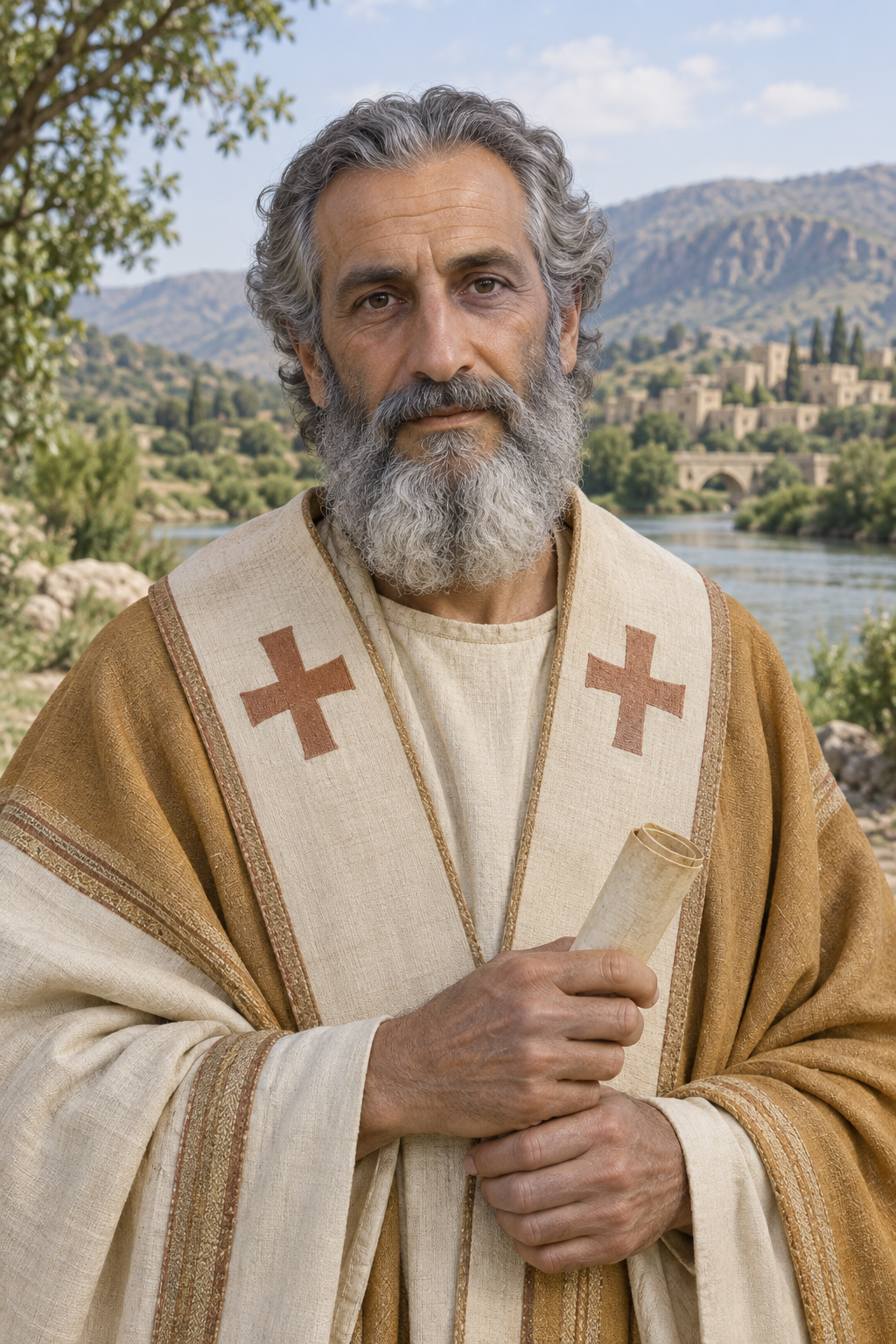
About Gregory Thaumaturgus
Gregory Thaumaturgus, remembered as the Wonderworker, was born around 213 at Neocaesarea in Pontus. He came from a non-Christian family and was first known as Theodore. His farewell address recalls the student whose legal ambitions changed through study with Origen. His Canonical Epistle shows a bishop addressing the damage invasion inflicted on ordinary people.
A journey connected with his sister's household brought him to Caesarea, where Origen persuaded him to stay. Gregory had intended to pursue law; instead, repeated conversations gradually won him to philosophy and Christian teaching. He remembered being questioned closely, having careless answers challenged, and learning not to accept an impressive argument before examining it. Origen's friendship mattered as much as his reasoning. Gregory did not describe himself as an effortless student: the discipline could be uncomfortable, and his admiration grew through the work of being taught. He also valued being allowed to read widely among philosophical schools, with guidance in testing their claims rather than an obligation to accept one school's conclusions.
Origen's letter to Gregory gives the teacher's side of their relationship. He thought Gregory capable of succeeding as a lawyer or philosopher, but urged him to devote his ability to Christianity. Secular learning need not simply be discarded: skills developed in other studies could serve the reading of Scripture. Geometry and astronomy were among the disciplines Origen thought could be useful, provided Gregory made them helpers rather than the final purpose of his studies. Origen also pressed him to read carefully, seeking the meaning of a passage instead of settling for its surface. Prayer belonged with this work of interpretation. The advice asked Gregory to bring both intellectual effort and dependence on God to his reading, rather than choose between them.
The church historian Eusebius identifies Gregory with the student Theodorus and names his brother Athenodorus beside him. He says that the brothers remained with Origen for five years and became bishops while still young. Later, he places both among the leaders of churches in Pontus. Gregory's responsibilities also drew him beyond his own community: Eusebius includes the brothers among the bishops who assembled at Antioch to examine the teaching of Paul of Samosata. The meetings took place repeatedly, as the participants questioned Paul's position and his supporters defended it.
Invasion raised urgent questions about property, captivity and sexual violence. His Canonical Epistle tells Christians not to profit from their neighbors' losses. Finding abandoned possessions or losing one's own property did not justify taking another person's goods. He also demanded investigation when escaped captives were reportedly being detained by local people. He distinguished voluntary restitution from returning goods only after exposure. For women assaulted in captivity, he rejected blame where their previous lives showed chastity, although his suspicion of women with other sexual histories remains part of the letter's troubling assumptions.
Gregory's later biographer, Gregory of Nyssa, remembered a bishop who challenged the way people judged candidates for church leadership. In the story of Alexander, a divided assembly mocks Gregory by proposing a charcoal worker instead of a socially impressive candidate. Gregory takes the suggestion seriously and examines the man rather than dismissing him because of his dirty clothing. Alexander's way of life, not the first impression made by his occupation, becomes decisive. The account adds that Alexander gave away his earnings and deliberately accepted an occupation that concealed his abilities. Gregory had Alexander examined; attendants then bathed him and clothed him in Gregory's garments before the assembly. The account presents Gregory resisting the assembly's contempt and recognizing a capacity for service that others had overlooked. It is a story preserved in the later Life, not an independently documented election record.
A short declaration of faith transmitted under Gregory's name expresses the conviction that Father, Son and Holy Spirit belong to one undivided Trinity. It denies that any person of the Trinity was created or introduced later, as though God had once existed without the Son or Spirit. This text became part of the tradition associated with his teaching. Its language gives a concise expression of the faith attached to his name, rather than a record of a sermon delivered on a securely known occasion.
Gregory's influence also passed through households. Basil of Caesarea recalled that his grandmother Macrina taught him Gregory's words as her memory had preserved them. Basil later recalled Gregory avoiding slander and seeking reconciliation before approaching the altar. The appeal shows how Gregory's remembered conduct remained a standard by which later Christians argued about their own responsibilities.
Basil also reports the celebrated tradition that Gregory began with seventeen Christians and brought the surrounding population to faith. He links that memory with stories of rivers changing course and a disputed lake drying up. These are accounts of Gregory's reputation for miracles, not verified measurements of his success. Gregory died around 270–275; the Church remembers his work as both a teacher and a pastor.
Wondering how to weigh the stories and sources? Learn how to read a saint biography.
Explore similar vocations
Prayers for Gregory Thaumaturgus
Gregory Thaumaturgus: sourced prayer excerpt
Increase our faith.