Biography
Guenhael of Landevennec
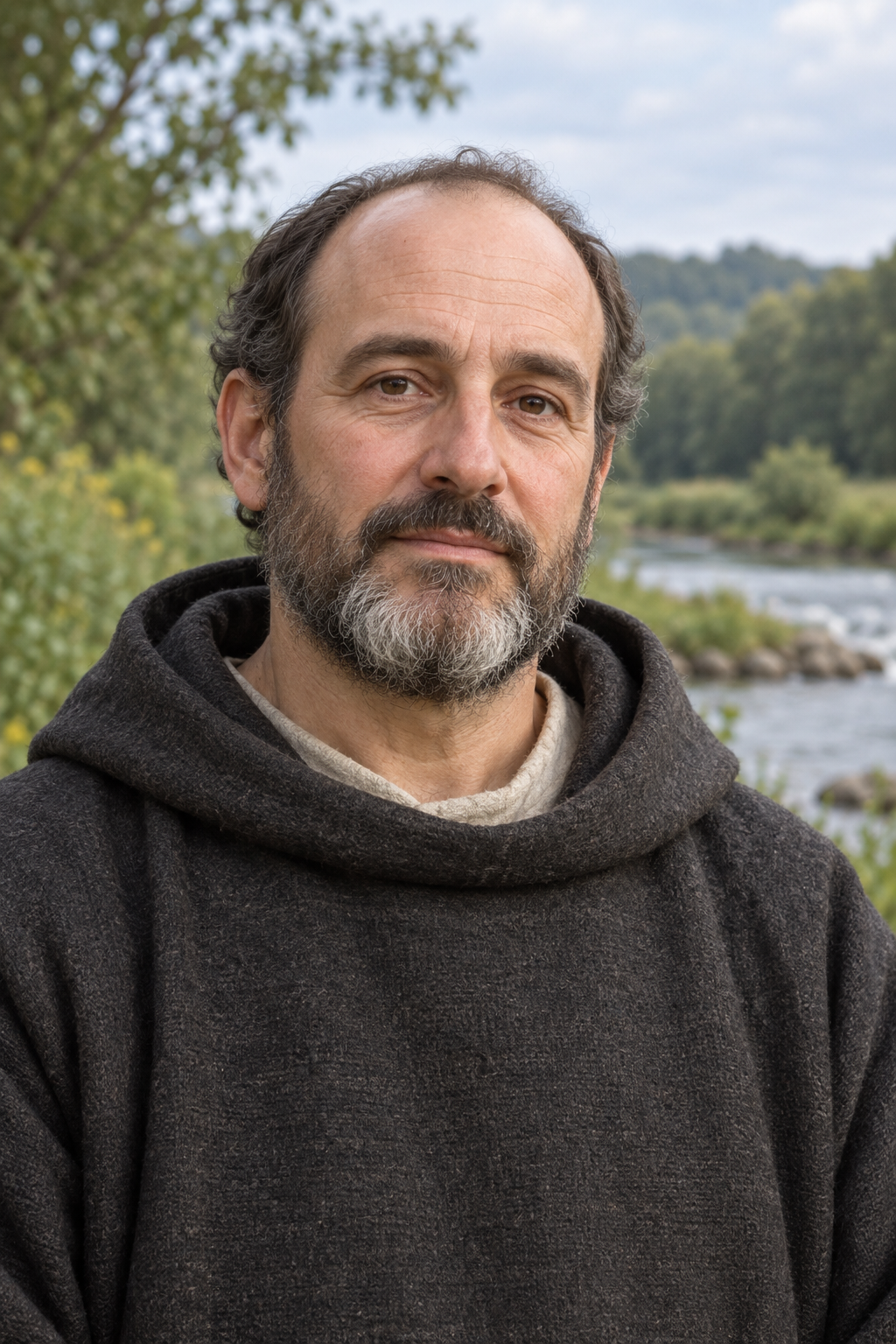
About Guenhael of Landevennec
Guenhael is remembered as a disciple and successor of Guénolé at Landévennec. The two names belong to distinct figures in the abbey’s tradition: Guénolé was its founder, while Guenhael was said to have followed him as abbot.
The account by Joseph Chardronnet places his childhood around Quimper, while acknowledging a competing claim from nearby Ergué-Gabéric. It tells of a child attracted to monastic life after meeting Guénolé, with his parents agreeing that he could join the community. These are received traditions, not contemporary childhood records.
According to the same account, he later resigned as abbot and traveled with other monks through Britain and Ireland. He is remembered there as encouraging monastic life before returning to Brittany. His final retreat is associated with the right bank of the Blavet, at present-day Lanester.
Jean Evenou’s scholarly notice cautions that the writer of the Life was more concerned with edification than history. He places its composition centuries after the events it describes. The journeys and striking ascetic episodes therefore cannot be read as a contemporary itinerary or personal testimony.
Evenou also distinguishes conflicting versions of the final years. One places the last monastery near the Blavet; Albert Le Grand later added further returns to Landévennec, including a death there. A Vannes liturgical account offered another burial tradition. These differences prevent a secure reconstruction of his final movements.
Chardronnet dates his death between 585 and 590. The approximate year 585 is retained here with that range explicit, rather than attaching the feast day to an exact historical death date.
Local patronage is more directly visible. Chardronnet lists parish dedications at Plougonvelin, Bolazec, Ergué-Gabéric, Lescouët-Gouarec and Tréguidel. These are parish associations, not a claim that every surrounding municipality has the same patronage.
At Plougonvelin, the diocesan heritage inventory identifies the church as Saint-Gwenaël, also called Saint-Guinal. It records windows by Pierre Toulhoat depicting his life. Such surviving dedications and images show how his memory continued locally even where the details of his biography remain uncertain.
Wondering how to weigh the stories and sources? Learn how to read a saint biography.