Biography
Hamo of Savigny
About Hamo of Savigny
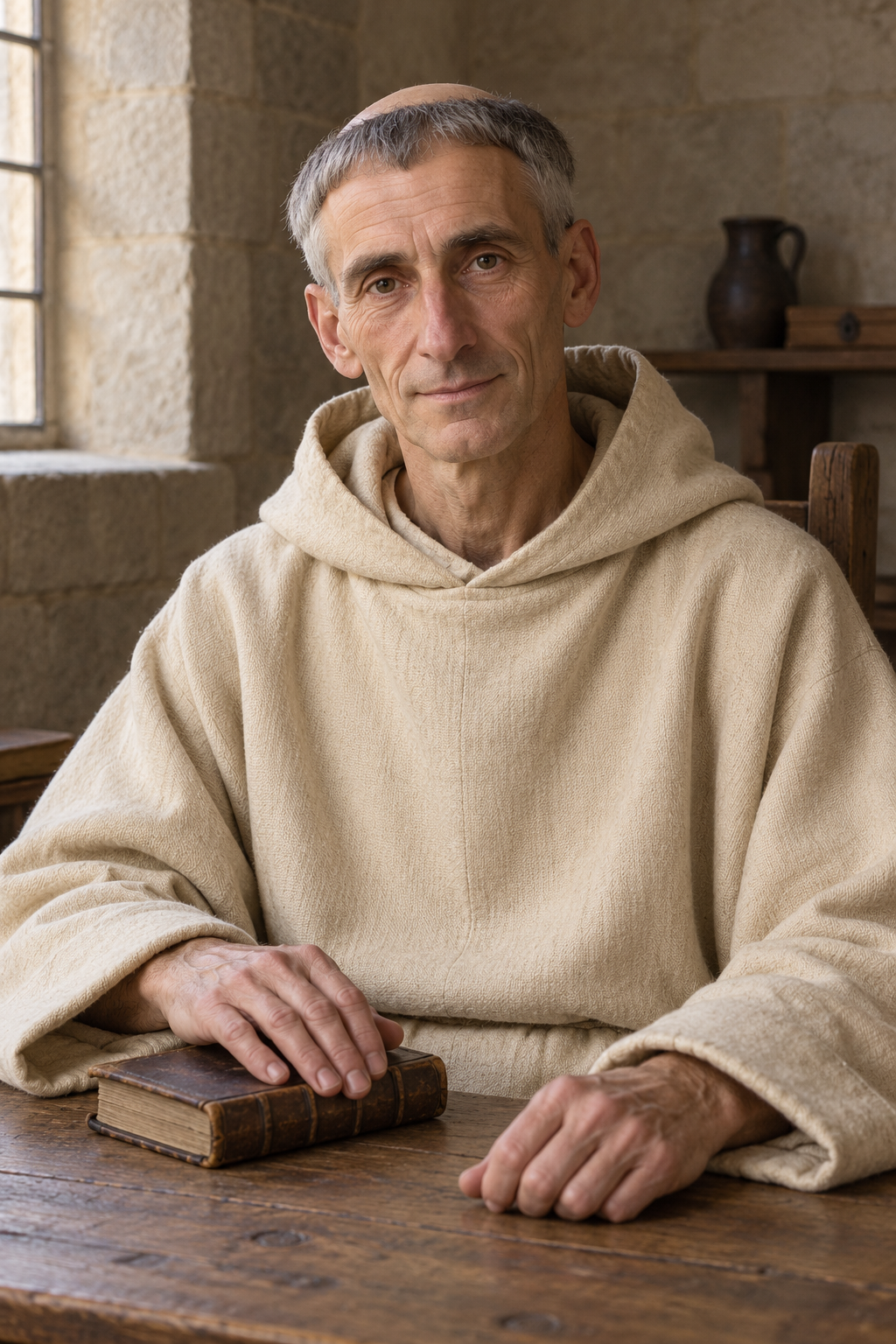
Hamo of Savigny, also known as Aymon or Hamon, was a monk whose religious life became closely associated with care for other people. The French Catholic account at Nominis places his origins in the diocese of Rennes. It recalls that his wish to become a monk was initially frustrated by suspicions that he had leprosy. He offered to care for two monks who did have the disease, and was eventually able to proceed to priesthood. The account emphasizes his affection for the lay brothers entrusted to him and his concern for their religious formation.
A Catholic account published by DEON describes Hamo’s early study of Scripture and his later reputation as a spiritual guide. Peter of Avranches was among those who sought his counsel. The same account places Hamo in contact with Henry II of England and Louis VII of France. It tells of his asking Henry to restrain troops from plundering during a campaign in Brittany, and of another appeal for the release of prisoners. These episodes belong to the tradition of his Life; they portray a monk willing to speak to powerful rulers on behalf of others. The account also credits him with helping to build churches, including one associated with a leprosarium at Beuron.
The story changed as it was retold. Georgina Fitzgibbon notes that a later version of Hamo’s Life removed references to Henry II. She connects that alteration with the monastery’s efforts to secure recognition for its saints.
A Latin manuscript of Hamo’s Life survives in the British Library’s Cotton collection. The library dates this copy to the last quarter of the twelfth century and identifies it as incomplete.
Historian Lorna Walker compares the earlier and later versions of the Life and finds striking differences. Her study asks how the canonization effort of 1243 and 1244 shaped those changes.
Hamo’s death is recorded as April 30, 1173, in DEON’s account. Richard Allen likewise dates Hamo’s death to April 30, 1173. Nominis gives 1175 instead.
Hamo was subsequently honored among the holy monks of Savigny. Alessandra Foscati’s study of the abbey’s miracle collection describes the transfer of their relics into the new church on May 1, 1243. The collection records healing claims associated with their veneration. Foscati examines these accounts as evidence for medieval understandings of illness and treatment, rather than as modern clinical reports. She also explains that the commonly printed version omits substantial material from the surviving manuscript. The community’s hopes for formal recognition did not succeed: the proposed canonization process never took place. Local devotion nevertheless preserved Hamo’s memory alongside that of his companions.
That memory also survives in the local landscape. Maen Roch’s heritage guide identifies a Rue Bienheureux Hamon at Saint-Étienne and describes his image in the church’s stained glass. Its excerpt from Marcel Helbert’s account also recalls a small relic once kept in the sacristy, while stating that the reliquary has disappeared. These traces belong to the later history of devotion, rather than proving the details of his medieval Life.
Wondering how to weigh the stories and sources? Learn how to read a saint biography.