Biography
Hannah Grier Coome
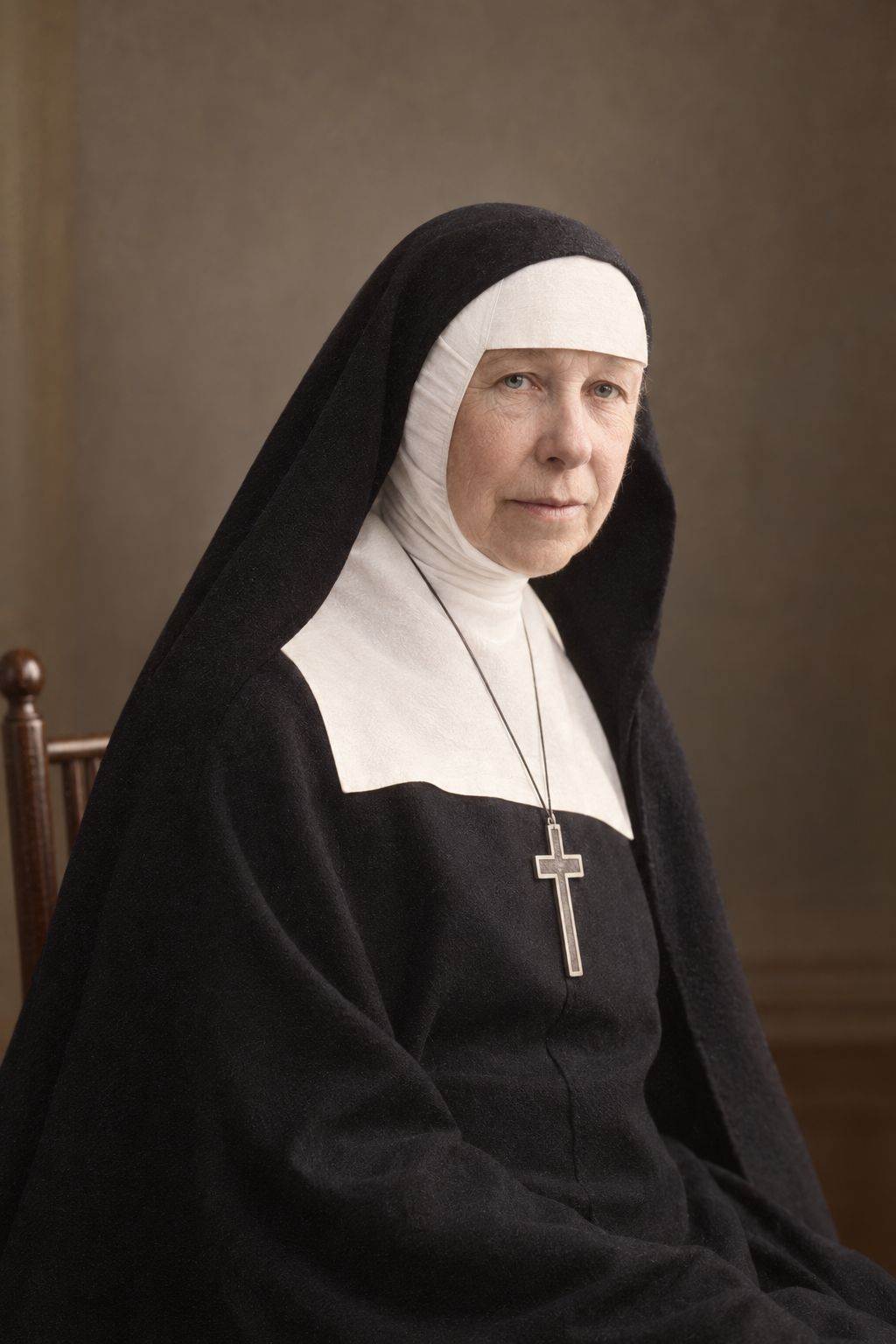
About Hannah Grier Coome
Hannah Grier Coome was born at Carrying Place in Upper Canada on October 28, 1837. Her father, an Anglican clergyman, educated her at home. She married the engineer Charles Horace Coome and spent much of her married life in England. After his death in Chicago, she considered entering an English religious community. After her husband’s death, she supported herself in Chicago by teaching decorative art and making embroidered furnishings for churches. These skills remained part of the work she brought to religious life. A visit to Toronto brought a different invitation. She trained with the Sisters of St. Mary at Peekskill, New York, before founding the Sisterhood of St. John the Divine in 1884.
The foundation grew from a shared effort. A pamphlet published in 1882 records Toronto churchwomen and clergy discussing how to organize sustained charitable work. They wanted trained sisters and a house the community could control. In February that year, a meeting formally invited Coome to become the founder and first superior. Its supporters promised to work toward providing a house and endowment while she and other women underwent two years of preparation. The Reverend O. P. Ford became warden, while a women’s committee led by Mrs. Broughall helped raise funds. A larger public meeting followed in April, with the bishop’s support. These arrangements show the practical commitments behind the proposed community: preparation, premises, financial support, and cooperation between the sisters and their supporters.
Letters from Harriet Starr Cannon, the superior of the American community, give a closer view of this preparation. In an undated letter, Cannon described training two Canadian women who were expected to return to Toronto and begin a sisterhood. She anticipated Coome’s profession in September and wrote that Hannah would visit New York to learn about the community’s work there, including its infirmary on Varick Street. The letter describes plans still being made, rather than a completed foundation. Contact continued after Coome returned to Canada. Writing on April 21, 1886, Cannon recalled a welcome in Toronto and reported that the new community had three novices and three postulants. Nursing, she observed, had become an important part of its work. Her visit included drives around the city before a journey home requiring several changes of train. The correspondence preserves the practical exchanges and personal attention through which the older community remained connected to the new one.
In a memorandum later published from the sisterhood’s archives, Coome recalled beginning parish work in Toronto with a small household. She then led a nursing party to Moose Jaw in 1885, during the conflict commonly called the North-West Rebellion. Her account distinguishes members of the household from the other trained nurses who joined them. She believed their service helped overcome suspicion of Anglican sisters. That judgment is her recollection of public attitudes, rather than proof that opposition disappeared. The memorandum also traces the growth of a women’s hospital from a cottage beside the sisters’ house. Later benefactors helped provide larger premises, a chapel, and accommodation for elderly or unwell sisters. Coome’s account names clergy and donors as well as the community itself, preserving something of the network that sustained the work.
The army’s published medical reports also describe the sisters’ service, from the perspective of the officers responsible for the hospitals. An entry for May 30 records the arrival of four members of the sisterhood and three trained nurses from Toronto. They were housed beside the hospital, and the superior took charge of organizing their work. On June 3, an inspecting officer praised the staff’s efficiency and the hospital’s condition. The surgeon-general’s account explains that the sisters were accepted after the base hospital moved from Swift Current to Moose Jaw. He commended the superior’s handling of the money supplied for the party’s return journey and proposed a contribution toward furnishing their Toronto home. These reports recognize both nursing and administration; they do not establish that the sisters served at every hospital mentioned in the wider campaign.
Coome retired as superior in 1916. Her niece, Dora Lilias Grier, succeeded her. She died in Toronto on February 9, 1921.
Her community’s remembrance continues to connect practical service with prayer. In a 2026 feast-day homily, Sister Constance Joanna reflected on the difficulty of balancing work, rest, contemplation, and care for others. She described obedience as attentive listening and response, rather than simply compliance with orders. Her account of community life also acknowledged failure and the need to receive love as well as give it. This is a later sister’s interpretation of the tradition Coome helped establish. It presents that tradition as a demanding shared life, sustained by attention to other people and by recognition of one’s own limits.
The Anglican Church of Canada commemorates Hannah Grier Coome on February 9 as a religious and founder of the Sisterhood of St. John the Divine.
Wondering how to weigh the stories and sources? Learn how to read a saint biography.