Biography
Harriet Starr Cannon
About Harriet Starr Cannon
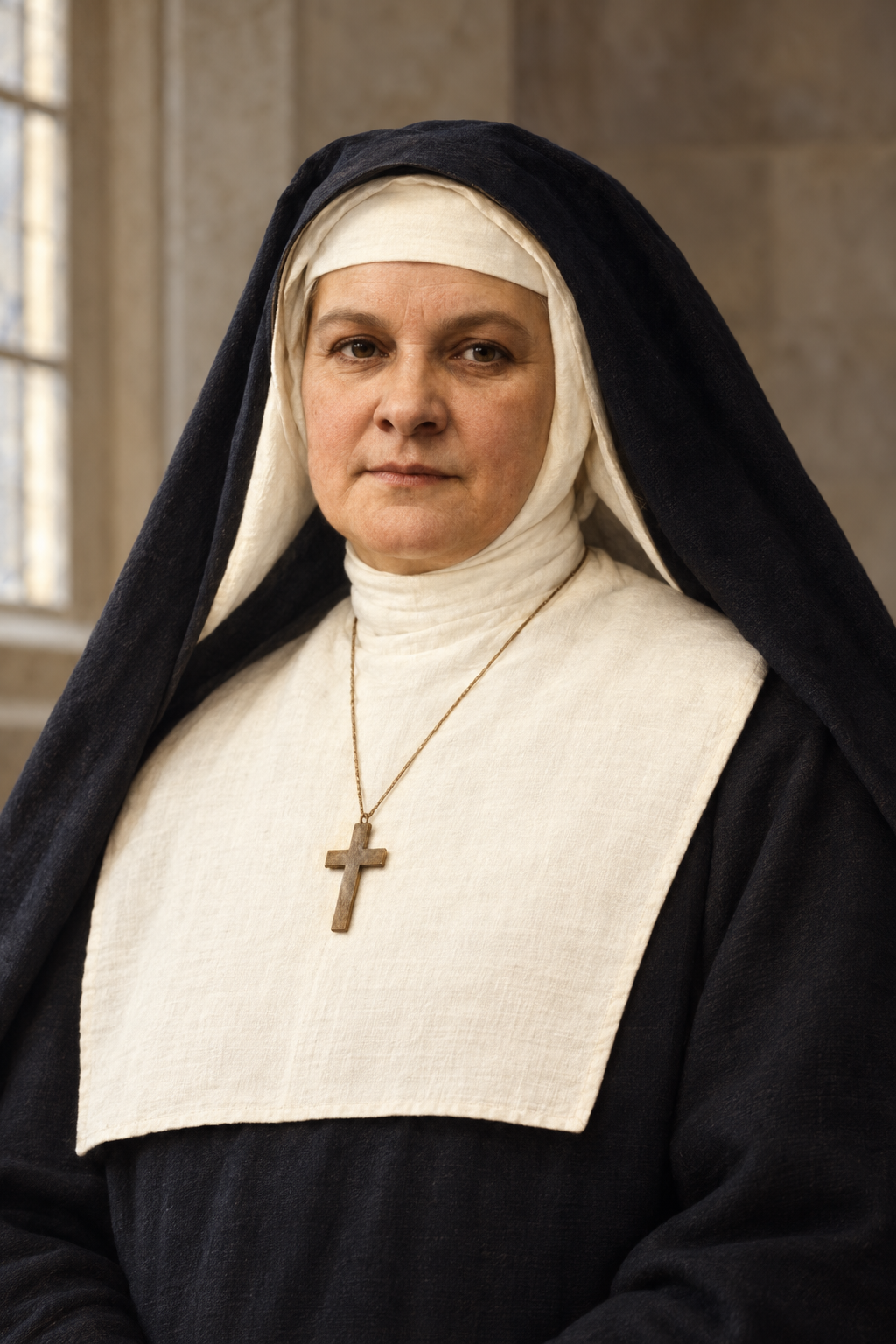
Harriet Starr Cannon helped establish the Community of St. Mary, a community of women devoted to prayer and service in the Episcopal Church. In 1865, she and four other founding sisters received recognition from Bishop Horatio Potter. Their purpose extended beyond running charitable institutions: they wanted a shared religious life centered on contemplation and worship.
Cannon was born in Charleston, South Carolina, in 1823. After her parents died of yellow fever the following year, she and her sister Catharine grew up with relatives in Bridgeport, Connecticut. She taught music. In 1855, as she prepared to join Catharine in California, news arrived that her sister had died. The loss remained important in her later recollections of her vocation. She entered the Sisterhood of the Holy Communion as a candidate in 1856 and became a full member in 1857. There she worked in the parish and at St. Luke’s Hospital under William Augustus Muhlenberg and Anne Ayres.
Cannon and her companions eventually sought a more permanent religious community. Seymour’s memorial describes their wish for a spiritual home bound together by lifelong vows. They worked at the House of Mercy and the Sheltering Arms before Bishop Potter received the profession of five sisters in February 1865. The community was incorporated that May. Cannon became its first superior and continued in that responsibility until her death.
Developing a common life took time. Gleeson’s study describes Cannon learning from religious books, visits to English communities in 1867, and the counsel of clergy experienced in monastic life. Her reading and the books she shared helped shape the sisters’ prayer. Their rule developed through successive contributions and revisions; it was not a finished system devised by one founder.
The sisters also faced opposition within their own church. Seymour recalled being asked to replace the word sisters with Christian ladies in a report because supporters might otherwise withhold donations. In 1867, pressure from opponents forced the sisters to leave the Sheltering Arms. Their work nevertheless expanded to schools, a children’s hospital, and other institutions. They acquired property at Peekskill in 1872 and established their headquarters there in 1876.
The community’s growth brought difficult obligations as well as new opportunities. Its later history describes Cannon’s resistance to taking over Kemper Hall’s debt and the financial burden the sisters eventually assumed. The same account recalls her performing ordinary convent duties while directing the community. Such details show the practical demands behind the expanding network of institutions.
At the New York school, Dix credited Sister Agnes with much of its educational reputation. He likewise identified Sister Catharine as the administrator of the children’s hospital. These institutions depended on the work of many sisters, alongside the direction provided by their superior.
A letter reproduced by Mary Hilary forbids whipping children in the community’s houses.
Dix described a school whose graduates could enter Barnard College, and a children’s hospital that had grown from a narrow rented house into larger premises. The school also housed novices, bringing education and preparation for religious life under one roof.
The community remembers the deaths of Constance and three other sisters who cared for people during the 1878 yellow-fever epidemic in Memphis. Their service became an important part of its public recognition.
Cannon died on April 5, 1896.
The Episcopal Church commemorates her on April 5.
In a 1915 anniversary address, Shirley Carter Hughson explained Cannon’s legacy through four principles: permanent religious commitment, prayer joined with work, Catholic teaching, and worship that openly expressed belief. He was interpreting her life for the community and its associates, not offering a detached biography. His use of Catholic described an ideal within Anglican religious life. The address reveals how her followers understood the disagreements that had surrounded the foundation: vows and forms of worship were part of the community’s purpose, rather than incidental details of its charitable work.
Hughson argued that public approval of useful institutions could become a pressure to neglect prayer. In his reading, Cannon’s example challenged a community to preserve its religious purpose even when doing so cost support. He also insisted that visible worship gave continuing expression to belief, treating devotional books, sacred furnishings and ceremonial as signs of conviction. These were the speaker’s theological judgments, addressed to people sharing the community’s commitments. They show the place Cannon held in its memory nearly twenty years after her death.
The community also continued beyond the places Cannon had known. Writing in 2012, church historian Richard Mammana described three autonomous provinces, with a southern convent and retreat center near Sewanee and an eastern convent in Greenwich, New York. He reported an eastern branch established in Malawi in 2002. His account traced western ministries in education, retreats and altar-bread production. At Greenwich, the sisters farmed, led retreats and helped with activities at the Episcopal diocesan Spiritual Life Center. This later geographical spread records the continuing life of the community she had helped establish.
Wondering how to weigh the stories and sources? Learn how to read a saint biography.