Biography
Henry Beard Delany
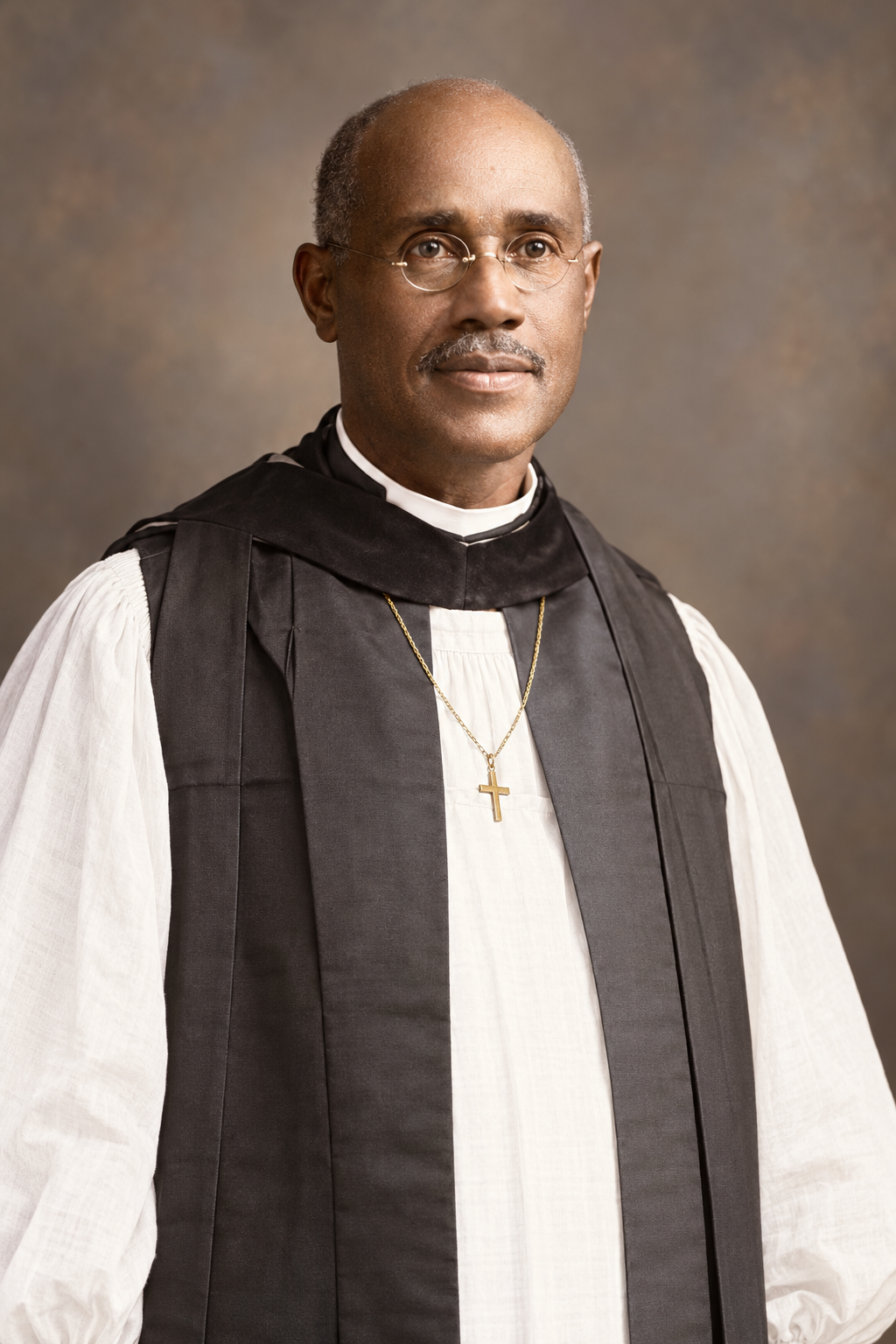
About Henry Beard Delany
Henry Beard Delany joined teaching, skilled building work, and pastoral ministry in the service of Black communities. Born on February 5, 1858, he grew up with family connections to Fernandina, Florida, and later attended St. Augustine’s Normal School in Raleigh. After graduating in 1885, he remained on the faculty, teaching religion, music, and education. His responsibilities grew to include the work of chaplain and vice principal.
He had been born enslaved in St. Mary’s, Georgia. His education at St. Augustine’s brought him into an Episcopal institution established to serve people emerging from slavery. The school became an important base for his ministry. He was ordained deacon in 1889 and priest in 1892, and later served as an archdeacon responsible for Black congregations.
In 1886, he married Nanny Logan, a fellow St. Augustine’s graduate. She also worked at the school, serving as matron and later teaching cooking alongside her other responsibilities. Both spouses contributed to school life.
Delany’s skills were practical as well as academic. He supervised building projects and worked with students on the school chapel, library, and St. Agnes Hospital. Teaching and construction belonged to the same expanding institution. He also assisted at St. Ambrose in Raleigh while carrying his responsibilities at the school.
His pastoral relationships reached beyond the campus. In Louisburg, he began with visits to homes, praying with sick and elderly residents across denominational lines before organizing public worship. In Warrenton, he worked for years toward a church that would also commemorate Thomas White Cain, a Black Episcopal priest who had died in the Galveston storm. Financial shortages repeatedly delayed the building.
An earlier report shows how these commitments overlapped. In 1897, Delany explained that he had been relieved of responsibility for the Louisburg mission so that he could devote more time to St. Augustine’s. Yet he still described ministry in Warrenton, Satterwhite, Pittsboro, and Raleigh. He also made monthly visits to the workhouse, giving instruction to prisoners in both its White and Black wards. At the school, classroom teaching continued alongside daily morning and evening prayer. The report records baptisms, communion services, and the burial of a child as well as public preaching. It offers a concrete picture of ministry shaped by recurring obligations to people in several settings, rather than by a single office or congregation.
The resulting All Saints church was constructed between 1913 and 1918. Its concrete blocks were made on site by local Black residents. A cruciform plan, peaked openings, and a corner entrance tower gave the modest building a Gothic Revival character. Its cornerstone named the Thomas Cain memorial. These material details preserve the work of the congregation and craftspeople alongside the memory of its clerical leadership.
Delany also sought a stronger voice for Black Episcopalians in church government. He and George Freeman Bragg supported missionary districts led by Black bishops with representation in the church’s governing bodies. General Convention instead authorized the more restricted suffragan arrangement. Delany accepted that opportunity, although it fell short of the plan he had advocated. His election therefore marked both an achievement and a limit imposed by the church’s racial order.
He was consecrated on November 21, 1918, in the chapel of St. Augustine’s School. A contemporary notice in The Witness identifies Bishop Joseph Blount Cheshire as consecrator, assisted by Bishops Beverly Tucker and Thomas Darst. Edward Thomas Demby, recently consecrated for ministry in Arkansas, read the litany, while Bragg served as master of ceremonies. The ceremony placed Delany’s new office within the school and clerical community with which he had long worked.
His own annual report gives a detailed picture of the work that followed. Reporting in 1921 on the previous year, he counted 137 services and 117 sermons and addresses across several dioceses. The itinerary moves among congregations, schools, private homes, funerals, and clergy gatherings. He visited sick people, addressed Sunday schools, baptized and confirmed worshippers, and ordained clergy. The office required sustained travel and attention to communities spread across the region.
The same report warned that inadequate salaries threatened this ministry. Delany argued that clergy could not support families on the amounts many received, and that schoolteachers were paid less than many domestic workers. One school had already closed; two clergy had told him they needed to seek work elsewhere. These were practical consequences of insufficient support, not simply disappointing financial totals. His report joined gratitude for the work accomplished with a direct request for conditions that would allow it to continue.
His later years brought declining health and continued financial strain. Historian N. Brooks Graebner describes the disparity between his extensive responsibilities and the resources available to meet them. Delany died on April 14, 1928.
The Episcopal Church commemorates him on April 14.
His remembered ministry encompasses the classroom, the building site, and the dispersed congregations whose needs he brought before the wider church.
Wondering how to weigh the stories and sources? Learn how to read a saint biography.