Biography
Henry Morse
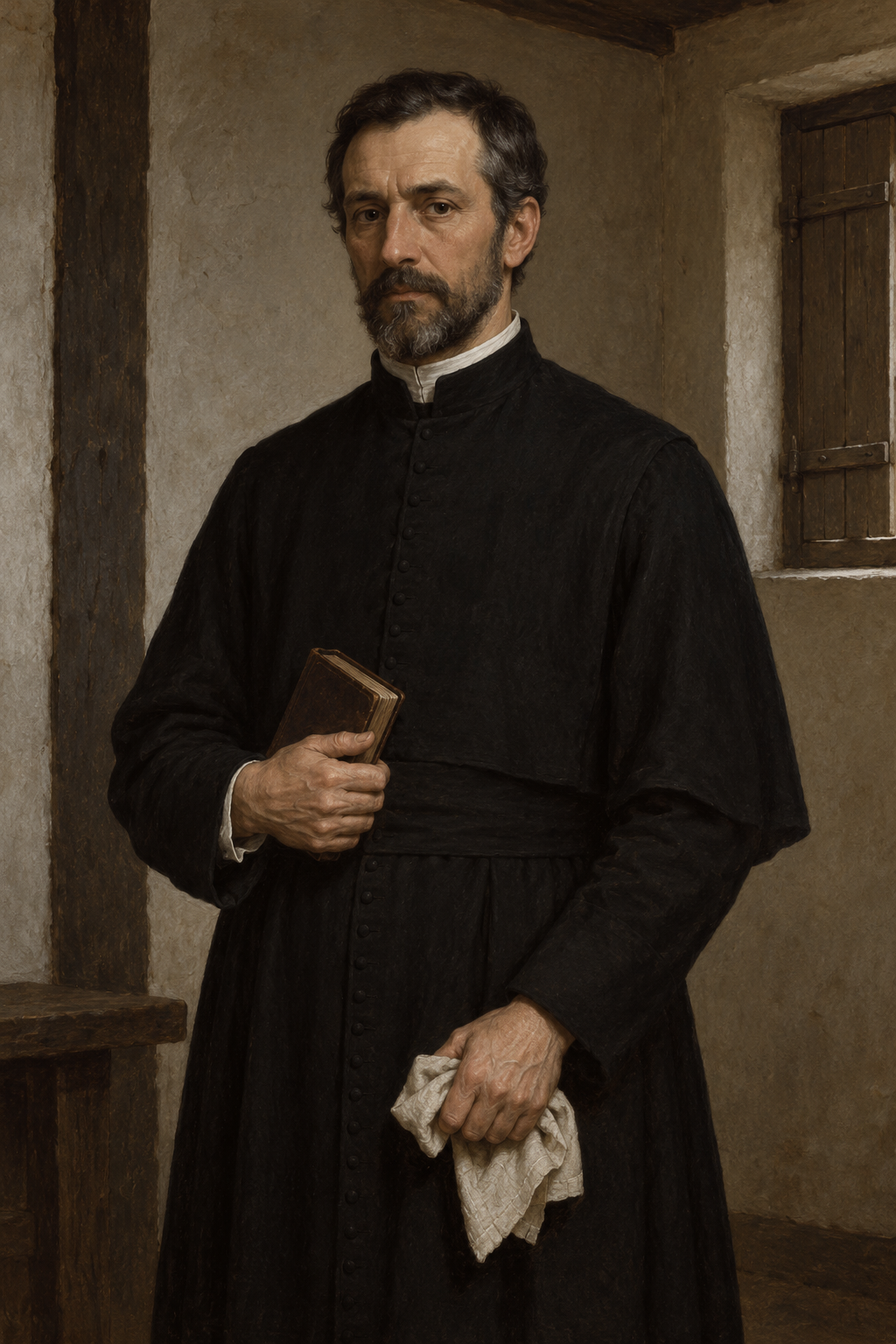
About Henry Morse
Henry Morse was an English Jesuit priest whose ministry repeatedly brought him into conflict with laws against Catholic clergy. He studied at Cambridge and turned toward Catholicism while training in law. After entering the Church at Douai, he was arrested on returning to England when he refused an oath concerning royal religious authority. Later imprisonment and exile did not end his work as a priest.
Morse became especially known for care during a plague outbreak. The Jesuits in Britain describe him ministering with the secular priest John Southworth to people affected by the disease. Their work involved spiritual care and practical help at a moment when fear and illness isolated many people. Morse himself survived infection, according to the Jesuit account. His service is a significant part of his story, not merely a prelude to his death.
Arrested again after returning to England, Morse was held at Newgate and tried in London. The Society of Jesus explains that his prior banishment made his presence in the country the basis for a treason conviction. He was executed at Tyburn on February 1, 1645. A contemporaneous calendar convention sometimes labels that date 1644–45; this profile uses the modern year 1645.
Morse is honoured among the Forty Martyrs of England and Wales. His story joins religious conviction with sustained care for vulnerable neighbors. It also records a legal setting in which priestly ministry itself could lead to imprisonment and death.
Wondering how to weigh the stories and sources? Learn how to read a saint biography.