Biography
Hilarion the Georgian
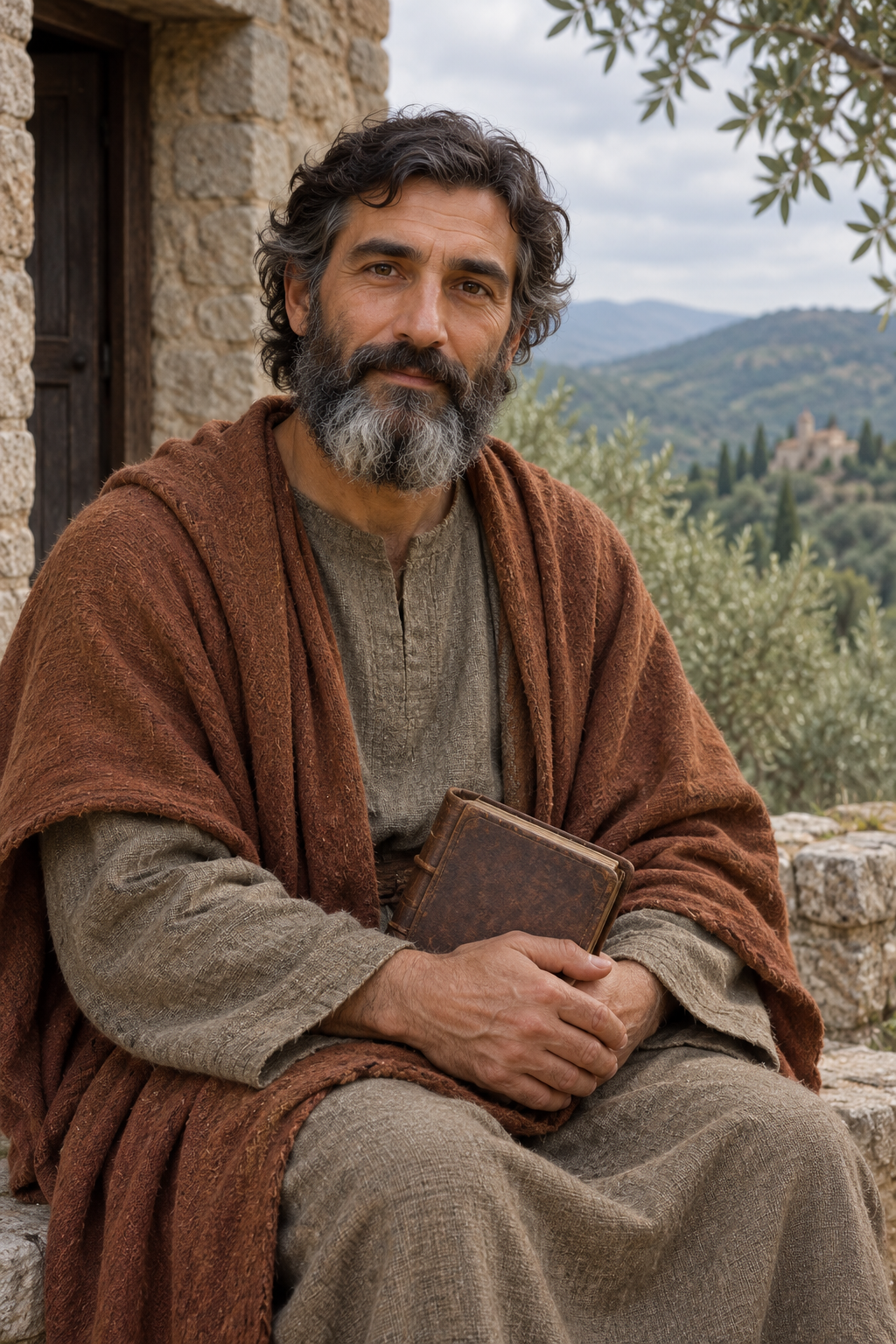
About Hilarion the Georgian
Hilarion the Georgian was a monk and religious founder from Kakheti whose travels connected his homeland with important Christian centers abroad. The Georgian Encyclopedia remembers him for encouraging monastic life and associates his work with religious establishments at David Gareja and Akuri. His journeys took him through Palestine, Bithynia, Rome, Constantinople and Thessalonica.
Among the places associated with his work, the encyclopedia names the Transfiguration church and Hilarion’s own section at David Gareja, together with the Mamadaviti convent in Akuri.
The received life describes a young man raised near a monastery supported by his family. He later sought solitude in the Gareja wilderness, was ordained a priest and became an abbot. Pilgrimage then drew him toward Jerusalem. On returning to Georgia, he used inherited resources for monastic foundations and help for people in need. The account says that he left again when others wanted to make him a bishop; it does not describe him as having accepted that office.
A later study by Tchkoidze draws a more precise picture of his work at Gareja. The shorter accounts describe a leader with eleven disciples among a wider population of hermits. They do not establish that the whole settlement already followed a single communal rule. The expanded Life adds an account of his return after pilgrimage and his use of inherited wealth to build a church around David of Gareja’s shrine. Tchkoidze connects that account with the monastery’s later development, while distinguishing information found only in the expanded text from material shared by the earlier versions.
The same expanded narrative gives the donations a difficult family setting. Hilarion’s maternal uncle resents receiving nothing from the inheritance and threatens both the monk and his monastery. The story ends with a miracle, the uncle’s repentance and his own entry into monastic life. Tchkoidze treats the episode as evidence of social tensions over property given to religious communities. The uncle’s precise legal claim cannot be established; the study offers a possible connection with his sister’s dowry as a hypothesis, not a known fact.
The chronology is less certain than a simple itinerary suggests. A scholarly review of Eka Tchkoidze’s study gives a probable birth around 822, while noting other proposed years. It also explains that Hilarion’s story survives in four forms. The earliest surviving manuscript of the brief Life dates to 990, whereas the oldest manuscript of the long version dates to 1074. The brief version is considered earlier and was composed by the first half of the tenth century. These are transmitted accounts, rather than a diary kept by Hilarion.
One memorable episode concerns language and hospitality. In the Orthodox account, monks on Mount Olympus object to Hilarion and his companions celebrating worship in a language other than Greek. The story resolves the conflict through a vision in which the Virgin Mary rebukes the hostile superior, who then welcomes the strangers. The vision belongs to the religious narrative; the episode’s concern with receiving outsiders is explicit.
Tchkoidze reads the expanded story in the context of later Georgian communities abroad. She argues that Hilarion’s reputation helped Georgian monks defend their religious legitimacy during disputes at Iviron on Mount Athos. The language of divine protection in the Life connected Georgian speech with Orthodox belief. This interpretation distinguishes the ninth-century monk from the later purposes his memory served. It does not require accepting the narrative’s claims about a specially chosen people as historical facts.
These questions also affect proposed connections between Georgian and Slavic religious literature. Regina Koycheva notes that differing chronologies make it difficult to establish whether Hilarion and Methodius were on Mount Olympus at the same time. She discusses possible channels of contact among their followers, but a personal meeting should not be treated as established. Her discussion records competing death years, including 875 and later dates.
The itinerary summarized in the scholarly review assigns five years to Mount Olympus, two to Rome with his disciple Isaac and the last three to Thessalonica, where his journey finally ended.
Hilarion’s final years are associated with Thessalonica. The scholarly review describes the tradition of his death there and the subsequent transfer of his remains toward Constantinople under Emperor Basil I. It also notes an important limit: the imperial story lacks confirmation in Greek sources. A much later Russian pilgrim did, however, report a Georgian monastery in Constantinople associated with Hilarion’s relics. Later devotion is evidence of his remembered importance, even where individual episodes remain uncertain.
The Georgian Encyclopedia places his burial at the Hroman Georgian Monastery near Constantinople and describes a cycle of writings and hymns devoted to him. In that literature he appears as a builder, superior and organizer of monastic communities. This lasting literary and religious memory extends beyond the precise dates of his journeys.
The Orthodox Church in America commemorates him on November 19.
Wondering how to weigh the stories and sources? Learn how to read a saint biography.