Biography
Hilarion the Great
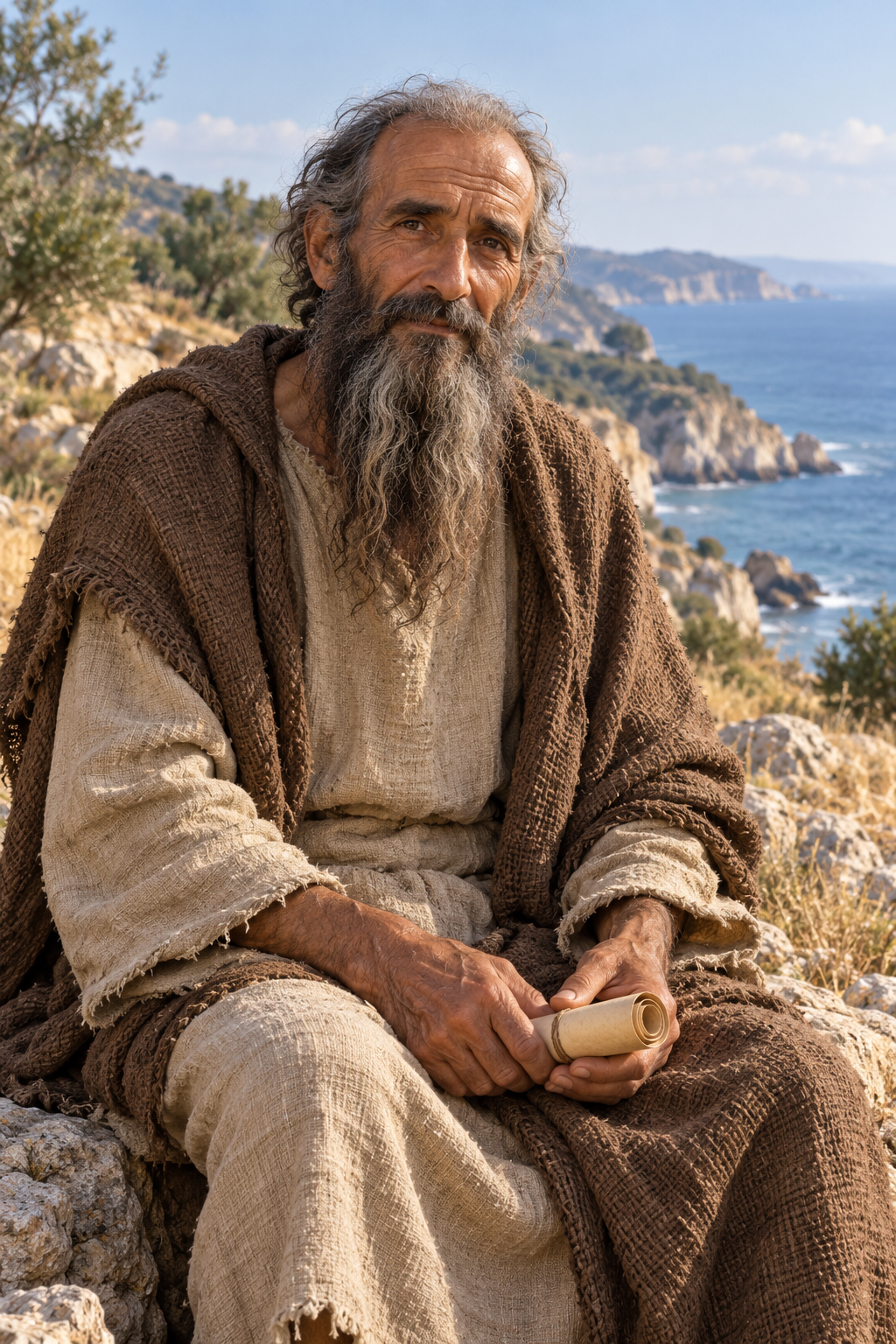
About Hilarion the Great
Hilarion the Great is remembered as an early Palestinian hermit whose influence drew others toward monastic life. Born near Gaza around 291, he died on Cyprus around 371. The Catholic Encyclopedia identifies Jerome’s Life of Hilarion as the principal account of his career, while also noting material preserved by the church historian Sozomen. Those sources tell us how an ascetic became a revered model; their devotional purpose also matters when reading their claims.
Jerome also knew of a letter praising Hilarion by Epiphanius of Salamis, who had met him; that letter no longer survives.
Jerome places his birth in Thabatha, a village south of Gaza, and describes his education in Alexandria. In this account, Hilarion became a Christian, sought out Antony in the Egyptian desert and spent a short time learning from him. Returning home after his parents’ deaths, he distributed his property and began a solitary life near the Palestinian coast. Jerome presents these choices as a deliberate rejection of wealth and public recognition.
The Orthodox tradition remembers his difficult spiritual discipline and the people who sought his help. Its account emphasizes prayer, manual labor and service without payment. It describes the growth of communities under his guidance and his visits to them. Miraculous healings and struggles with demons form part of that religious portrait; they should be read as the tradition’s testimony to his holiness, rather than as independently verified medical events.
Yet the attention itself became a burden in the story Jerome tells. Hilarion repeatedly sought quieter places, traveling through Egypt, Sicily and Dalmatia before settling on Cyprus. Even there, visitors found him. The Life ends with his death, burial in a garden and the removal of his body to Palestine by his disciple Hesychius. Jerome also records devotion at the Cypriot burial place, preserving a memory shared across the sea.
That tension between solitude and service is central to the work’s literary design. In his study of the Dalmatian episodes, Bazyli Degórski explains how Jerome portrays a man who wants anonymity but cannot conceal divine power when charity calls him to act. The stories of the threatening serpent and the sea draw on biblical images. Their purpose is theological: Hilarion appears as a witness to Christ’s victory over evil and chaos. This helps explain the narrative without treating its extraordinary scenes as ordinary travel reporting.
Sozomen connects Hilarion with his own family’s religious history. He reports that his grandfather’s household and another family at Bethelia embraced Christianity through Hilarion’s influence, associating their conversion with an exorcism. He describes the other family’s subsequent support for churches, monasteries and people in need. This family tradition shows how Hilarion’s reputation became part of the religious identity of later generations.
There is also evidence of remembrance beyond Jerome’s biography. An anonymous pilgrim from Piacenza, writing about a sixth-century journey, located Hilarion’s resting place near Gaza. The Cult of Saints in Late Antiquity project preserves the Latin passage and an English translation, together with discussion of the itinerary’s date and transmission. The notice establishes that a place associated with his tomb was known to pilgrims. It does not independently verify every detail of the earlier account of his life or the movement of his remains.
The monastery associated with his name at Tell Umm Amer preserves another part of that legacy. UNESCO describes a settlement that developed from an early hermitage into a substantial complex, with churches, living quarters, water facilities and accommodation for pilgrims. Much of the visible fabric belongs to later centuries. The site therefore speaks both to the beginnings of Palestinian monasticism and to the communities that subsequently organized their religious life around Hilarion’s memory.
Its location near routes linking regions of Asia and Africa also placed the community within a wider world of travelers and exchange. The surviving churches, crypts, hostel and baths show that a monastery could serve visitors as well as its resident monks. These later buildings should not be imagined as the setting of every episode in the fourth-century Life. They record the growth of a continuing institution around an honored founder.
His commemoration also took root far from Palestine. Caulonia’s municipal account calls him the town’s patron and describes processions with a statue and a relic, including a ceremonial presentation of the town’s keys. This is evidence of a community’s continuing devotion, without establishing the authenticity of the relic or proving that Hilarion himself visited the town.
Sant’Ilario dello Ionio likewise identifies Hilarion the Abbot as its patron, explaining that the town bears his name. The municipal description connects the local celebration with the rhythms of the autumn season. That local patronage is distinct from the broader place he holds in Christian monastic memory.
The Orthodox Church in America commemorates Hilarion on October 21. Its account recalls a spiritual teacher whose influence spread through other people and communities, even while he sought solitude.
Wondering how to weigh the stories and sources? Learn how to read a saint biography.