Biography
Hildegund of Meer
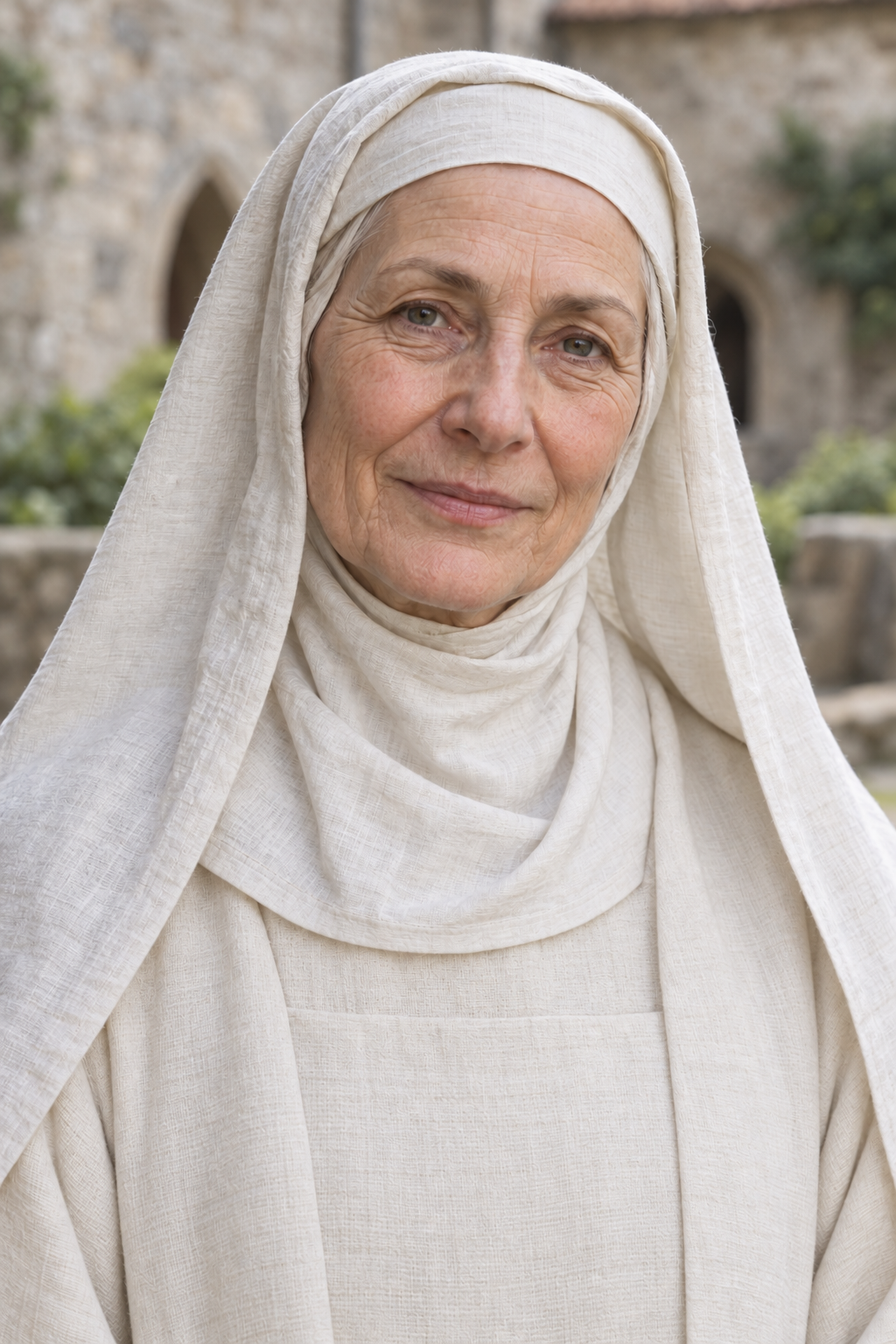
About Hildegund of Meer
Hildegund founded a community of Premonstratensian women at Meer in 1166. Widowed and able to endow a religious house, she also entered it herself and became its first prioress. The first sisters came from Dünnwald, with spiritual direction from Steinfeld. Her foundation therefore joined an existing network of communities rather than beginning as an isolated household.
Family ties had already brought her close to the order. The historian Odilo Engels records that her mother and sister had entered Dünnwald, while her son Hermann belonged to Cappenberg. After the death of another son, Dietrich, Hildegund transferred Meer castle to the church of Cologne as an endowment for prayer for him and their family. The gift required a women’s religious community following the Rule of Augustine.
Her decision gave inherited property a lasting religious purpose. The foundation united provision for a community of women with remembrance of the dead, placing family resources at the service of an institution that would outlive its donor. Steinfeld’s oversight also reflected an older connection between that house and the family of Are.
The parish that bears her name preserves the account of a pilgrimage to Rome after her husband Lothar’s death. It says that she traveled with Hermann and that her daughter later joined the women at Meer and succeeded her as leader. These details come from the received account of her life.
The sources do not agree on all dates. Nominis gives her death around 1183.
The local parish instead gives 1186, and the order’s guide lists modern studies that place her death around that year. The later estimate is retained here as approximate; February 6 is her commemorative day, not treated as independently verified evidence of the day she died.
The community survived for centuries after her death, despite destructive fires in the sixteenth and seventeenth centuries. It was suppressed in 1802. Relics venerated as Hildegund’s were taken to the parish church at Osterath and transferred in 1996 to the chapel of the senior residence bearing her name. Her remembrance continued after the monastery itself had ceased to function.
Hildegund’s local recognition should be described carefully. Her parish identifies her as its namesake patron and explains that the Premonstratensians regard her among their venerable figures. This local remembrance is distinct from a claim that a formal canonization has been established.
Wondering how to weigh the stories and sources? Learn how to read a saint biography.