Biography
Honoratus of Arles
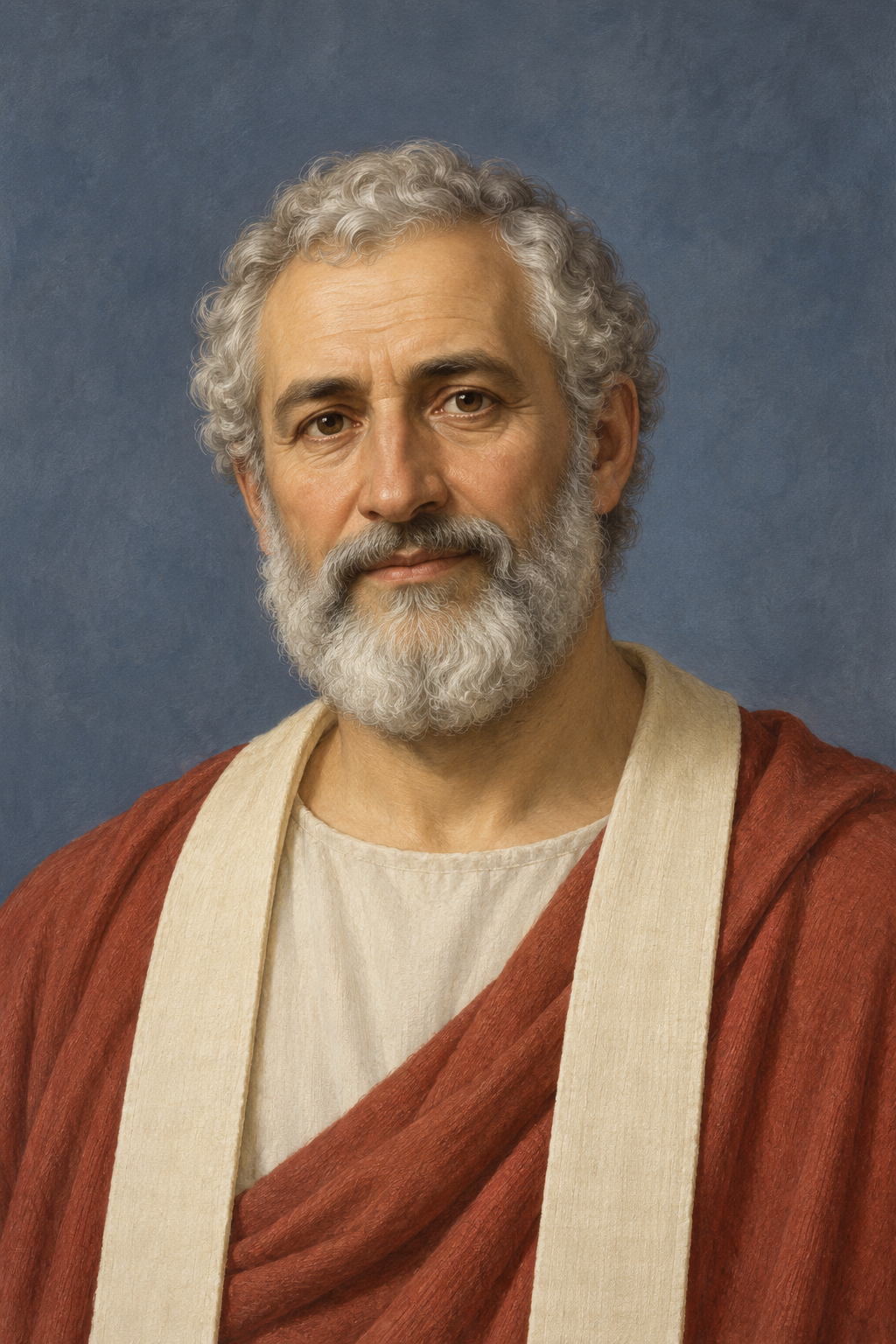
About Honoratus of Arles
Honoratus founded the monastery of Lérins before becoming bishop of Arles. Born into a family of high Roman standing, he received baptism as a young man and embraced a religious life with his brother Venantius and their companion Caprasius. Their journey took them to Greece, where Venantius died at Methoni. Honoratus eventually returned through Italy and settled on the island of Lérins, off the coast near Cannes, around 410.
The diocese of Fréjus-Toulon remembers his renunciation as more than a change of occupation: he sold his possessions and freed the people he held in slavery. This account places a concrete cost alongside his withdrawal from the privileges of his family.
At Lérins, Honoratus became a priest. Hilary’s commemorative sermon presents him as reluctant to seek clerical honors and describes his priesthood as preserving the humility of a monk. Hilary even praises the respect bishops showed him while he was still a priest. The passage offers an early picture of authority rooted in the monastic community.
Hilary describes the practical work of establishing the community: a church sufficient for the monks and shelters suited to their habitation. His brief description places worship and accommodation together in the foundation’s beginnings. The form of that early community remains a subject of scholarly debate. Matheus Coutinho Figuinha proposes that Honoratus and his companions began as hermits and only later consolidated their life under a common superior. He dates the Rule of the Four Fathers to between 414 and 419, rather than automatically identifying it with the moment of foundation. This is a historical reconstruction, not a securely dated document signed by Honoratus.
The rule presents four speeches under the names of Egyptian monastic teachers. They address common residence, obedience to the superior, the reception of newcomers, daily routine and discipline. Scholars disagree about the circumstances behind those voices and their relationship to the people of Lérins. The text points to the practical demands of organizing a community, while its uncertain origins prevent a simple claim that Honoratus personally wrote every prescription.
A more direct link with monastic teaching survives in John Cassian’s dedication of seven Conferences to Honoratus and Eucherius. Cassian describes the leader of a large monastery seeking instruction for his monks and another reader eager to travel to Egypt. He offers written accounts of the Egyptian teachers as a way to support the first and spare the second a dangerous journey. The dedication places Honoratus within an exchange of books and spiritual counsel extending beyond the island.
Cassian says that his earlier Institutes and first ten Conferences had not exhausted their appetite for this teaching. The new collection would clarify matters previously left obscure or untreated. His language is warmly complimentary, but the dedication also identifies a concrete purpose for the work: supplying instruction that a monastic leader could share with his community.
Cassian also anticipated another group of conferences, showing that this exchange formed part of an ongoing undertaking. Hilary remembered a similarly personal effort on his own behalf. Honoratus traveled back to their homeland despite longstanding infirmities to encourage him toward religious life. Hilary portrays the encounter as patient persuasion, recalling his own earlier attachment to worldly ambitions. The memory helps explain the personal bond underlying his later praise.
He was later chosen bishop of Arles, probably in 427 or 428. The succession is not entirely straightforward: an intervening bishop, Euladius, may separate him from the murdered Patroclus. His episcopate was short. Hilary, his relative and disciple, was with him at his death and succeeded him as bishop.
Hilary’s account is therefore both close testimony and a text with a purpose. Historian David Natal argues that the sermon helped justify Hilary’s own election: by presenting Honoratus as an ideal bishop, he could present himself as the fitting successor. Reading it with that purpose in view preserves its value without treating every tribute as a detached assessment.
The early sermon does not establish Honoratus’s birthplace or birth date. The New Catholic Encyclopedia places his death probably in 430, on January 14 or 15. The older Catholic Encyclopedia instead gives 429 and records several proposed January dates.
His Catholic feast is January 16. His relics were transferred to Lérins in 1391, renewing the connection between the island community and its founder. The medieval abbey’s principal church was dedicated to Honoratus. Its dedication took place in 1088, centuries after his lifetime; the church now occupying that site belongs to the nineteenth century.
Grasse honors him as its patron, and the local parish bears his name. A civic account of the January 2024 celebration describes parishioners carrying his reliquary through the old town and pausing for a blessing of the city.
Augsburg’s sanctoral also records traditional invocations for favorable weather and protection against misfortune. These are devotional associations, rather than promises about particular outcomes.
Wondering how to weigh the stories and sources? Learn how to read a saint biography.