Biography
Hugh of Bonnevaux
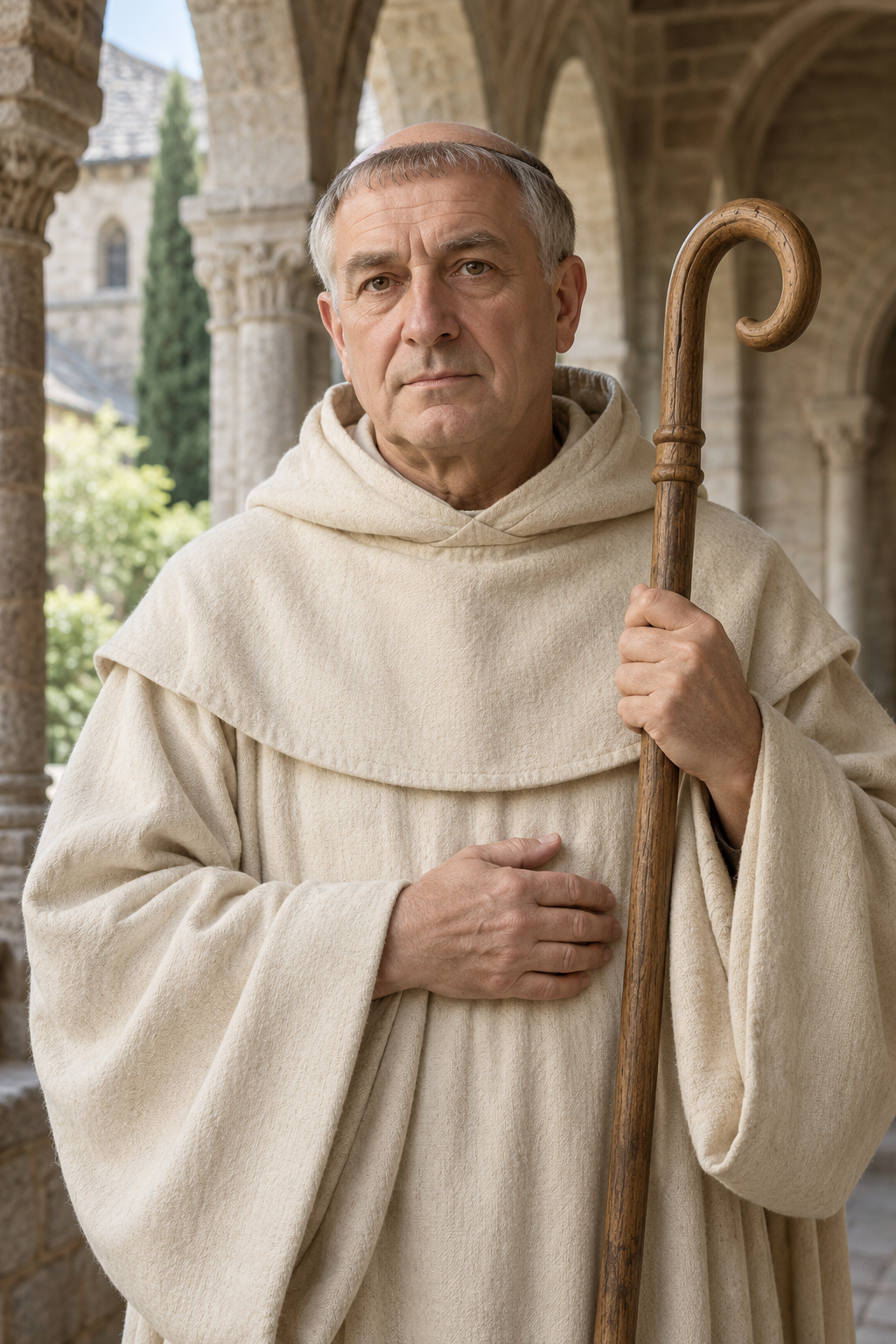
About Hugh of Bonnevaux
Hugh of Bonnevaux belonged to the family of the lords of Châteauneuf and is generally remembered as a nephew of Hugh, bishop of Grenoble. They were different men: the bishop died in 1132, while the younger Hugh became a Cistercian monk and eventually led two abbeys. Historian Michel Wullschleger treats the precise family relationship as probable. He also distinguishes the stories of miracles in Hugh’s Life from the charters and letters that document his responsibilities.
Born around 1120 at Châteauneuf d’Isère, Hugh came from a noble family. Anselme Dimier’s account in the New Catholic Encyclopedia places his entry into the Cistercian abbey of Miroir around 1138. He later moved to Léoncel. This account presents the beginning of his vocation as a difficult period: illness during his novitiate brought a need for encouragement.
A letter from Bernard of Clairvaux preserves the encouragement Hugh received early in his monastic life. Bernard rejoices that a young man accustomed to comfort has chosen a different way of living. He urges Hugh not to lose heart over rough clothing, unappealing food, or the difficulty of the rule. The letter also addresses pressure from relatives who wanted him to reconsider. Its language about resisting his family is severe, borrowing an image from Jerome to insist that religious commitment must come first. Alongside that uncompromising advice, Bernard recommends prayer, confidence in God’s mercy, and attention to spiritual counsel. The letter ends by emphasizing perseverance. It gives direct evidence of the demands Hugh was being encouraged to accept, without requiring us to treat every later story about his novitiate as established history.
Later tradition adds another side to Bernard’s guidance. The Catholic Church in Norway’s account recalls that Hugh became excessive in bodily penances and that Bernard urged a more balanced approach.
Hugh became abbot of Léoncel in 1162. His election as abbot of Bonnevaux followed in 1166, a date Wullschleger supports from the abbey’s charters. Moving to Bonnevaux did not end his concern for Léoncel. As abbot of its mother house, he continued to have responsibilities toward the community he had previously led. Documents show him participating in agreements involving its property and rights.
His reputation as a mediator reached beyond monastic affairs. Wullschleger describes letters in which Frederick Barbarossa sought Hugh’s involvement in negotiations. After the reconciliation at Venice in 1177, both imperial and papal letters acknowledged his contribution alongside that of other negotiators.
The surviving terms of the Peace of Venice help explain what this reconciliation involved. Frederick recognized Alexander as the lawful pope and promised the reverence due to him and his successors. The agreement also addressed the restoration of possessions and the rights of Church and empire, while providing for further mediation where disputes remained.
Hugh died in 1194 and was buried at Bonnevaux. His grave became a place of pilgrimage, with reports of miracles associated with it. An inquiry into his life and miracles followed, though it did not lead to a completed formal canonization process. The Norwegian Catholic account records the later confirmation of his longstanding cult in 1903. It also recalls the relocation of his remains to a nearby chapel in 1743 and the building of a new chapel in 1966. These later memorials belong to the history of his veneration, which continued after the abbey’s own medieval life had ended.
His local memory continues in the parish of Saint Hugues de Bonnevaux, established in the Diocese of Grenoble-Vienne in 2000. The parish explicitly identifies him as its patron. Its account of his legacy emphasizes his reputation as a conciliator, particularly his part in the reconciliation of Pope Alexander III and Emperor Frederick Barbarossa in 1177.
Wondering how to weigh the stories and sources? Learn how to read a saint biography.