Biography
Hypatius of Rufinianae
About Hypatius of Rufinianae
Hypatius of Rufinianae was an abbot whose community stood across the Bosporus from Constantinople in the fifth century. His Life, written by the monk Callinicus, preserves a demanding vision of monastic life: humility, poverty, care for others and close attention to religious conduct. It also presents monks as forceful defenders of Christianity, with deep hostility toward practices they regarded as pagan. Both sides of that legacy belong to his story.
He was born in Phrygia around 366. His father was a lawyer, and the family provided him with an education. After a quarrel with his father at eighteen, he left for Thrace. The surviving biography places these events within the story of a young man seeking religious life. Callinicus, who became his disciple, wrote after his death; an early editor also said that he had known Hypatius personally.
In Thrace, Hypatius worked as a herdsman and learned to chant the psalms with a priest. He eventually entered monastic life. Later, with two companions, he settled in the neglected monastery associated with Rufinus near Chalcedon. The buildings were restored, other monks joined them, and Hypatius became the community’s superior. The church’s account remembers him guiding the monastery for forty years.
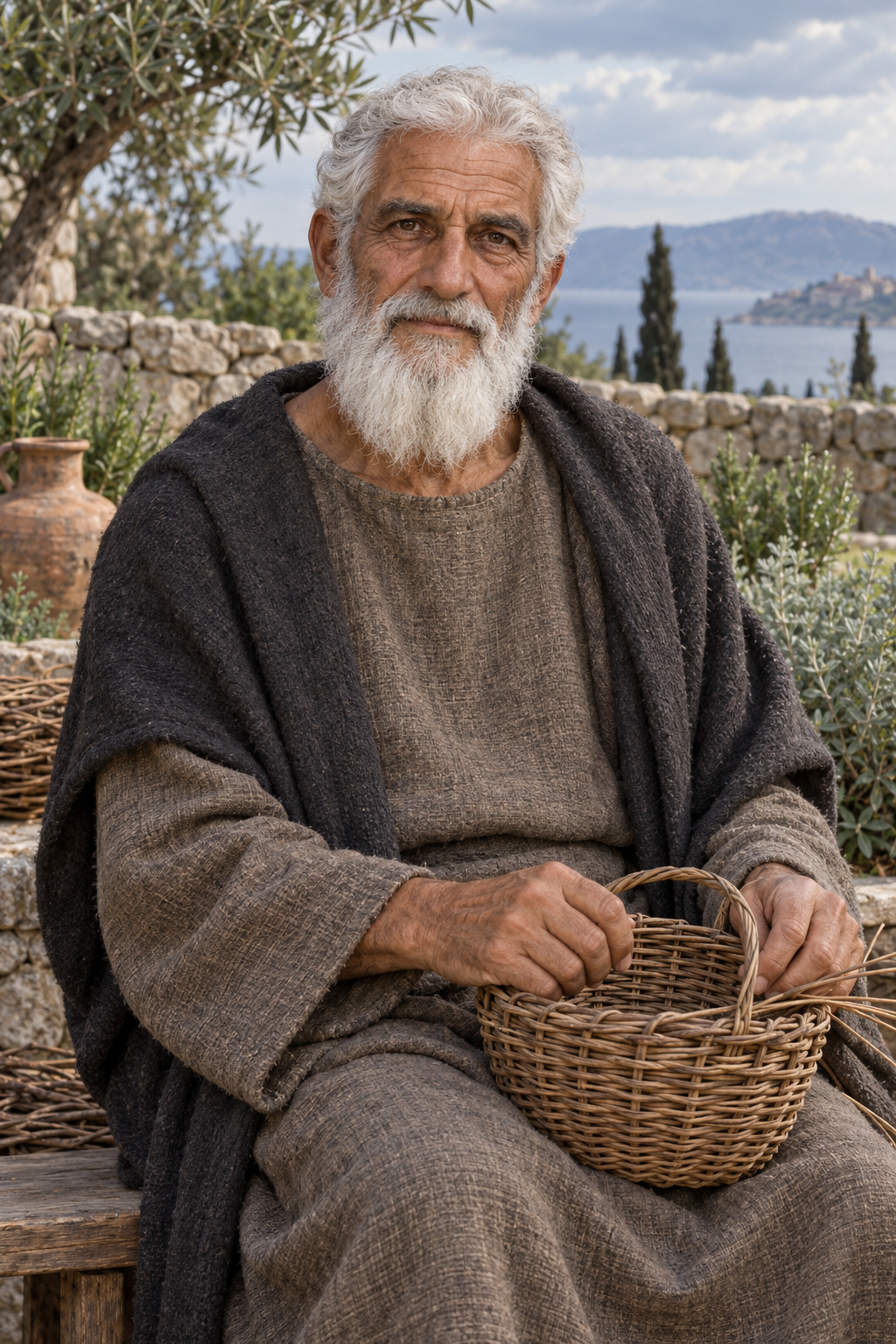
The rebuilding was gradual. At first, the monks supported themselves by weaving baskets, making coarse garments and tending a garden. The Life also recalls a disagreement with his companion Timothy that led Hypatius to leave for a time. Their teacher Jonah helped resolve it, and Hypatius returned around 406. Donations subsequently supported further repairs. This account preserves practical work and internal disagreements alongside the monastery’s spiritual ideals.
Care for sick people was central to his reputation. Nominis remembers him serving them even before his later leadership, and its Roman Martyrology notice emphasizes the discipline through which he taught monks and lay visitors. His religious authority was therefore expressed both in the demands he placed on himself and in the community that gathered around him. Nominis also recalls the esteem in which John Chrysostom held him. This belongs to the church’s remembrance of his relationships, alongside its account of his service to sick people.
The Life also tells of enslaved people belonging to the official Monaxius who sought to become monks. Hypatius admitted them and refused to surrender them when their owner demanded their return. The narrative says that Monaxius eventually allowed them to remain after hearing the abbot’s counsel.
He also offered refuge when doing so brought conflict with Eulalius, the bishop of Chalcedon. According to the Life as summarized in Wace’s dictionary, Alexander and his monks were driven out after arriving in Constantinople and were beaten when they sought shelter at a church. Hypatius received them in his monastery and tended their injuries. Neighbors prepared to defend the visitors, but an imperial message ended the immediate confrontation.
His resistance could extend to church authority itself. Before Nestorius had been formally condemned, Hypatius removed the patriarch’s name from the liturgical books used at the nearby church. Bishop Eulalius protested, but the abbot refused to reverse his decision. The episode shows the tensions between a monastic leader’s convictions and the authority of his bishop, as preserved in a biography sympathetic to Hypatius.
His opposition to non-Christian worship was coercive. Callinicus describes him cutting down and burning trees honored by local people. When the prefect Leontius proposed games at Chalcedon, Hypatius threatened to kill him while he presided. Leontius abandoned the plan. Historian Juan Antonio Jimenez Sanchez argues that the proposed festival was probably secular, despite the biography’s portrayal of it as a revival of idolatry. The threatened violence should not disappear behind a general description of religious zeal. Jiménez Sánchez places Leontius’s prefecture in 434–435 and suggests that the proposed program included athletic, literary and musical competitions. The disagreement therefore concerned what those public activities meant, as well as whether the monks could prevent them.
The same historian cautions that Callinicus’s account is a partisan representation of local religious practices. Its supernatural victories over rival worship express the biographer’s Christian commitments. They cannot simply be read as independent descriptions of the beliefs of everyone living in Bithynia. The Life remains valuable evidence, but its purpose and perspective matter.
Hypatius died in 446, remembered as about eighty years old. Stories of miraculous cures, multiplied food and predictions of disasters became part of his devotional memory. These are claims of the saint’s Life and later church tradition, rather than verified medical or prophetic events. The Orthodox Church in America commemorates him on March 31.
Catholic remembrance also preserves his name: Nominis lists June 17 as his local feast and identifies him in the Roman Martyrology as the superior of the Rufinian monastery in Bithynia. Across these commemorations, he remains a figure through whom communities remember the responsibilities and conflicts of early monastic leadership.
Wondering how to weigh the stories and sources? Learn how to read a saint biography.