Biography
Ignatius Choe In-cheol
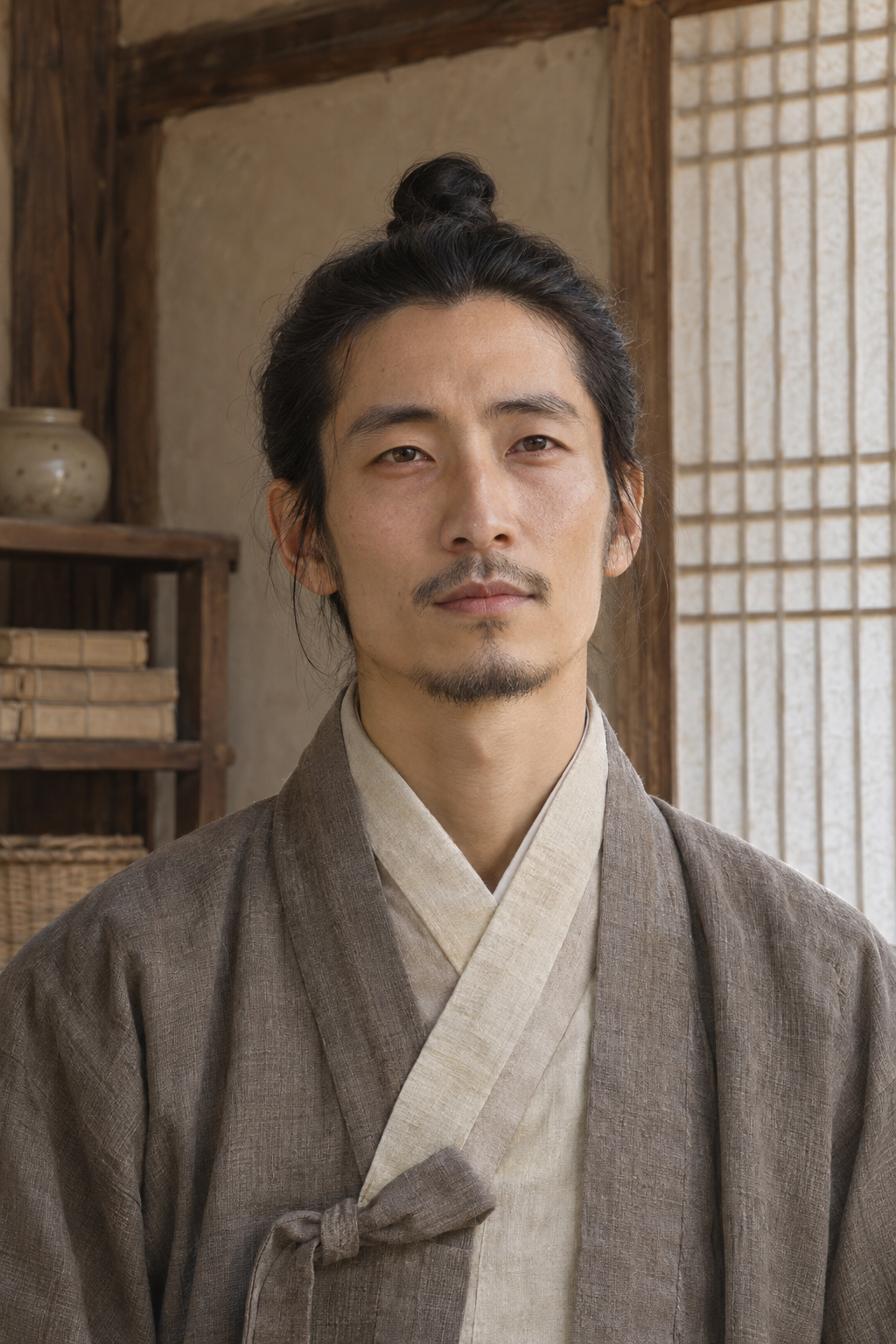
About Ignatius Choe In-cheol
Ignatius Choe In-cheol grew up in a family of interpreters in Seoul. His elder brother, Matthias Choe In-gil, taught him Catholic doctrine in the Church’s early years. In 1791 the brothers were arrested and taken to the Ministry of Punishments. The account remembers Ignatius initially resisting punishment, while other prisoners gave way. Officials then sent Ignatius home for three days to reconsider.
His Christian name also belongs to the Church’s early years. Historian Bang Sang-geun includes Ignatius among believers whose baptismal names preceded Zhou’s arrival. In his study, the name is evidence of a Christian identity formed within the lay community, before a resident priest could provide instruction and the sacraments. Bang distinguishes this pattern from people who first received their names from Zhou, and from earlier believers who later received supplementary baptismal rites. He does not identify a surviving personal explanation from Ignatius about the choice of his patron. The distinction concerns how the early community handed on its religious identity.
Bang further proposes a Jesuit connection in the choice of Ignatius as a patron, alongside the names Francis Xavier and Aloysius Gonzaga. Korean Catholics knew Jesuits through Father de Grammont, the Jesuit missionary who baptized Peter Yi Seung-hun in Beijing, and through the authors of religious books that circulated among them. In Bang’s reading, admiration for those teachers helps explain the selection. This remains an interpretation of naming patterns, rather than proof that Ignatius himself joined a religious order or intended to become a priest.
The royal chronicle names Ignatius among eleven detainees in 1791. Officials reported using persuasion in the ministry courtyard and pressure through prisoners’ families. The king demanded their reform. This contemporary report corroborates the organized use of family pressure in his case.
The respite brought pressure from his elderly mother and other relatives. Back at the ministry, Ignatius said he would abandon Catholicism, then withdrew that declaration and defended his religion. Eventually he accepted the king’s persuasion and promised to stop practising. The encyclopedia records this change of position and his release, rather than presenting his first imprisonment as an unbroken refusal to recant.
After returning home, he regretted his decision and resumed Church work with Matthias. His brother was killed in 1795 while protecting the Chinese priest James Zhou Wen-mo. Ignatius continued among the Church’s leaders, maintaining contact with Francis Kim Jong-gyo, the brothers Thomas Choe Pil-gong and Peter Choe Pil-je, and Hwang Sa-yeong. He studied doctrine with fellow believers, helped spread the faith, and assisted Zhou when the priest needed refuge.
Cha Gi-jin reports that after Matthias’s death Ignatius moved from Jeongdong to Gyedong and received Zhou in his own home. He also describes Ignatius meeting Francis Kim Jong-gyo and Hwang Sa-yeong for instruction, and carrying on Church business through visits to Columba Kang Wan-suk and John Choe Chang-hyeon.
Yeo Jin-cheon adds detail to these connections. He names Oh Hyeon-dal among Ignatius’s companions and describes visits to Hwang Sa-yeong’s home once or twice each year. He also places repeated encounters with Zhou at the homes of Choe Chang-hyeon and Kang Wan-suk. These were contacts through which Ignatius took part in the community’s religious gatherings. Yeo interprets his return after recantation in light of Matthias’s example: the elder brother had remained behind when the priest escaped. That is the historian-priest’s account of the brothers’ spiritual connection, not a surviving statement in which Ignatius explains his own motives.
The Annals dictionary identifies a younger brother, Choe In-seong, as well as Matthias. It also locates the maternal aunt’s home where Ignatius sought refuge in 1801 more precisely, in Gwanjeongdong. These details distinguish the family circle beyond the two brothers most often mentioned in the martyr biographies.
The hostile police report accused him of burning ancestral tablets and abandoning rites. It described his allegiance to Zhou and fellow believers, and his refusal to change even facing execution.
In 1801 he was arrested after seeking shelter with his maternal aunt. He explained Catholic doctrine to his interrogators rather than renouncing it. He was sentenced to death and beheaded with fellow Catholics outside Seoul’s Small West Gate on July 2, 1801. His later imprisonment ended differently from the earlier one: he continued to profess the religion that he had once promised to give up.
A later painting by Tak Hui-seong commemorates his assistance to the priest through a scene of welcome at Uiju. Men stand with a horse outside a fortified wall beneath dark clouds; the diocesan caption identifies Ignatius receiving Zhou at the border. This is a devotional representation of his connection with the priest. The named narrative sources establish his help with refuge, but the picture alone cannot establish the precise movements or people who accompanied Zhou across the frontier. Its value here is as a record of later remembrance, rather than contemporary testimony to that journey.
Wondering how to weigh the stories and sources? Learn how to read a saint biography.